
Lead
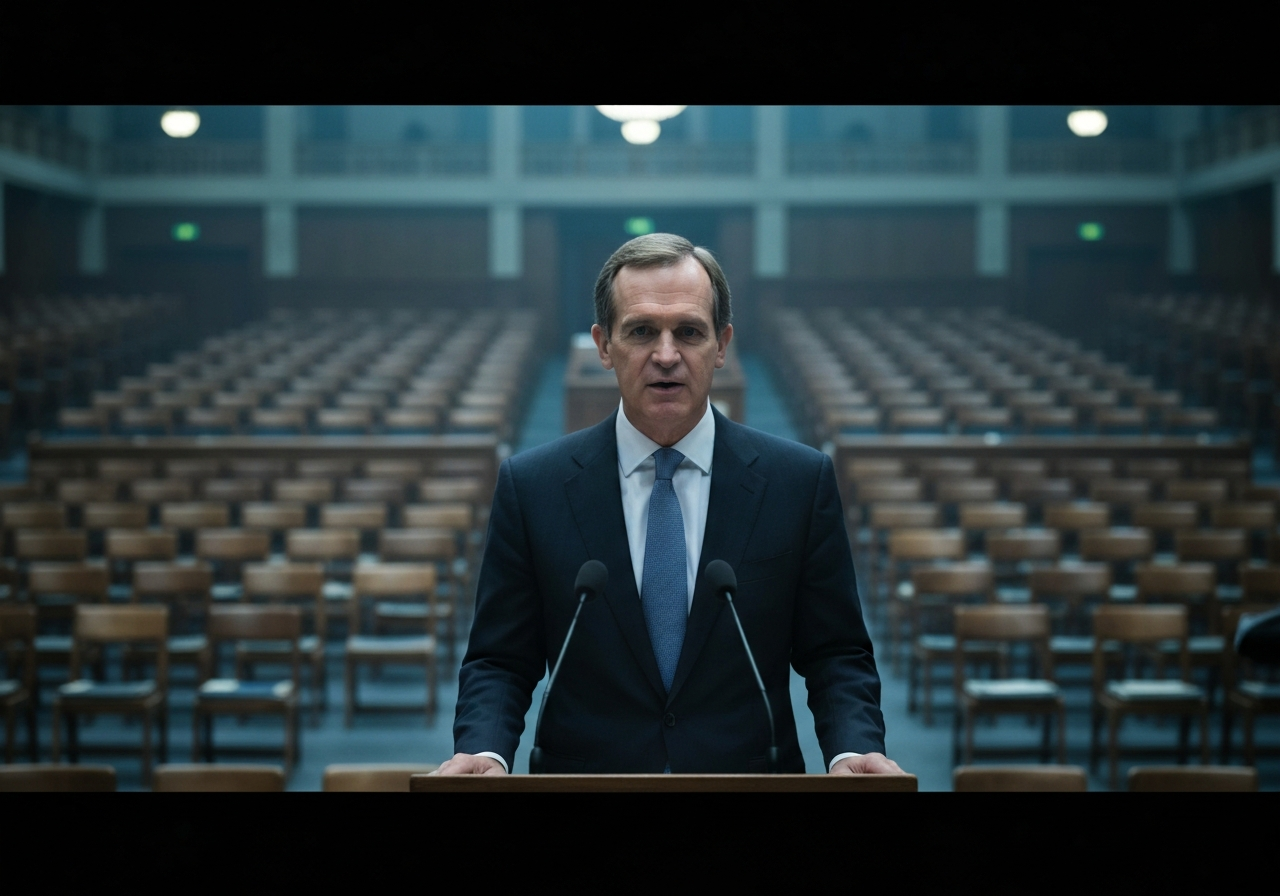
On the final full day of his visit to Australia, Canadian prime minister Mark Carney addressed the Australian federal parliament in Canberra on 5 March 2026, proposing closer Canada–Australia cooperation to counter the influence of dominant powers. Carney framed the two nations as “strategic cousins,” calling for joint action on critical minerals, defence and trade. He announced Australia will join the G7 critical minerals alliance and urged deeper technical and investment ties to strengthen supply chains and strategic autonomy. The speech linked these moves to wider concerns about a fraying international order.
Key Takeaways
- Mark Carney spoke in Canberra on 5 March 2026, urging Canada and Australia to coordinate more closely across defence, trade and critical minerals.
- Canada and Australia together hold roughly 34% of global lithium stocks, 32% of uranium supply and 41% of iron ore, figures Carney cited to underline leverage in supply chains.
- Carney announced Australia will join the G7 critical minerals alliance, the largest democratic grouping focused on strategic mineral reserves.
- He advocated expanding domestic processing, boosting investment and accelerating technical cooperation to improve supply-chain resilience and strategic autonomy.
- Carney questioned the legality of recent US and Israeli strikes on Iran, saying they appeared to lack UN Security Council support and broader consultation.
- He reiterated plans for defence upgrades—next-generation drones, surveillance aircraft, cyber and AI tools—and a trilateral Canada–Australia–India AI initiative to build sovereign capacity.
- Carney framed the effort as middle-power diplomacy: working with like-minded nations to protect institutions and national sovereignty amid competing superpowers.
Background
Canada and Australia have long been close trading partners, sharing legal traditions, defence ties and multilateral commitments. Both countries are resource-rich middle powers whose economies depend on stable rules and open markets, which has shaped a history of bilateral cooperation on mining, agriculture and defence procurement. In recent years, global strain—from geopolitical rivalry to cascading crises—has led policymakers in both capitals to reconsider dependence on concentrated supply chains and external technology providers.
Carney has been prominent in urging renewed middle-power diplomacy since his World Economic Forum address in Davos in January 2026, where he warned about the erosion of the post-1945 international architecture. The G7 critical minerals alliance, founded to coordinate democratic countries with major mineral reserves, has become a focal point for countries seeking to secure inputs for energy transition and defence industries. Canberra’s decision to join the alliance signals a shift toward formalized cooperation on strategic raw materials.
Main Event
Speaking to Australia’s federal parliament, Carney argued that Canada and Australia should move from rivalry to purposeful collaboration. He urged joint investment and technical cooperation to expand domestic processing of critical minerals and to strengthen supply-chain resilience. Carney used concrete production figures—34% of global lithium stocks, 32% of uranium supply and 41% of iron ore—to argue the two nations already control leverage that could be coordinated for mutual benefit.
Earlier, at the Lowy Institute in Sydney, Carney addressed the recent US and Israeli strikes on Iran. While he said he welcomed what he described as the end of Ayatollah Ali Khamenei’s regime, Carney questioned the legality of those strikes, noting they lacked UN Security Council backing and did not appear to respond to an imminent threat. He said the actions were taken without broader consultation and, “prima facie,” seemed inconsistent with international law.
Carney also discussed defence and technology priorities. He urged both countries to build next-generation drones, surveillance aircraft, cyber defences and sovereign AI tools to avoid becoming dependent on hyperscalers or being squeezed by hegemons. He described an ongoing trilateral initiative with Australia and India to bolster sovereign AI capacity and called for robust security guarantees for Ukraine once hostilities there reach a close.
During his Canberra visit Carney was scheduled to meet Governor-General Sam Mostyn, opposition leader Angus Taylor and to hold a joint press conference with Prime Minister Anthony Albanese. Australian leaders have publicly supported strikes on Iran; Albanese and Foreign Minister Penny Wong have said questions of international law arising from those strikes are matters for the US and Israel to address.
Analysis & Implications
Coordinated Canada–Australia action on critical minerals would tighten their negotiating position with major purchasers and processors, particularly firms and states in the US, EU and Asia. By aligning mineral-export policies and expanding domestic processing, the two countries can capture more value domestically and reduce strategic exposure to concentrated refining hubs. That shift could attract upstream investment in processing plants, battery manufacturing and nuclear fuel services, though it will require capital, regulatory alignment and workforce planning.
On defence, a bilateral or multi-lateral push to develop drones, surveillance platforms, cyber and AI capabilities reflects growing concern about operating independence in high-tech domains. For middle powers, indigenous capabilities reduce reliance on a narrow set of suppliers and increase bargaining power in alliances. However, developing sovereign AI and defence systems is costly and timelines are long, so pragmatic partnerships with trusted allies and industry will be essential.
Carney’s public questioning of the legality of US and Israeli strikes on Iran risks diplomatic friction with Canberra’s senior leaders, who have been more supportive. That divergence highlights the tightrope middle powers face: balancing alliance solidarity with a rules-based approach to international conduct. If Canada pursues more assertive critiques of allied actions, it may gain credibility among some partners while complicating coordination on security operations.
Finally, the push for a Canada–Australia–India AI trilateral signals an effort to knit together democracies with complementary research bases and markets. If realized, such cooperation could create alternative technology supply chains and standards to those dominated by hyperscale cloud providers or single-state ecosystems, though success depends on harmonized governance, data-sharing agreements and export controls.
Comparison & Data
| Mineral | Combined Canada–Australia share |
|---|---|
| Lithium (global stocks) | 34% |
| Uranium (supply) | 32% |
| Iron ore | 41% |
Those percentages indicate substantial resource positions but should be read as leverage only if matched by processing and market access. Historically, commodity leadership did not automatically translate into finished-product dominance; capturing downstream value requires factories, skilled labour, financing and consistent policy. The announcement of Australia joining the G7 critical minerals alliance is a step toward coordinating those upstream and midstream elements across like-minded democracies.
Reactions & Quotes
“In this new world, we should be strategic collaborators,”
Mark Carney, Canadian prime minister
Carney used this line in parliamentary remarks to capture the shift from competition to cooperation he proposed between Canada and Australia. He followed it with policy proposals on investment and technical cooperation to strengthen domestic processing and supply chains.
“It would appear, prima facie, to be inconsistent with international law,”
Mark Carney, on US and Israeli strikes on Iran
This comment, made at the Lowy Institute, underscored Carney’s unease about the strikes’ legality given the lack of UN Security Council approval and limited consultation with partners.
“Questions of international law are for the US and Israel to answer,”
Penny Wong, Australian foreign minister
Wong’s position, echoed by Prime Minister Anthony Albanese, signals Canberra’s reticence to publicly challenge allied actions on Iran, creating a diplomatic difference with Carney’s commentary.
Unconfirmed
- Whether the strikes on Iran will lead to the immediate fall of Ayatollah Ali Khamenei’s regime is unconfirmed and lacks independent verification.
- The claim that the strikes were not consulted with Canada reflects Carney’s assertion; formal documentary evidence of consultation (or lack thereof) has not been published.
- Timelines and funding details for a Canada–Australia–India trilateral AI initiative have not been released; the scope and schedule remain to be confirmed.
Bottom Line
Mark Carney’s Canberra speech crystallizes a middle-power strategy: leverage resource endowments and democratic partnerships to build economic and defence independence. The decision for Australia to join the G7 critical minerals alliance and the push for joint processing, investment and AI capacity are concrete steps toward that goal, but implementation will require sustained political will and capital.
Diplomatically, Carney’s public doubts about the legality of strikes on Iran mark a cautious but notable divergence from Canberra’s official posture, illustrating the complex balance middle powers must strike between alliance solidarity and adherence to international law. Observers should watch for follow-up agreements on minerals processing, defence-industrial cooperation and the formal terms of the trilateral AI workstream.