
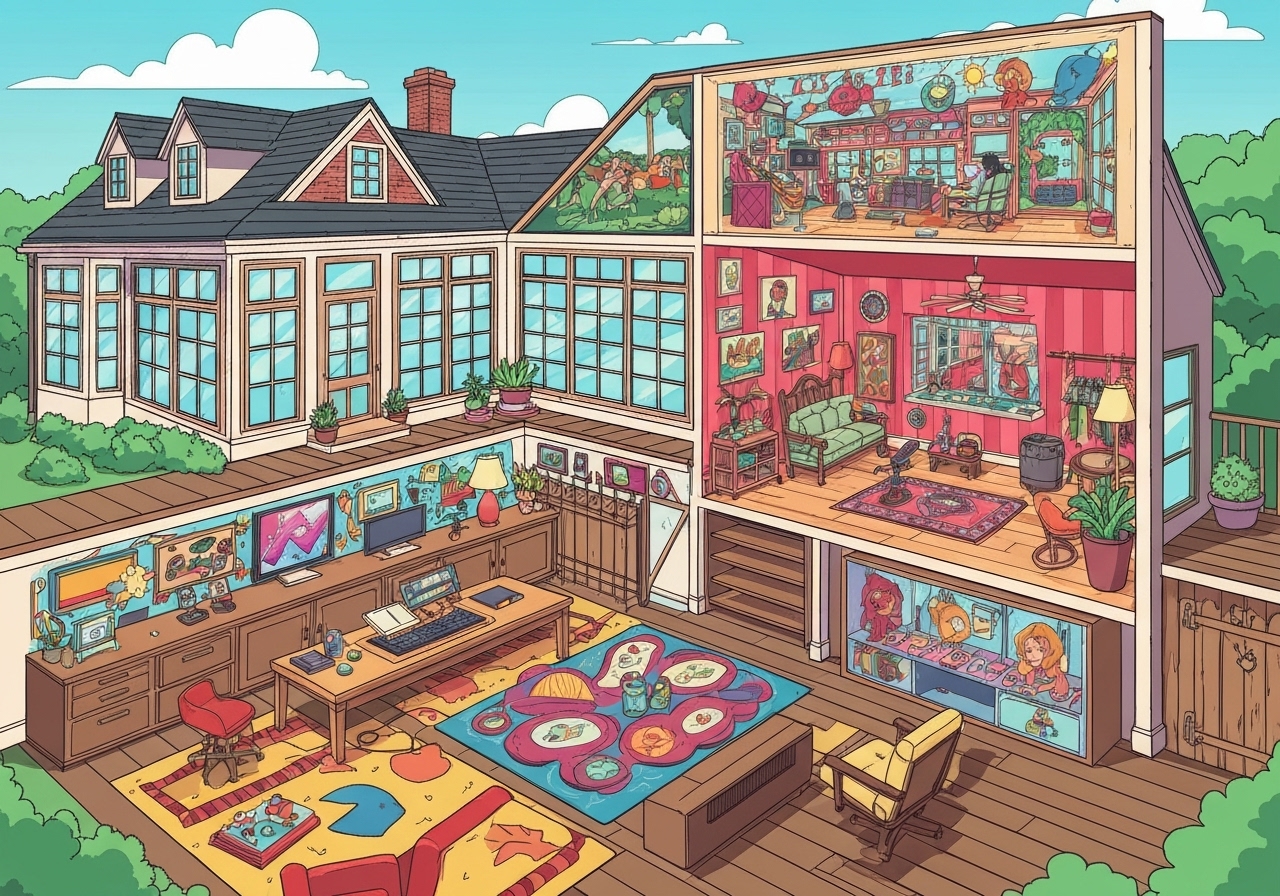
On Dec. 31, 2025, designers John and Christine Gachot completed the conversion of a 19th-century carriage shed on their Shelter Island property into a combined art studio and recreation space. The project repurposes a rustic outbuilding into a working atelier and social room equipped with a Pac-Man arcade, pool table and a vintage slot machine. The couple, principals of the Manhattan design firm Gachot, aimed to marry the island’s relaxed character with practical workspace for painting and family downtime. The result preserves historical fabric while adding contemporary amenities for both work and play.
Key Takeaways
- The property is on Shelter Island, New York; the carriage shed dates from the 19th century and was acquired with the house in 2017.
- Owners are John Gachot (55) and Christine Gachot (56), founders of the Gachot design firm known for projects like the Shinola Hotel in Detroit and bars such as Jac’s on Bond and Pebble Bar.
- The former outbuilding was transformed into an art studio and recreation room featuring a Pac-Man arcade game, a pool table and a vintage slot machine.
- The design pays tribute to John Gachot’s late father, sculptor Richard Gachot, who used a similar outbuilding as a studio; Richard Gachot died in 2018.
- The conversion balances preservation of original timber and structure with added lighting, storage for art supplies and flexible layouts for family gatherings.
- The space serves dual purposes: a functional painting studio for the couple and a casual entertainment room for their two sons and visiting friends.
Background
Shelter Island, situated between Long Island’s North and South Forks, has been a summer refuge and creative incubator for the Gachot family for decades. John Gachot grew up visiting the island and later returned there with his wife and their two sons as a place to unwind from their Manhattan-based design practice. In 2017 the couple purchased a house they had admired for years; the sale included a 19th-century carriage shed that had originally served utilitarian farm or storage functions.
John’s memories of his father’s studio — a former ice house behind a home in Old Westbury — influenced the decision to retain an outbuilding for artistic use. Christine and John run a firm noted for warm, layered interiors and commercial commissions such as hotels and bars, which shaped their approach to the carriage-shed conversion. Their brief combined respect for the building’s history with practical needs for daylight, storage and social space.
Main Event
The conversion process focused on stabilizing the 19th-century frame, upgrading lighting and introducing durable surfaces suitable for paint and varnish. The couple worked to reveal and conserve original timbers while inserting modern electrical and HVAC discreetly to support year-round use. Flooring and wall finishes were selected to resist splatter and wear, yet remain in keeping with the building’s rustic character.
Interior programming intentionally blends studio needs with leisure amenities. One end of the shed functions as a painting and assemblage area — with easels, racks and task lighting — while the opposite end contains recreational equipment, including a Pac-Man arcade cabinet, a pool table and a vintage slot machine that the family uses during gatherings. The layout allows the space to shift from focused, individual work to group entertainment without extensive reconfiguration.
The Gachots say the space also operates as a family hub. John recalled his father’s studio as a place for private conversation and creative exchange; they sought to recreate that intimacy while making the building more openly social. The conversion was completed with relatively modest structural intervention, emphasizing reversible changes so the carriage house retains interpretive flexibility for future owners.
Analysis & Implications
The project illustrates a broader trend in adaptive reuse: smaller outbuildings on residential lots are increasingly being repurposed as hybrid work-and-leisure spaces. As remote and flexible work patterns persist, homeowners seek separate, dedicated places to work that nonetheless encourage family interaction. The carriage house conversion shows how careful preservation can coexist with contemporary functional demands, adding value without erasing history.
Economically, such conversions can be cost-effective compared with full additions because they reuse an existing shell and often avoid extensive permitting for habitable space if treated as accessory structures. Design choices — conserving exposed framing, adding targeted insulation and upgrading lighting — can extend seasonal usability while preserving character, which appeals to buyers interested in authenticity and low-impact renovation.
On a cultural level, the Gachots’ approach underscores how personal memory and professional identity inform design decisions. Referencing John’s father’s studio provided a conceptual throughline that justified retaining raw textures and modest scale. The inclusion of playful elements like arcade machines signals a shift in what constitutes desirable domestic amenity: experiential, multigenerational spaces that support both craft and leisure.
Comparison & Data
| Feature | Typical 19th-Century Shed | Gachot Carriage Shed (2025) |
|---|---|---|
| Original use | Storage/ice house/utility | Art studio + recreation room |
| Construction date | 19th century | 19th century (retained) |
| Added amenities | None | Electrical, modern lighting, HVAC, arcade, pool table |
| Intervention level | Preserve as-is | Stabilize structure; reversible upgrades |
The table highlights how the Gachot project balances conservation and contemporary retrofit. Rather than a full rebuild, interventions focused on targeted stabilization and service upgrades, keeping the building’s footprint and historic fabric intact while adding functional systems for year-round use.
Reactions & Quotes
“I basically grew up here,”
John Gachot, designer
John linked the project to childhood memories on Shelter Island, saying the carriage shed evoked his father’s studio and shaped the couple’s intention to preserve a sense of informality.
“We wanted a place that could be both a working studio and a place to unwind with family,”
Christine Gachot, designer
Christine described the brief as pragmatic and emotional: functional lighting and storage for art-making alongside comfortable seating and games for their two sons and visiting friends.
Unconfirmed
- Whether the carriage shed carries any formal historic designation or local preservation restrictions was not reported and remains unconfirmed.
- No public cost breakdown for the conversion was provided; reported design choices reflect intent rather than a published budget.
Bottom Line
The Gachots’ carriage-house conversion on Shelter Island demonstrates how modest historic outbuildings can be adapted to meet modern creative and social needs without erasing their past. By conserving original materials and making reversible upgrades, the project retains character while expanding functionality for family life and professional practice.
For homeowners and designers, the case underscores two practical takeaways: prioritize targeted structural stabilization and service upgrades, and program spaces flexibly so they can alternate between focused work and leisure. As demand for separated home workspaces endures, similar adaptive reuse projects are likely to grow in both frequency and sophistication.
Sources
- The New York Times — news