
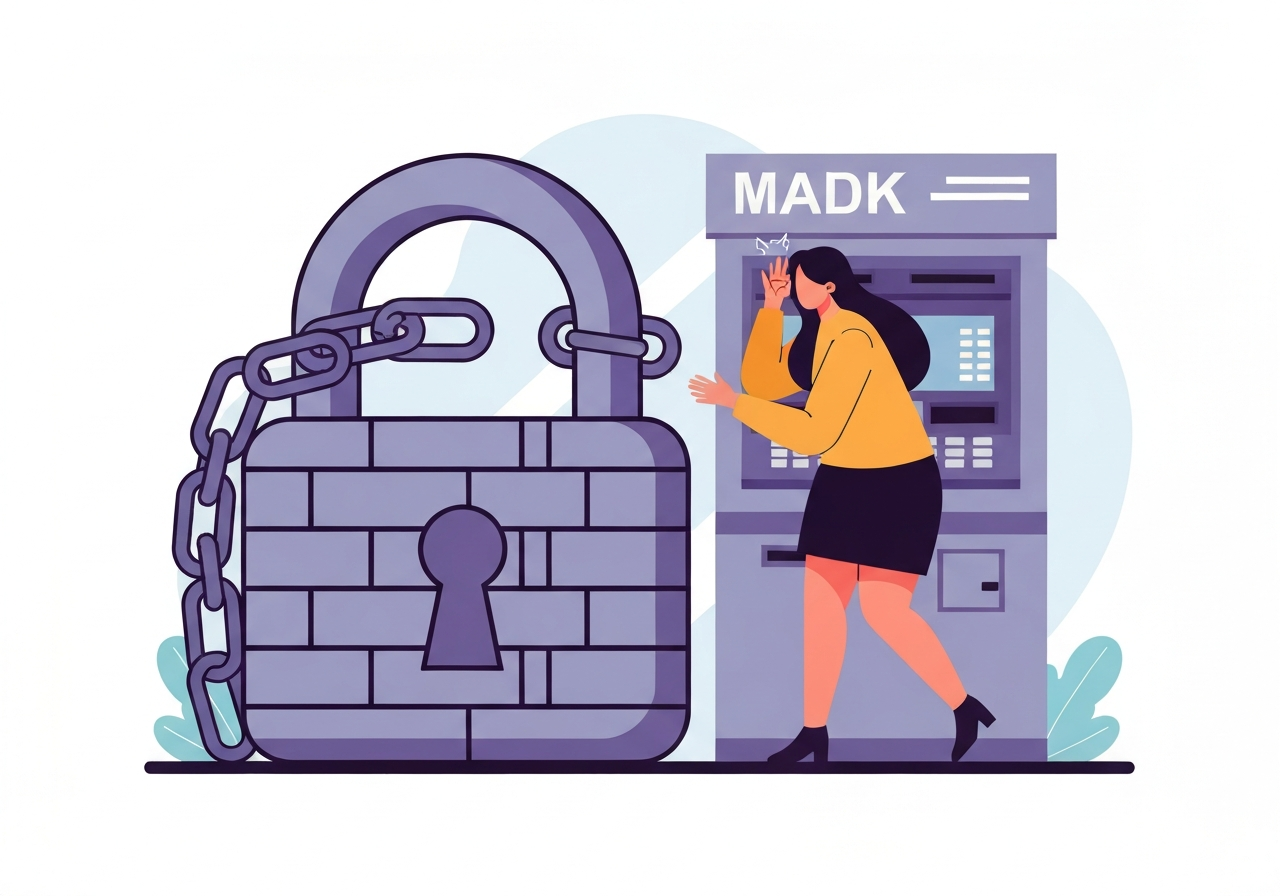
In October, an Indiana small-business owner took a merchant cash advance of $50,000 to cover payroll and operating costs; she received just under $47,000 after fees. Months later a Connecticut-based collections process — triggered by her lender after alleged missed payments — led banks to freeze every account linked to her, leaving her unable to pay employees or vendors. The freeze followed a prejudgment remedy waiver in the MCA contract and arrived without a prior hearing; she settled in January after borrowing from friends and hiring counsel. Connecticut lawmakers are debating a bill to ban the waiver for cash advances and to force clearer fee disclosure as the state prepares to vote before May 6, 2026.
Key takeaways
- The borrower took a merchant cash advance (MCA) in October for $50,000 and received roughly $47,000 after fees; her contract required eventual repayment of $72,500.
- The MCA required daily remittances taken from deposits; the lender withdrew about $558 per day against sales receipts.
- The contract named Connecticut law, enabling a prejudgment remedy waiver that let the lender seek an immediate bank freeze without a prior court hearing.
- Use of Connecticut prejudgment remedies surged after New York tightened rules in 2019; in 2023 Connecticut limited some uses for advances under $250,000, but enforcement remains contested.
- A state representative, Jonathan Jacobson, introduced a bill to ban prejudgment remedy waivers for MCAs and to require APR-style disclosure; the measure has bipartisan co-sponsors and faces a vote before May 6, 2026.
- Intermediaries offering debt renegotiation have surfaced; at least one merchant reported paying a middleman whose assistance failed to prevent default or an ensuing freeze.
- Business owners often settle quickly to regain access to funds because contesting freezes in Connecticut requires hiring local counsel and waiting while cash is inaccessible.
Background
Merchant cash advances are structured as purchases of future receivables rather than conventional loans, so many state lending laws, including interest-rate caps and licensing rules, often do not apply. MCAs typically move fast: funds can appear within hours and require minimal paperwork, which appeals to new or thin-credit small firms. That speed and accessibility have produced rapid industry growth but also high effective costs for borrowers, who may face steep markups and daily remittances tied to sales.
Because an MCA is not labeled a loan, providers can contract around typical consumer-protection structures; many agreements include clauses that select a specific state’s law for disputes. In recent years Connecticut became a favored forum for some MCA firms after New York strengthened oversight in 2019. In Connecticut, a prejudgment remedy process allows plaintiffs to attach assets before a full adjudication if certain filings and affidavits are made, a tool lenders have used aggressively to seek repayment from defaulting merchants.
Main event
The owner, identified by a middle name at her request, took the October MCA as an emergency infusion when customers tightened spending and traditional banks declined to lend to a nascent firm. The advance carried automated daily draws that removed $558 from her accounts to repay the purchase of future sales. When she fell behind — in part after paying fees to a debt-negotiation intermediary that then ceased contact — the lender began collections in Connecticut and submitted an affidavit alleging default.
Because the MCA contract specified Connecticut law and the operating bank had a Connecticut branch, a state marshal served an attachment order on the bank. The bank froze all accounts tied to the merchant, not just the business account, leaving the owner unable to access payroll funds, vendor payments or personal reserves. Notices of the right to contest the attachment were mailed and would arrive only after the funds were already inaccessible in practice.
Facing a cash runway measured in days, the merchant scrambled to borrow from friends and to retain Connecticut counsel. Within weeks she agreed to a settlement payment to regain access to funds; negotiations over other advances remain ongoing. Her description of the experience emphasizes the shock of sudden de-platforming from ordinary banking services and the emotional strain on staff and family.
Analysis & implications
Legally, prejudgment remedies offer plaintiffs a fast route to preserve assets when they claim imminent dissipation; for MCA holders, that tool reduces collection risk. But when applied in cross-jurisdictional MCA disputes, the remedy can cut off a small business’s lifeblood before a merits hearing, creating acute economic harm. For merchants with thin margins and time-sensitive payroll obligations, a brief freeze can cascade into layoffs, supplier defaults or closure.
Policy makers face a trade-off between preserving access to capital and protecting merchants from contractual clauses that enable swift asset seizures. Proponents of the waiver ban say eliminating prejudgment remedies for MCAs would curb an asymmetric power dynamic; opponents argue it could raise the cost of capital or drive some funders away, shrinking an already narrow credit channel for high-risk firms. Academic and regulatory observers note that transparency about fees — an APR-like disclosure — would help merchants compare offers but may not fully address the structural incentives that encourage rollovers and repeated advances.
Economically, wider restrictions or clearer disclosures could modestly increase the pricing of short-term alternative finance as funders internalize higher enforcement costs and delayed recoveries. Politically, Connecticut’s move may prompt similar measures elsewhere: New York and California already took steps toward transparency, and states watching the consequences could follow, potentially reshaping the MCA landscape and funder behaviors.
Comparison & data
| Item | Typical MCA Example |
|---|---|
| Principal advanced | $50,000 |
| Net received | ~$47,000 |
| Total repayment agreed | $72,500 |
| Daily remittance | $558/day |
| Connecticut statutory cap relevance | 2023 limits apply under $250,000 (contested) |
The table above contrasts the merchant’s deal terms against the legal threshold highlighted in Connecticut’s 2023 restrictions. Even with statutory tweaks, interpretation and enforcement remain disputed, and the immediate practical effect for many borrowers is that a signed waiver can produce a fast and sweeping attachment.
Reactions & quotes
“It devastated my family and my business, with no warning, zero warning,” the owner said, describing how the freeze halted payroll and vendor payments.
Merchant (requested partial anonymity)
“I view the industry to be nothing less than the golden age of piracy,” said Jonathan Jacobson, now a Connecticut state representative, urging a ban on prejudgment remedy waivers for cash advances.
Jonathan Jacobson, Connecticut state representative (testimony)
“There’s going to be no security… very little ability for them to recoup money,” argued an attorney representing MCA funders in testimony opposing parts of the bill, warning some lenders might exit the market if rules tighten.
Jared Alfin, attorney for MCA creditors (legislative testimony)
Unconfirmed
- Specific practices by unnamed MCA intermediaries that purportedly took fees then disappeared are based on the merchant’s account and are not independently verified.
- The extent to which individual MCA law firms are uniformly interpreting the 2023 Connecticut statute in ways that permit continued use of prejudgment remedies remains contested and varies by case.
Bottom line
The episode illustrates how certain contract clauses in fast-moving alternative finance deals can convert an emergency lifeline into an existential threat for small businesses. Even where statutory reforms exist, interpretation and on-the-ground procedures can leave merchants exposed if they lack resources to litigate quickly in a distant forum.
For policy makers, the challenge is to balance access to nonbank capital with guardrails that prevent rapid asset seizures that disrupt operations. For entrepreneurs, the practical takeaway is to scrutinize forum-selection and attachment-language in advance, seek independent legal review when possible, and compare all costs — not just upfront amounts — before accepting rapid funding.