
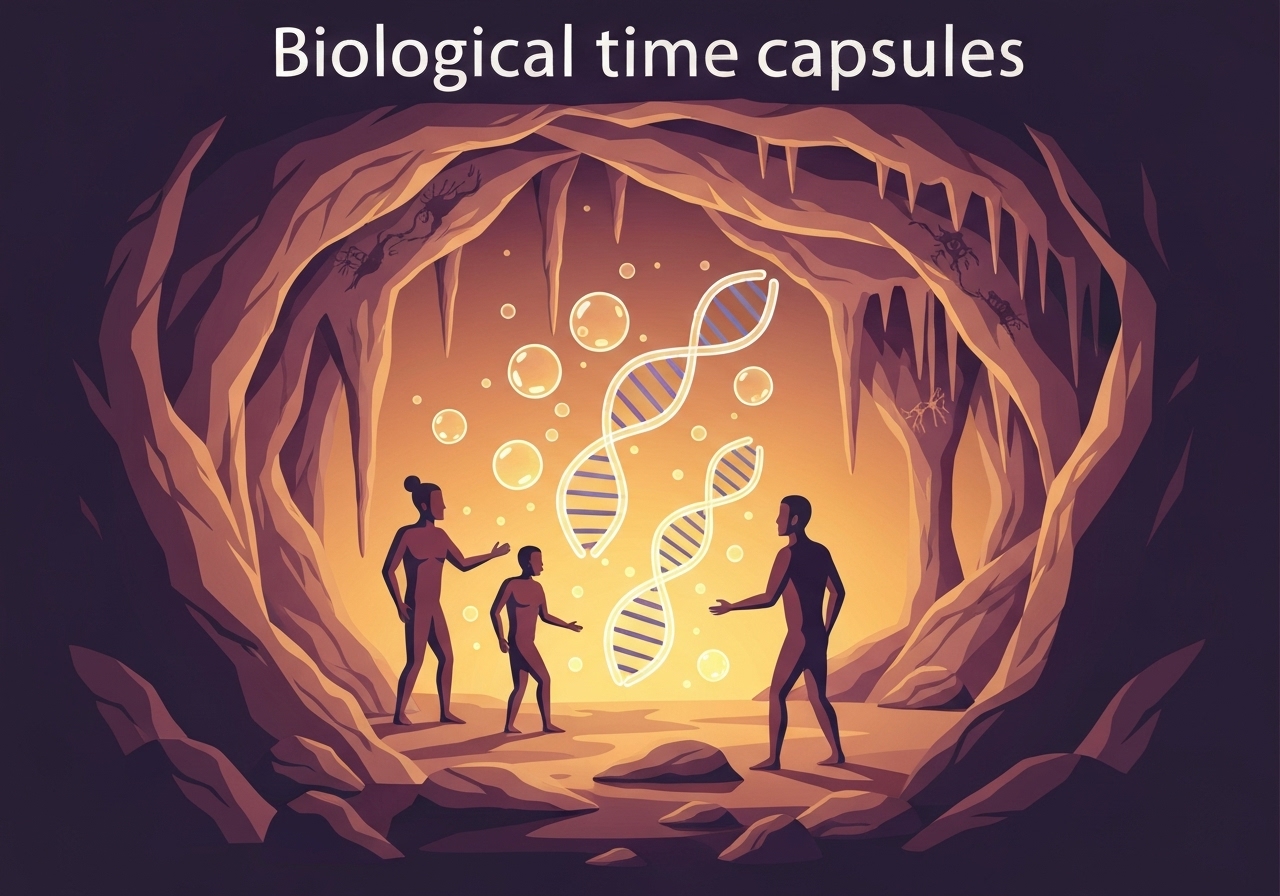
Lead: Researchers at the Geogenomic Archaeology Campus Tübingen (GACT) are extracting ancient DNA from sediments in Hohle Fels cave, Germany, to reconstruct who and what occupied ice‑age Europe. Over recent decades lab automation and next‑generation sequencing have transformed sedimentary DNA into a tool that can detect animals, microbes and human traces spanning tens of thousands to millions of years. Early findings include DNA from a cave hyena dated to about 40,000 years ago and comparisons with much older sedimentary DNA such as 2‑million‑year samples from Greenland. The program aims to clarify when Neanderthals and modern humans used the same caves and to map ecosystem changes driven by climate and people.
Key takeaways
- GACT researchers are processing hundreds of sediment samples from Hohle Fels (Swabian Jura, Germany) using multidisciplinary methods that include clean‑room extraction and robotic workflows.
- Sequencing technologies now read up to hundreds of millions times more DNA than early machines; whole‑genome throughput that once took years can be done in days.
- A cave hyena coprolite DNA signature dating to roughly 40,000 years ago has been recovered from Hohle Fels sediments, illustrating faunal signals preserved in cave deposits.
- The oldest sediment DNA reported to date comes from Greenland and is about 2 million years old — showing exceptional long‑term preservation in some contexts.
- GACT combines archaeology, geoscience, microbiology and bioinformatics; international fieldwork this year included several hundred samples from Serbian caves, with future campaigns planned for South Africa and the western United States.
- Authentication requires detecting ancient damage patterns, eliminating modern contamination, and using specialized bioinformatics; every confirmed identification is analytically demanding.
- Researchers expect to recover cave bear genomic fragments, earlier human traces, and complex microbial communities as sample processing scales up.
Background
Over the past twenty years paleogenetics has moved from low‑yield curiosity to a high‑throughput discipline. Early milestones include sequencing an extinct quagga relative in 1984 and, more recently, the awarding of the 2022 Nobel Prize in Physiology or Medicine to Svante Pääbo for work that underscored ancient DNA’s role in understanding human evolution. Those technological advances—improvements in sequencing, lab automation and bioinformatics—made it feasible to recover even tiny fragments of DNA trapped in cave sediments rather than relying solely on bones.
Caves such as Hohle Fels in the Swabian Jura (a UNESCO World Heritage area) accumulate layered deposits over tens of millennia. Stable, sheltered conditions slow chemical degradation and allow fragile biomolecules to survive. As a result, sedimentary deposits become “biological time capsules,” preserving signals from humans, prey species, predators and microbes that lived and interacted in and near the caves.
Main event
At Hohle Fels, GACT’s workflow divides samples between clean‑room molecular labs and geochemical facilities to build parallel records. Some subsamples undergo ultra‑clean extraction and robotic handling to limit contamination; others are analyzed for stratigraphy, sediment chemistry and taphonomic context. This joint approach allows teams to link DNA signals to dated layers and archaeological materials such as stone tools and ivory fragments.
The team has already identified DNA consistent with cave hyena droppings dated to around 40,000 years ago, demonstrating how animal behavior leaves molecular traces. Sedimentary DNA also recovers signals of predators that hauled prey into caves and of human waste and activity, expanding the archive beyond what bones and artifacts alone record.
Fieldwork in 2024 extended beyond Germany: GACT collaborators collected several hundred sediment samples in Serbia this summer, with plans to test preservation limits in South Africa and the western United States. Each environment poses distinct challenges for DNA survival; the project’s cross‑regional design is intended to map those constraints and identify contexts most likely to yield ancient molecular data.
Analysis & implications
Recovering authentic ancient molecules from sediments is technically exacting. Ancient fragments tend to be short and chemically damaged; modern contamination from recent visitors and wildlife is omnipresent. Laboratories rely on characteristic molecular damage patterns, ultra‑clean facilities and bespoke bioinformatics filters to separate genuine ice‑age molecules from modern noise. Because of these hurdles, positive identifications are conservative but robust when damage signatures and stratigraphic consistency align.
For human evolution studies, sediment DNA offers a complementary record to bones and tools. It can detect hominin presence in layers where no skeletal remains survive, improving temporal and spatial resolution of site occupation. That capability can help resolve whether Neanderthals and Homo sapiens used specific caves contemporaneously or at distinct times, and whether their presence correlated with ecological shifts visible in faunal and microbial DNA.
Ecologically, sedimentary DNA provides a long‑term view of community composition and extinction patterns. Tracing predators, prey and microbes across layers can reveal cascading effects of climate change and human activity. Those reconstructions feed into contemporary biodiversity discussions by showing which ecosystems were resilient, which collapsed, and what novel combinations of species arose after major environmental change.
Comparison & data
| Signal | Age / date |
|---|---|
| Oldest reported sediment DNA (Greenland) | ~2,000,000 years |
| Cave hyena DNA from Hohle Fels sediments | ~40,000 years |
| Quagga (extinct equid) genome sequencing milestone | 1984 (first extinct animal genome) |
| Svante Pääbo Nobel Prize recognizing paleogenetics | 2022 |
The table highlights the range of time scales accessible to sedimentary DNA work, from multi‑million‑year records in exceptional Arctic settings to late Pleistocene signals preserved in temperate caves. Contextual data—stratigraphy, radiometric dates and sediment chemistry—remain essential for interpreting molecular signals and avoiding false temporal assignments.
Reactions & quotes
GACT team members emphasize the method’s potential while noting technical limits. Below are selected, concise remarks with context.
“Sediments let us detect occupations and species that leave no bones; each verified signal opens new questions,”
GACT researcher
This reflects the team’s focus on integrating archaeological context with molecular evidence to expand the site‑level record.
“Automation and damage‑pattern analysis are game‑changers for credibility in ancient DNA,”
Independent paleogeneticist
Outside specialists underline that robotics and bioinformatics are crucial to separate ancient fragments from modern contaminants.
“World Heritage caves like Hohle Fels preserve unique archives of human‑ecosystem interaction,”
Heritage scientist
Heritage experts stress that archaeological protection and careful sampling are required to balance research and conservation.
Unconfirmed
- Whether specific Hohle Fels layers will yield complete genomes for cave bears or early humans remains unconfirmed and depends on preservation quality in individual deposits.
- The degree to which Neanderthals and Homo sapiens occupied the same cave chambers contemporaneously at Hohle Fels is still under investigation and not yet demonstrated by overlapping authenticated DNA signatures.
- Predictions that sediment DNA will recover exhaustive ecological networks for every site are speculative; recovery is patchy and context‑dependent.
Bottom line
Sediments beneath cave floors are proving to be rich reservoirs of ancient biological information, capable of extending the fossil and artifact record with molecular traces of people, animals and microbes. GACT’s multidisciplinary approach—combining careful field sampling, lab automation and rigorous bioinformatics—aims to convert those traces into reliable reconstructions of ice‑age ecosystems and human behaviour.
Technical challenges remain: fragmentary molecules, contamination risk and variable preservation mean results must be interpreted conservatively. Still, as sequencing throughput and analytical methods improve, sedimentary DNA will increasingly fill gaps left by traditional archaeology and paleontology, offering a more continuous picture of past life and its responses to climatic and cultural change.