
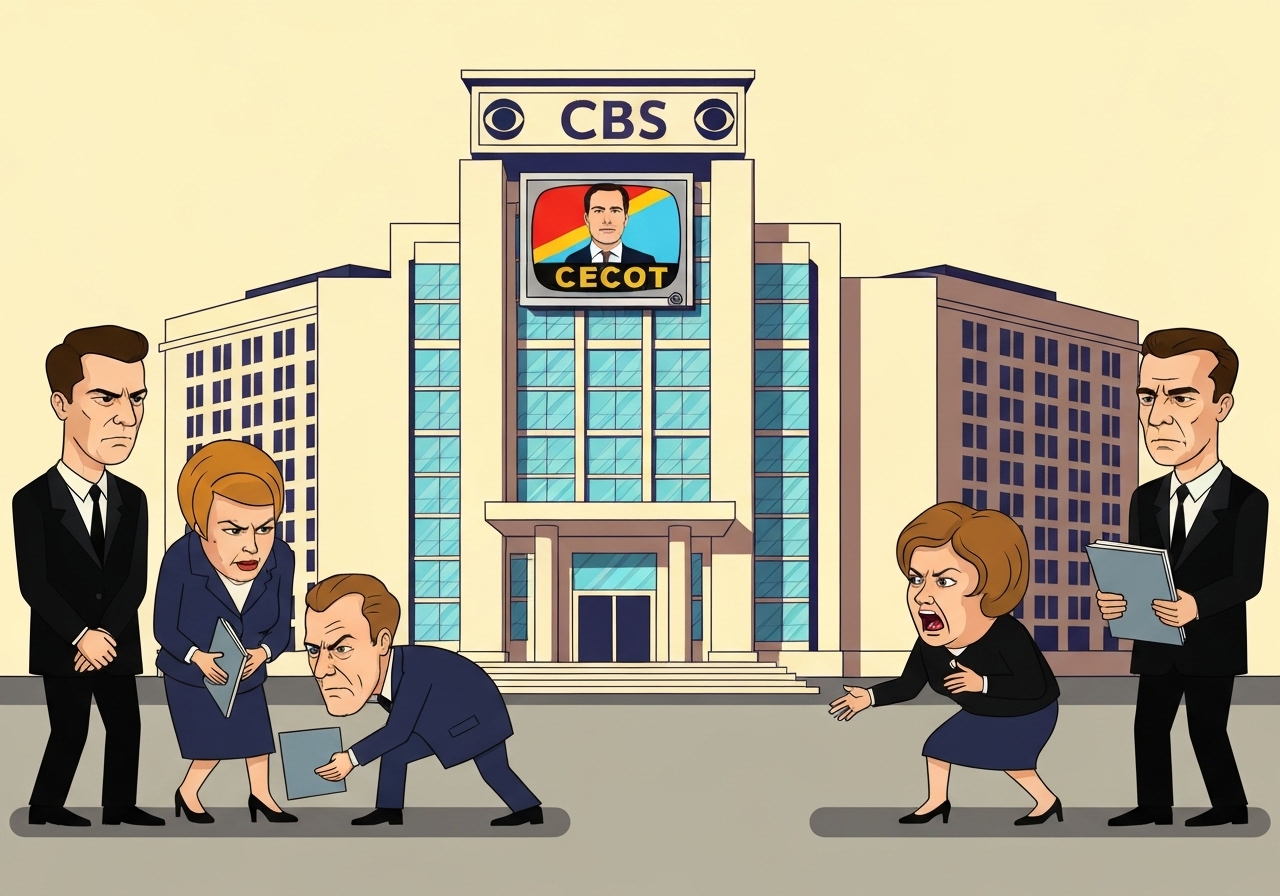
On Dec. 21, 2025, CBS News pulled a planned ’60 Minutes’ segment by correspondent Sharyn Alfonsi that contained interviews with Venezuelan men deported to the CECOT maximum‑security prison in El Salvador. The abrupt decision, disclosed internally and reported publicly, sparked unrest inside the program: staffers say some have threatened to resign and at least one correspondent warned the move could be seen as corporate censorship. CBS told reporters the piece required additional reporting; Alfonsi and multiple CBS staffers contend the report had cleared legal and editorial reviews and was ready to air. The dispute has amplified broader concerns about editorial independence under new ownership and leadership changes at the network.
- CBS pulled the piece after promoting it Friday; internal sources say the segment had been screened five times and cleared by CBS attorneys and Standards and Practices.
- Correspondent Sharyn Alfonsi told colleagues in a memo that the decision amounted to corporate censorship and argued the administration’s refusal to comment should not veto reporting.
- Bari Weiss, CBS News editor‑in‑chief, raised questions Saturday morning; sources say one issue was the absence of a response from the Trump administration.
- CBS publicly said the story “needed additional reporting,” while Alfonsi maintained it was factually correct and fully vetted.
- The move comes after a late‑2024 lawsuit by former President Trump against CBS/Paramount and during a period of ownership changes that included David Ellison assuming control and acquiring Bari Weiss’s Free Press for $150 million.
- President Trump posted criticism of ’60 Minutes’ on Dec. 8 and Dec. 16, 2025, and the timing of his most recent complaint coincided with the internal controversy over the piece.
- CBS had promoted the report under the title “INSIDE CECOT” and said Alfonsi interviewed released deportees who described brutal conditions inside the facility.
Background
The segment focused on Venezuelan migrants whom U.S. authorities deported to El Salvador, where the detainees say they endured harsh conditions at CECOT, a high‑security prison. Reporting on deportations and detention practices has been a flashpoint in U.S. coverage of immigration policy, tying domestic enforcement decisions to conditions in receiving countries. ’60 Minutes’ has a long history as a high‑profile investigative program; its methods typically include multiple legal and editorial reviews before broadcast. The recent change in Paramount/CBS ownership and the installation of Bari Weiss as editor‑in‑chief followed corporate negotiations and settlements connected to prior litigation involving the program, adding a layer of corporate governance context to newsroom concerns.
Late in 2024, former President Donald Trump sued CBS and its parent company, then under different leadership, over a Kamala Harris interview; the suit and its settlement negotiations became a point of anxiety inside the newsroom. David Ellison later assumed control of Paramount, completed the acquisition of Weiss’s Free Press for $150 million, and placed Weiss in the editorial post. That sequence — lawsuit, ownership transition, acquisition of a newsroom veteran’s startup, and a new editor‑in‑chief — has prompted some journalists to question whether editorial decisions will be insulated from commercial or political pressures.
Main Event
The story at the center of the dispute was produced by Sharyn Alfonsi and, according to multiple CBS staffers, underwent extensive checks, including five screenings and legal vetting, before the network announced the segment Friday afternoon. The program promoted the item under the banner “INSIDE CECOT,” describing interviews with deported men who recounted torture and brutality. Sources tell reporters that Bari Weiss raised substantive concerns Saturday morning, most notably that the Trump administration had not answered interview requests and had declined to provide comment.
Staff accounts say Weiss urged further work to secure responses from the Department of Homeland Security, the White House, and the State Department; one staffer said Weiss suggested contacting White House deputy chief of staff Stephen Miller and provided his number. Alfonsi responded in an internal memo arguing that the administration’s silence should not be permitted to function as a veto over reporting and that the story’s sources had risked their safety to speak on the record. CBS publicly stated the segment required additional reporting; Alfonsi and several colleagues disputed that claim, saying the piece had already met internal standards.
The decision triggered immediate internal pushback, according to staffers who spoke on condition of anonymity. Some employees described the action as politically motivated and said it had damaged trust in leadership; others were more measured, describing it as an editorial judgment that could be revisited. Amid the dispute, President Trump intensified public criticism of ’60 Minutes’ on social platforms, and staffers noted the coincidence between his posts and the timing of the internal decision. At least one correspondent warned that pulling the segment after full clearance amounted to dismantling long‑standing editorial processes.
Analysis & Implications
The episode raises core questions about newsroom independence at a moment of ownership change. If a news outlet’s leadership intervenes late in the editorial process to withhold a vetted investigation, it risks creating a chilling effect: reporters may self‑censor or avoid stories that could upset corporate stakeholders or politically powerful figures. That outcome would reduce the newsroom’s capacity to pursue adversarial reporting, particularly on immigration and national security, where government nonresponse is common.
From a legal and reputational standpoint, CBS faces competing risks. Airing an investigation without responses from implicated officials can invite criticism for incomplete coverage; conversely, declining to publish after internal clearance can appear as capitulation to political pressure and undermine audience trust. The prior lawsuit and settlement discussions amplifying concern over owner influence heighten the reputational stakes. For investigative programs like ’60 Minutes,’ perceived loss of autonomy could weaken the brand value that distinguishes long‑form television reporting.
Operationally, staff departures or public dissent among prominent correspondents would be immediately visible and damaging. Threats to quit — even if limited in number — signal damaged internal morale and can accelerate talent loss. The dispute may also have market implications: advertisers and partners track editorial stability, and continued allegations of interference could affect distribution or licensing negotiations tied to parent‑company transactions. Finally, the broader news ecosystem watches such episodes closely because they set informal precedents for other outlets navigating owner, advertiser, or political pressure.
Comparison & Data
| Process element | Typical practice at major networks | What sources describe for this story |
|---|---|---|
| Number of screenings | 2–3 editorial/legal reviews | 5 screenings cited by staff |
| Legal/Standards sign‑off | Yes, before air | Staff say legal and Standards cleared the piece |
| Owner/Editor involvement | Occasional high‑level review | Reported personal intervention by editor‑in‑chief |
The table summarizes differences staffers reported versus typical practice. Multiple internal screenings can be normal for high‑risk reporting, but the five‑screening figure and a late‑stage leadership intervention are out of the ordinary by those accounts. That procedural divergence is central to why employees described the action as extraordinary and, in some cases, politically motivated.
Reactions & Quotes
Colleagues and leaders offered brief public lines that reflect the dispute’s competing claims. Each statement has circulated in press reports and internal messages, and they illuminate the core tension between editorial readiness and leadership caution.
“We determined it needed additional reporting.”
CBS News (official statement)
CBS released a concise public line saying the segment required further reporting; the network framed the decision as editorially driven and routine, not political. That statement followed internal messages and reporting that described deeper disagreement over whether the story had already satisfied legal and editorial checks.
“These men risked their lives to speak with us.”
Sharyn Alfonsi (correspondent)
In an internal memo, Alfonsi invoked the obligation journalists have to protect and report victims’ accounts, arguing that abandoning the piece would betray sources who had spoken under risk. Her memo framed the administration’s silence as a tactical effort to stifle coverage and called the pull a political, not editorial, act.
“My job is to make sure that all stories we publish are the best they can be.”
Bari Weiss (editor‑in‑chief, statement to The New York Times)
Weiss, responding publicly, emphasized routine editorial oversight and the responsibility to withhold stories that lack sufficient context or voices. She indicated the piece will air when the newsroom and leadership agree it meets that standard.
Unconfirmed
- Whether Bari Weiss first viewed the segment before or after the Friday promotion remains unclear and unverified by on‑the‑record timelines.
- The extent and number of staff who have formally threatened to resign has not been independently confirmed beyond anonymous accounts.
- Alfonsi’s assertion that the administration’s silence was a deliberate tactic to ‘kill’ the story is a claim about motive that is not independently proven.
- Reports that Weiss provided Stephen Miller’s number are based on anonymous staff accounts and have not been corroborated by on‑the‑record sources.
Bottom Line
The dispute over the shelved ’60 Minutes’ segment crystallizes tensions at the intersection of investigative journalism, corporate ownership, and political pressure. If internal decisions consistently allow nonresponse from powerful actors to delay or block reporting, the practical effect would be a narrower public discourse and weaker accountability journalism. Conversely, hastily airing complex investigations without opportunities to address gaps can create real legal and ethical risks.
For CBS, the near‑term task is procedural and reputational: establish a transparent record of why the piece was held, articulate the steps necessary to resolve editorial gaps, and rebuild internal trust so reporters can pursue high‑risk stories without fear of arbitrary interference. Observers inside and outside journalism will watch whether the segment is reworked and broadcast, how many staff follow through on threats to leave, and whether new ownership clarifies its role in editorial decision‑making.