
Lead
Rescue teams said Saturday they have detected “signs of life” in the rubble of a massive garbage avalanche that struck a landfill in the village of Binaliw, Cebu City, on Thursday. The collapse has killed at least four employees of the waste facility and left more than 30 people listed as missing, while 12 others were pulled out with injuries. City officials said they will intensify careful excavation, bringing a 50-ton crane under police escort to reach potential survivors. Authorities warned that unstable debris and combustible materials make the recovery operation hazardous and slow.
Key Takeaways
- At least four people have died and more than 30 remain missing after a garbage mound collapsed at a landfill in Binaliw, Cebu City, on Thursday.
- Twelve workers were rescued with injuries from the site; the landfill employs about 110 staff, officials said.
- Rescuers reported detected “signs of life” in specific areas, prompting the deployment of a 50-ton crane to support excavation.
- Cebu City Mayor Nestor Archival emphasized responder safety, citing risks including unstable debris and acetylene hazards that have altered the security perimeter.
- Initial victim counts Friday listed two dead and 36 missing; officials revised the confirmed dead to four by Saturday but did not provide an updated missing total.
- A survivor, 31-year-old office worker Jaylord Antigua, described the collapse as instantaneous and said he escaped by crawling through darkness in the debris.
- Local leaders are preparing contingency plans for garbage collection and disposal after the facility incident, but details remain limited.
- The Philippines has a precedent for deadly dumpsite collapses: a July 2000 Quezon City disaster caused more than 200 fatalities and spurred national regulations on illegal dumpsites.
Background
Open dumpsites and large unlined landfills remain a persistent safety and public-health concern across the Philippines, particularly where informal waste pickers and low-income communities live near disposal sites. Many such facilities were established decades ago with limited engineering controls, creating steep, unstable waste slopes that can fail without clear external triggers. Urban growth, inadequate municipal budgets for integrated waste management, and informal recovery economies have combined to keep hazards at these sites high.
Legislative and regulatory responses have followed past catastrophes: after a July 2000 mound collapse in Quezon City that killed more than 200 people, national authorities moved to close illegal dumpsites and encourage more structured waste management. Nonetheless, enforcement and investment vary by locality, and large-volume landfills can still reach tipping points when loads, decomposition gasses or other factors undermine slope stability. Stakeholders include municipal authorities, landfill operators, emergency services, and thousands of informal scavengers whose livelihoods depend on access to waste piles.
Main Event
The event unfolded Thursday at a waste management facility in Binaliw village, where a high mound of refuse collapsed across low-slung buildings that house administrative offices and work areas. The slide struck without warning according to survivors; one, Jaylord Antigua, said the wall of garbage cascaded down and destroyed the office where he was working. He escaped with bruises after crawling through rubble and darkness, later describing the experience as traumatically close to death.
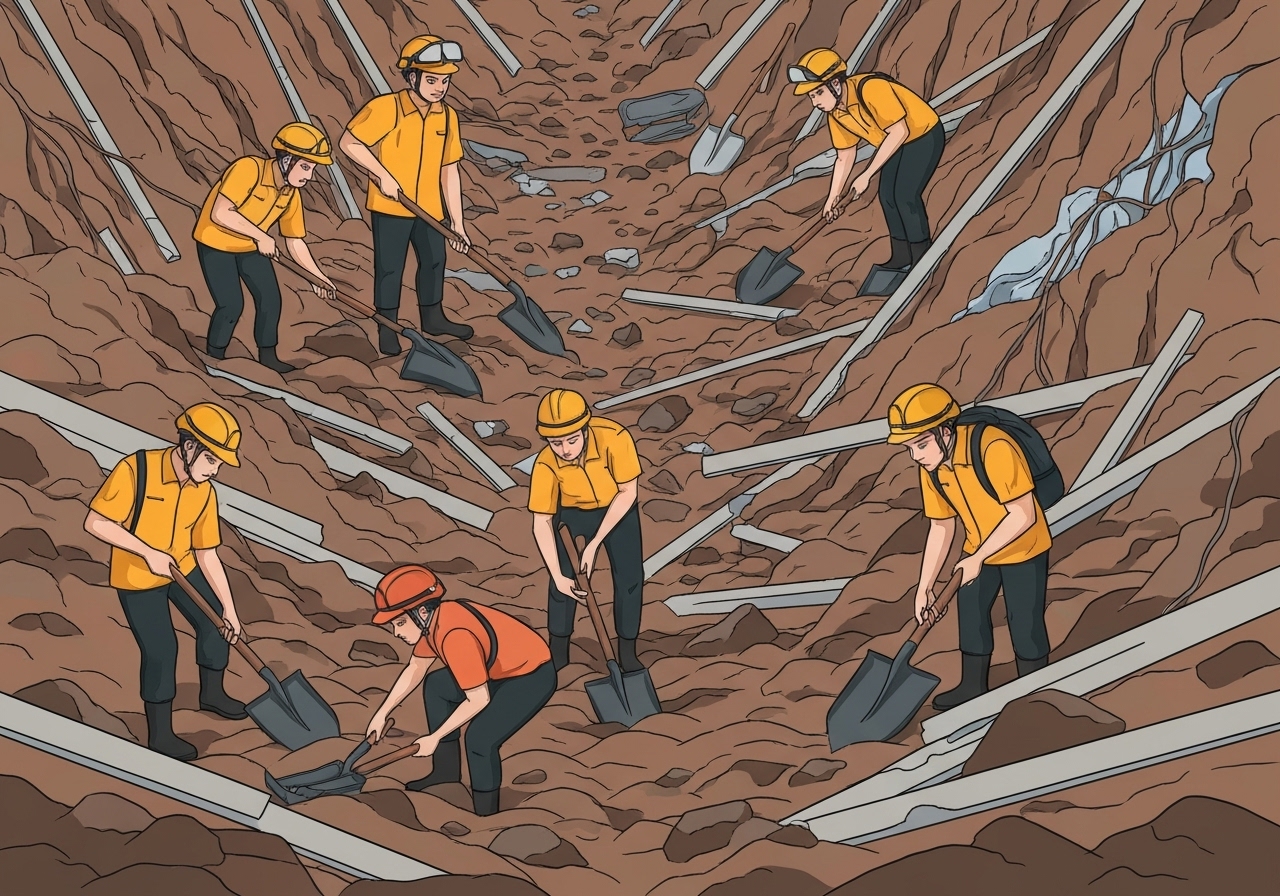
Rescue operations from Friday into Saturday involved police, firefighters and disaster-response teams working amid twisted tin roofs, exposed rebar and highly combustible material. Officials reported locating areas with detected signs of life, which prompted plans to use a more powerful 50-ton crane to lift and remove heavy loads of compacted waste. The crane was being escorted to the site by police to reach locations that smaller equipment could not safely access.
Cebu City Mayor Nestor Archival said the safety of responders is the foremost concern, noting hazards such as unstable debris and acetylene risks that required adjustments to the security perimeter and controlled access. The facility employs about 110 people; among the four confirmed dead were an engineer and a female office worker, according to the mayor and police. Authorities said they were also preparing for potential disruptions to local garbage collection, although specifics on contingency measures remained sparse.
Analysis & Implications
The collapse underscores persistent infrastructure and governance challenges in municipal solid-waste management across many Philippine localities. Facilities that lack slope stabilization, gas-venting systems and controlled access can become acute liabilities as waste volumes increase and decomposition alters internal stresses. The human cost is amplified where workers and informal scavengers operate close to unstable piles without comprehensive safety protocols or early-warning systems.
Public-health and environmental risks extend beyond immediate casualties. Burning or smoldering refuse can emit toxic smoke; ruptured containers and shifted materials can release leachate into nearby soils and waterways. The mention of acetylene and other combustible hazards heightens the risk profile for both rescuers and surrounding neighborhoods, complicating the pace of recovery and cleanup operations.
From a policy perspective, the incident may accelerate calls for investment in engineered landfills, separation-at-source programs, and safer livelihoods for waste pickers through formalization or social-protection measures. Budgetary constraints at municipal levels and the political difficulty of siting and funding modern waste facilities mean reforms will face practical hurdles, but a high-profile collapse often increases political pressure for change.
Comparison & Data
| Event | Year | Confirmed dead | Missing | Notable outcome |
|---|---|---|---|---|
| Binaliw landfill collapse (Cebu City) | 2024–2026 (reported Thursday/Saturday) | 4 | More than 30 | 50-ton crane deployed; rescue ongoing |
| Quezon City dumpsite collapse | 2000 (July) | More than 200 | Many | Prompted closures of illegal dumpsites and regulatory changes |
The table provides a concise comparison to the 2000 Quezon City disaster, which had far higher fatalities and led to national policy responses. While the current incident’s confirmed fatalities are lower, the number of missing and the dangers posed by combustible materials and unstable debris justify slower, more cautious search-and-recovery work. Officials must balance rapid rescue attempts with responder safety to avoid additional casualties.
Reactions & Quotes
City officials and rescuers described operations as cautious and deliberate because of the site’s hazards. The mayor emphasized measured action while acknowledging the urgency of finding survivors.
“Authorities confirmed the presence of detected signs of life in specific areas, requiring continued careful excavation and the deployment of a more advanced 50-ton crane, which is enroute with police escort.”
Nestor Archival, Cebu City Mayor (official statement)
Rescue teams on the ground described a perilous working environment of unstable refuse and damaged structures that forced changes to access and equipment use.
“Safety of responders remains paramount due to hazards such as unstable debris and acetylene risks, prompting adjustments to the security perimeter and controlled access.”
City rescue coordination team (field briefing)
A survivor provided a first-hand account of the collapse, underlining how quickly the event occurred and why rapid but careful search efforts are crucial.
“I saw a light and crawled toward it in a hurry, because I feared there will be more landslides. It was traumatic. I feared that it was my end, so this is my second life.”
Jaylord Antigua, 31-year-old survivor
Unconfirmed
- The precise technical cause of the collapse remains unconfirmed; investigators have not publicly released a final root-cause analysis.
- Officials had not released an updated, consolidated count of how many people remain missing as of Saturday; reported figures rose from 36 missing on Friday to “more than 30” by Saturday.
- The full impact on Cebu’s municipal garbage collection and timelines for restoring normal disposal operations have not been finalized.
Bottom Line
The Binaliw landfill collapse in Cebu City is a stark reminder that legacy waste sites can present sudden and deadly risks when structural, operational and safety systems are inadequate. While rescuers have detected signs of life and deployed heavier equipment to reach survivors, the combination of unstable debris and combustible materials means operations will remain slow and hazardous.
Beyond the immediate emergency, the event is likely to renew scrutiny of local waste-management practices, the safety of landfill workers and scavengers, and municipal contingency planning for waste collection. Policymakers and municipal managers will face pressure to accelerate investments in engineered facilities and protective measures for vulnerable workers and communities.