
Lead
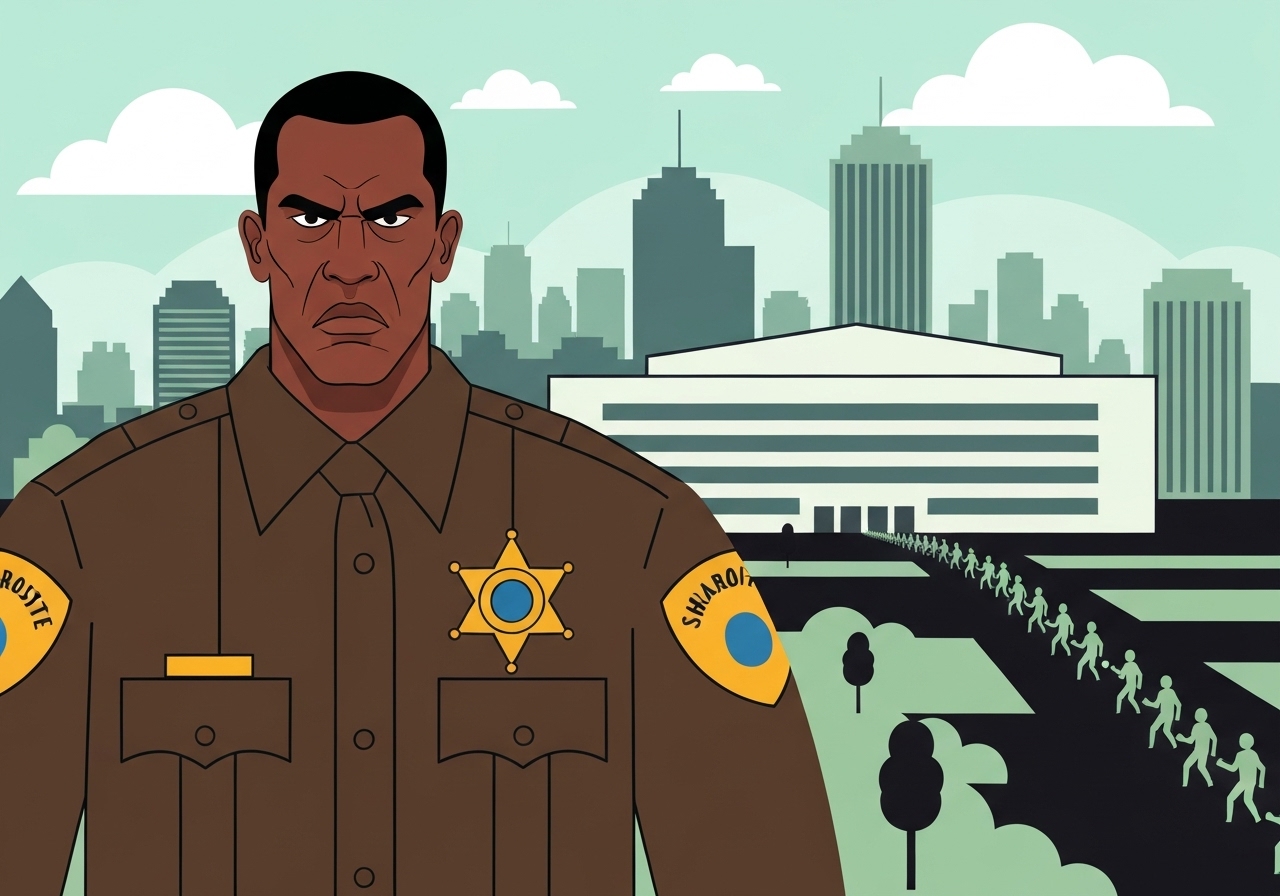
Mecklenburg County Sheriff Garry McFadden said Thursday that two federal officials told him U.S. Customs and Border Protection (CBP) agents could begin an enforcement operation in Charlotte, North Carolina, as early as this weekend or early next week. The sheriff’s office declined to identify the officials and said it has not been asked to assist. The Department of Homeland Security declined to describe future operations. Local leaders and advocates are mobilizing information and mutual‑aid networks amid growing concern in the city.
Key Takeaways
- Two federal officials reportedly told Sheriff Garry McFadden that CBP agents may start enforcement in Charlotte Saturday or early next week.
- Charlotte is home to more than 150,000 foreign‑born residents and has a population that is about 40% white, 33% Black, 16% Hispanic and 7% Asian.
- Local organizers say nearly 500 people joined a call organized by CharlotteEAST to prepare mutual aid and share resources for immigrants.
- The Charlotte‑Mecklenburg Police Department stated it has no authority to enforce federal immigration laws and is not involved in planning the operation.
- Federal operations elsewhere expanded rapidly: Operation Midway Blitz in the Chicago area began in early September and has resulted in more than 3,200 arrests across the region.
- Community groups organized “know your rights” trainings and canceled some public events, citing fears of enforcement and family separation.
Background
The Trump administration has publicly defended sending immigration agents and federal personnel into Democratic‑led cities such as Los Angeles and Chicago, framing those deployments as part of a broader crime and deportation effort. Officials point to recent violent incidents — including the fatal stabbing of Ukrainian refugee Iryna Zarutska on a Charlotte light‑rail train — when arguing for expanded enforcement; a man with a lengthy criminal record has been charged in that murder.
Earlier this month a CBP‑led initiative, dubbed Operation Midway Blitz, began in the Chicago area and was later expanded from suburban ICE arrests to include hundreds of CBP agents in urban neighborhoods. That operation, led in part by Border Patrol chief Gregory Bovino, arrested more than 3,200 people suspected of immigration violations across the region. Local leaders in those cities criticized the sweep as heavy‑handed and disruptive to community policing.
Main Event
On Thursday Sheriff Garry McFadden issued a statement saying two federal officials confirmed plans for CBP to start enforcement activity in Charlotte Saturday or early next week; his office declined to name them. The sheriff added that his office had not been asked to assist and that details about the operation were not disclosed to county authorities. DHS Assistant Secretary Tricia McLaughlin declined to comment directly, stating that DHS enforces federal law nationwide but does not discuss potential future operations.
Local elected officials, faith leaders and immigrant‑rights groups immediately moved to inform residents. City Councilmember‑elect JD Mazuera Arias said a nearly 500‑person call organized by CharlotteEAST aimed to create a mutual‑aid network and share resources. CharlotteEAST executive director Greg Asciutto and other organizers urged immigrants to connect with support groups and attend “know your rights” briefings.
Activists and officials reported receiving unconfirmed sightings of plainclothes officers in neighborhoods and on transit, a pattern some compared to reports from Chicago during the Midway operation. State Sen. Caleb Theodros said the scene echoed earlier chaos seen in other cities targeted by the administration. Organizers canceled a Hispanic heritage festival and shifted in‑person training to virtual formats, citing enforcement fears and concerns about family separation.
Analysis & Implications
If CBP deploys agents in Charlotte as reported, the move will underscore the administration’s strategy of sending federal enforcement into major, Democratic‑run cities to highlight its public‑safety rationale while pursuing immigration removals. Such deployments create immediate tension between federal agencies and local jurisdictions that emphasize community policing and trust with immigrant residents. CMPD’s explicit statement that it will not enforce federal immigration laws signals a predictable legal and operational distance between local and federal authorities.
The likely effects on immigrant communities include heightened fear, reduced willingness to use public services or report crimes, and disruptions to workplaces and schools if large‑scale arrests occur. Organizers’ efforts to teach rights and create mutual‑aid networks are standard community responses, but they do not eliminate the legal and logistical consequences of enforcement actions, which can include detentions, removal proceedings and family separation.
Politically, the operation is likely to be framed differently by national actors: the administration will present it as crime‑fighting and law enforcement, while local officials and advocates will emphasize due process, local autonomy and humanitarian concerns. That dynamic could shape litigation, local policy responses, and messaging in upcoming political cycles. Economically, concentrated enforcement can strain legal aid, local social services and immigrant‑serving nonprofits, which already provide many support functions.
Comparison & Data
| Metric | Chicago Operation | Charlotte |
|---|---|---|
| Reported arrests | More than 3,200 | N/A (potential operation) |
| Foreign‑born residents | — | More than 150,000 |
| City racial composition | — | 40% white, 33% Black, 16% Hispanic, 7% Asian |
The Chicago operation’s scale — 3,200 arrests reported regionally — provides a reference point for potential outcomes if CBP expands similar tactics in Charlotte. Charlotte’s large foreign‑born population and diverse makeup mean impacts may be widespread across neighborhoods, transit systems and workplaces. Local organizations have started preparing volunteers and leaders to respond quickly to whatever timeline is announced.
Reactions & Quotes
Officials and advocates gave succinct public responses that reflect the split between federal posture and local concern.
“Every day, DHS enforces the laws of the nation across the country. We do not discuss future or potential operations.”
Tricia McLaughlin, DHS Assistant Secretary (official statement)
Context: DHS framed the matter as routine enforcement and declined to comment on future plans, which is consistent with previous refusals to preview enforcement actions.
“The purpose of this call was to create a mutual aid network.”
JD Mazuera Arias, City Councilmember‑elect (organizer comment)
Context: Local leaders are focusing on rapid community outreach, coordination of services and information sharing after reports of a possible imminent operation.
“They’re not always wearing vests that say ‘ICE.’”
Tony Siracusa, Indivisible Charlotte spokesperson (advocacy warning)
Context: Advocates warn residents to learn how to identify federal agents and understand their rights when approached, part of broader “know your rights” training efforts.
Unconfirmed
- The identities of the two federal officials who allegedly informed Sheriff McFadden have not been publicly confirmed by the sheriff’s office.
- The exact start date, scale, number of agents and operational tactics for the reported Charlotte enforcement are not publicly disclosed by DHS or CBP.
- Reports of plainclothes officers in neighborhoods and on transit are described by residents and leaders but have not been independently verified as federal personnel.
Bottom Line
The report that CBP may deploy an enforcement operation in Charlotte as early as this weekend heightens immediate uncertainty for a city with a large immigrant population and active grassroots support networks. Local authorities insist they are not assisting federal immigration enforcement, while advocacy groups are scaling trainings and mutual‑aid efforts to reduce harm and confusion among residents.
What to watch next: official confirmations from DHS or CBP about timing and scope; any requests from federal agencies for local cooperation; early reports of arrests or detentions; and responses from municipal leaders and courts. Community organizers’ preparedness and legal support resources will be critical to how residents experience and respond to any enforcement activity.
Sources
- Associated Press (news media report summarizing sheriff’s statement and local reaction)
- U.S. Department of Homeland Security (official federal agency page; government source)
- U.S. Customs and Border Protection (official agency site; government source)