
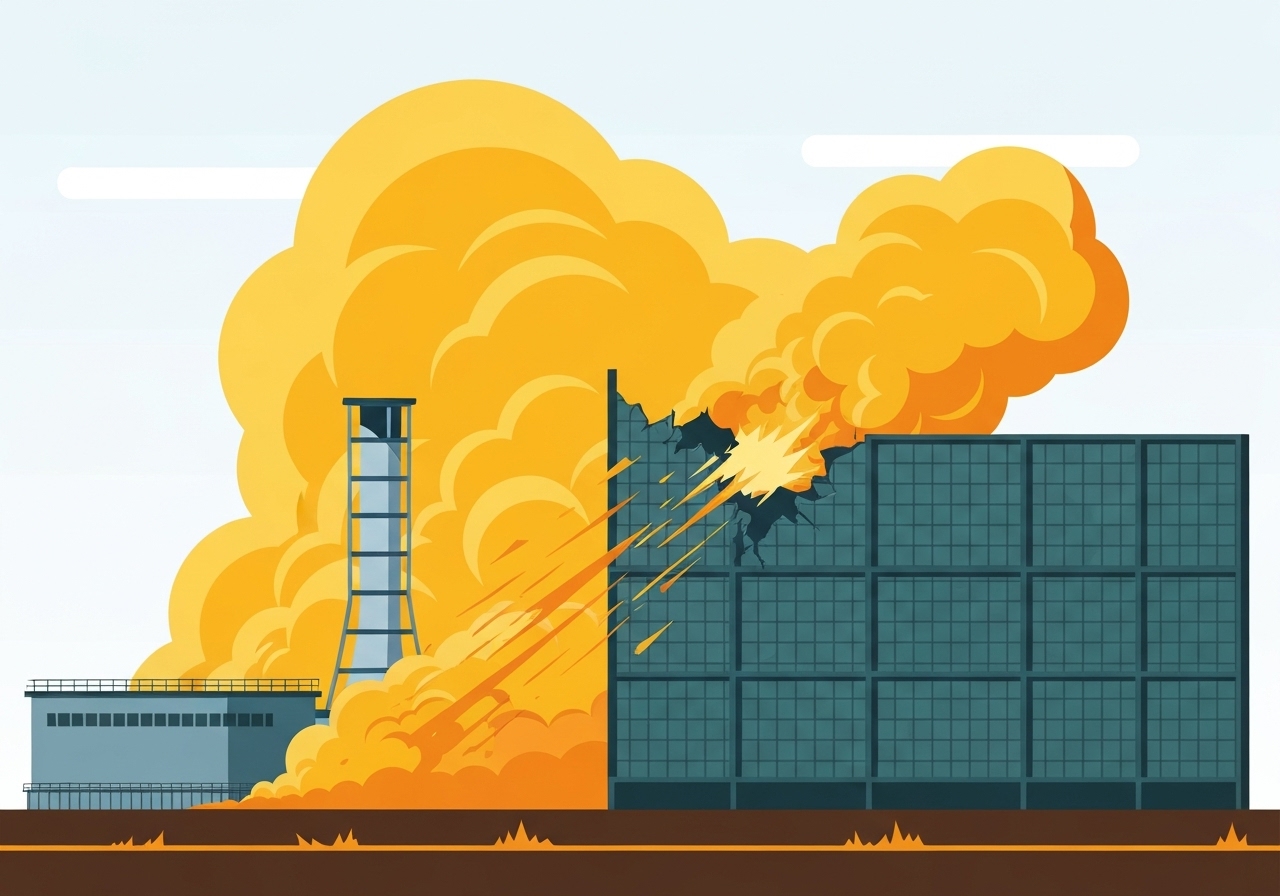
Lead: The International Atomic Energy Agency (IAEA) says the New Safe Confinement (NSC) at Chernobyl lost its primary ability to confine radioactive material after a drone strike on Feb. 14, 2025. The strike caused a fire and damaged the protective cladding, prompting the IAEA to call for a major renovation to avoid further degradation. Ukraine accused Russian forces of carrying out the attack; the Kremlin denied responsibility. The agency reports limited temporary roof repairs but says comprehensive restoration is essential to preserve long‑term safety.
Key Takeaways
- The NSC was hit by a drone strike on Feb. 14, 2025; the impact sparked a fire and damaged external cladding, according to the IAEA.
- The IAEA concluded the structure has “lost its primary safety functions, including the confinement capability,” and recommends major renovation.
- IAEA Director General Rafael Mariano Grossi said only limited temporary roof repairs have been done; no permanent damage to load‑bearing structures or monitoring systems has been reported.
- The NSC, an arch‑shaped steel shelter completed in 2019, was designed to last 100 years and cost €2.1 billion from more than 45 donor countries and organisations.
- Chernobyl’s No. 4 reactor exploded on April 26, 1986; more than 30 people died in nearby Pripyat, and health impacts persist, per the IAEA and WHO.
- Russian forces seized the plant in February 2022 during the early phase of the full‑scale invasion and left just over a month later; the site has remained a focal point during the conflict.
Background
The New Safe Confinement (NSC) was built to cover the ruined Unit 4 of the Chernobyl plant and to contain the radioactive inventory left after the 1986 accident. Planned and funded as an international effort, it was assembled over years and slid into position to allow dismantling and waste management operations beneath the arch. Donor funding—coordinated through the Chernobyl Shelter Fund and overseen by institutions including the European Bank for Reconstruction and Development—totalled about €2.1 billion.
Chernobyl’s 1986 explosion spread radioactive fallout across Ukraine, Belarus and parts of Russia and Europe; more than 30 immediate fatalities were recorded in Pripyat, and long‑term health studies show elevated rates of certain cancers and birth defects in the most exposed populations. The NSC was intended as a multi‑decade measure to limit releases while a permanent solution for the site is developed.
The conflict that began with Russia’s 2022 full‑scale invasion brought military activity to the exclusion zone. Russian forces took control of the plant in February 2022, detained staff for a period and then withdrew control just over a month later. The presence of active hostilities near a high‑risk nuclear legacy site raised warnings from international regulators from the outset.
Main Event
On Feb. 14, 2025, a drone strike struck the NSC, the IAEA said, igniting a fire and tearing the shelter’s outer cladding. The immediate operational priority was extinguishing the blaze and confirming the safety of personnel and monitoring systems. IAEA teams at the site assessed surface damage and the functioning of radiation detectors and other surveillance equipment.
According to the agency, temporary repairs have been carried out to parts of the roof to limit further weather‑related deterioration. However, the IAEA determined these fixes fall short of restoring the NSC’s full confinement capability, prompting a recommendation for a substantial restoration project to return the structure to its designed protective functions.
Ukrainian officials publicly accused Russia of carrying out the strike; the Kremlin has denied involvement. The attribution issue remains politically charged and relevant to any security measures for future work at the site, but the technical imperative identified by the IAEA is focused on structural remediation and radiological monitoring.
The IAEA said its on‑site staff will continue to support Ukrainian authorities and donor partners to plan and execute restoration work while maintaining surveillance to detect any changes in radiological conditions.
Analysis & Implications
The IAEA’s finding that the NSC has lost its primary confinement function does not, on its own, indicate a widespread radiological release occurred at the time of the strike. Loss of confinement capability means the structure can no longer be relied upon as the engineered barrier it was designed to be; even without immediate detachment of substantial material, exposure pathways are more credible now than before the damage.
Restoration will be technically complex and costly. The NSC is the world’s largest movable land structure and was engineered to allow controlled deconstruction beneath it. Repairing or retrofitting the archive arch needs skilled teams, specialised materials and secure access—challenges magnified when the site is near active hostilities or under threat of future attacks.
Financially, donors and international organisations face a choice between funding a high‑cost renovation or accelerating alternative long‑term strategies for waste isolation and site remediation. The €2.1 billion original price tag and the multilateral nature of construction mean political coordination will be required to mobilise new funds rapidly.
Regionally and globally, the incident reinforces concerns about operating nuclear legacy facilities in or near conflict zones. Even limited degradation of containment can complicate cross‑border radiological monitoring and emergency preparedness, prompting neighbouring states and international bodies to reassess contingency plans.
Comparison & Data
| Year | Event | Key detail |
|---|---|---|
| 1986 | Chernobyl Unit 4 explosion | April 26; >30 immediate deaths in Pripyat; widespread fallout |
| 2010–2019 | NSC construction and installation | Project completed 2019; designed for 100‑year life |
| 2025 | Drone strike on NSC | Feb. 14; fire and cladding damage; IAEA reports loss of confinement |
The table highlights the long timeline from disaster to engineered protection and the recent incident that has altered that protection. While the NSC was intended to allow decades of controlled work beneath the arch, damage to the external shell increases the urgency of remediation planning and raises questions about timelines for safe dismantling work.
Reactions & Quotes
IAEA leadership stressed the technical urgency of a full restoration to restore confidence in the shelter’s protective role.
“Timely and comprehensive restoration remains essential to prevent further degradation and ensure long‑term nuclear safety,”
Rafael Mariano Grossi, IAEA Director General (official statement)
The European Bank for Reconstruction and Development emphasised the NSC’s origin as a major international effort to stabilise the site.
“The NSC was the largest international collaboration ever in the field of nuclear safety,”
European Bank for Reconstruction and Development (donor statement)
Health agencies continue to underline the human consequences of the 1986 accident and the importance of robust monitoring.
“Birth defects and elevated cancer rates remain documented among populations exposed in 1986,”
World Health Organization / IAEA (health assessments)
Unconfirmed
- Attribution of the Feb. 14 drone strike remains disputed: Ukraine has accused Russia, while the Kremlin denies responsibility; independent forensic attribution has not been publicly released.
- The precise extent of any incremental radioactive release triggered by the strike has not been independently verified beyond the IAEA’s monitoring reports.
- Long‑term effects on subsurface waste handling plans and project timelines are projected but not yet fixed; detailed engineering assessments are pending.
Bottom Line
The IAEA’s assessment that the NSC no longer fulfills its primary confinement role marks a significant change in the technical status of the Chernobyl site. While immediate catastrophic release has not been reported, the loss of a reliable engineered barrier raises both operational and diplomatic challenges: restoration will require technical expertise, funding and secure access in a tense security environment.
For policymakers and neighbouring states, the incident underscores the fragility of nuclear legacy protections during armed conflict and the importance of multilateral coordination. The next steps—detailed damage surveys, donor mobilisation and secure reconstruction plans—will determine whether the site can be returned to its intended protective trajectory or if longer‑term containment strategies must be revised.
Sources
- CNN (news report summarising IAEA statement and reactions)
- International Atomic Energy Agency (IAEA) (official press releases and assessments)
- European Bank for Reconstruction and Development (EBRD) (donor oversight; project funding information)
- World Health Organization (WHO) (health assessments related to the 1986 accident)