
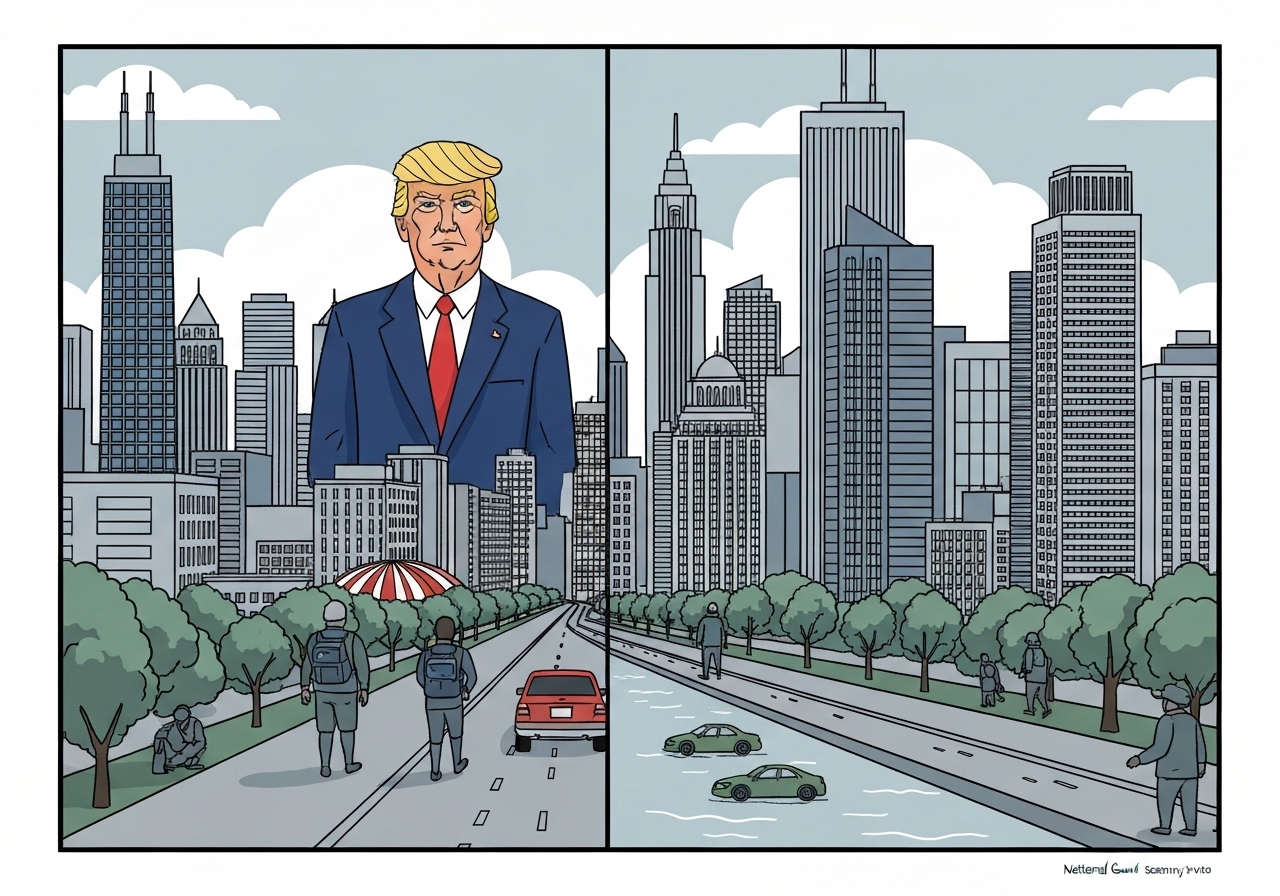
Who: President Donald Trump and Chicago communities; When: early September 2025 after the Labor Day weekend; Where: Chicago, Illinois; What: Mr. Trump said he may send National Guard troops to the city to tackle crime; Result: the announcement deepened divisions between residents, local leaders and police while crime data show mixed trends.
Key Takeaways
- President Trump signalled plans to send National Guard forces to a third U.S. city, naming Chicago as a possible target without specifying timing or details.
- Chicago saw at least 58 people shot and eight killed over the Labor Day weekend; a Bronzeville drive‑by left seven wounded near Chicago Police HQ.
- Local police data and a Council on Criminal Justice review show homicides fell: the homicide rate was down about one‑third between January and June year‑on‑year.
- Chicago Police Superintendent Larry Snelling noted last year’s homicide total fell by 125 and shooting victims dropped by more than 700, and stressed the Guard lacks arrest powers.
- Community groups such as Chicago CRED insist prevention and local intervention are already reducing violence; some neighborhoods, however, support a federal troop presence.
- Illinois Governor J.B. Pritzker and city officials have said they will resist any unilateral federal deployment.
Verified Facts
Over the Labor Day weekend, Chicago recorded at least 58 shooting victims and eight fatalities, including a multi‑victim drive‑by in Bronzeville where seven people were wounded within a block of Chicago Police headquarters. Those figures were cited publicly by President Trump as part of his justification for a potential National Guard deployment.
Independent trend data from the Council on Criminal Justice indicate the homicide rate in Chicago fell by roughly one‑third between January and June compared with the same period a year earlier. Chicago Police leadership reported that total homicides dropped by 125 last year and that shooting victims declined by more than 700.
Superintendent Larry Snelling told local media and officials that National Guard members do not possess standard police powers, including arrest authority, and that any use of the Guard would require close coordination with the Chicago Police Department.
Grassroots programmes remain active in hard‑hit neighborhoods. Chicago CRED, which runs mentoring and intervention classes for young men at risk of entering gangs, reported continued engagement with participants who have histories of arrests and shootings, and said community‑based work is aimed at reducing repeat violence.
Context & Impact
This announcement follows recent moves to deploy Guard units to other U.S. cities such as Los Angeles and Washington, D.C., and comes amid an election‑year debate over federal intervention in local public safety. The National Guard has been used in past domestic crises, but its role varies and is constrained by legal and operational limits.
City and state officials, including Governor J.B. Pritzker, have publicly rejected the president’s threat as an overreach and signalled they would resist deployment without clear justification and intergovernmental agreement. The dispute has become a flashpoint between federal and local authorities over crime policy and resources.
Advocates for federal assistance point to persistent high levels of violence in parts of Chicago and argue additional manpower could help address immediate threats. Opponents argue that long‑term reductions in violence require sustained funding for prevention programmes, enforcement targeting weapons trafficking and community investment—areas critics say have seen shortfalls.
Official Statements
“The National Guard does not have police powers. They don’t have the powers of arrest. There would have to be some serious coordination between the police department and the National Guard.”
Superintendent Larry Snelling, Chicago Police Department
“We will resist any improper federal overreach into state or local public safety decisions.”
Governor J.B. Pritzker
Unconfirmed
- The precise timing, size and operational plan for any National Guard deployment to Chicago have not been released by the White House.
- There is no confirmed evidence yet that a Guard deployment would produce sustained reductions in violent crime in Chicago.
Bottom Line
The president’s threat to send the National Guard has sharpened debate in Chicago between residents and officials who favour immediate federal help and those who urge investment in prevention and local policing strategies. Crime statistics show recent improvements on some measures, but persistent high levels of violence in parts of the city keep public safety at the center of political and community tensions.