
Lead
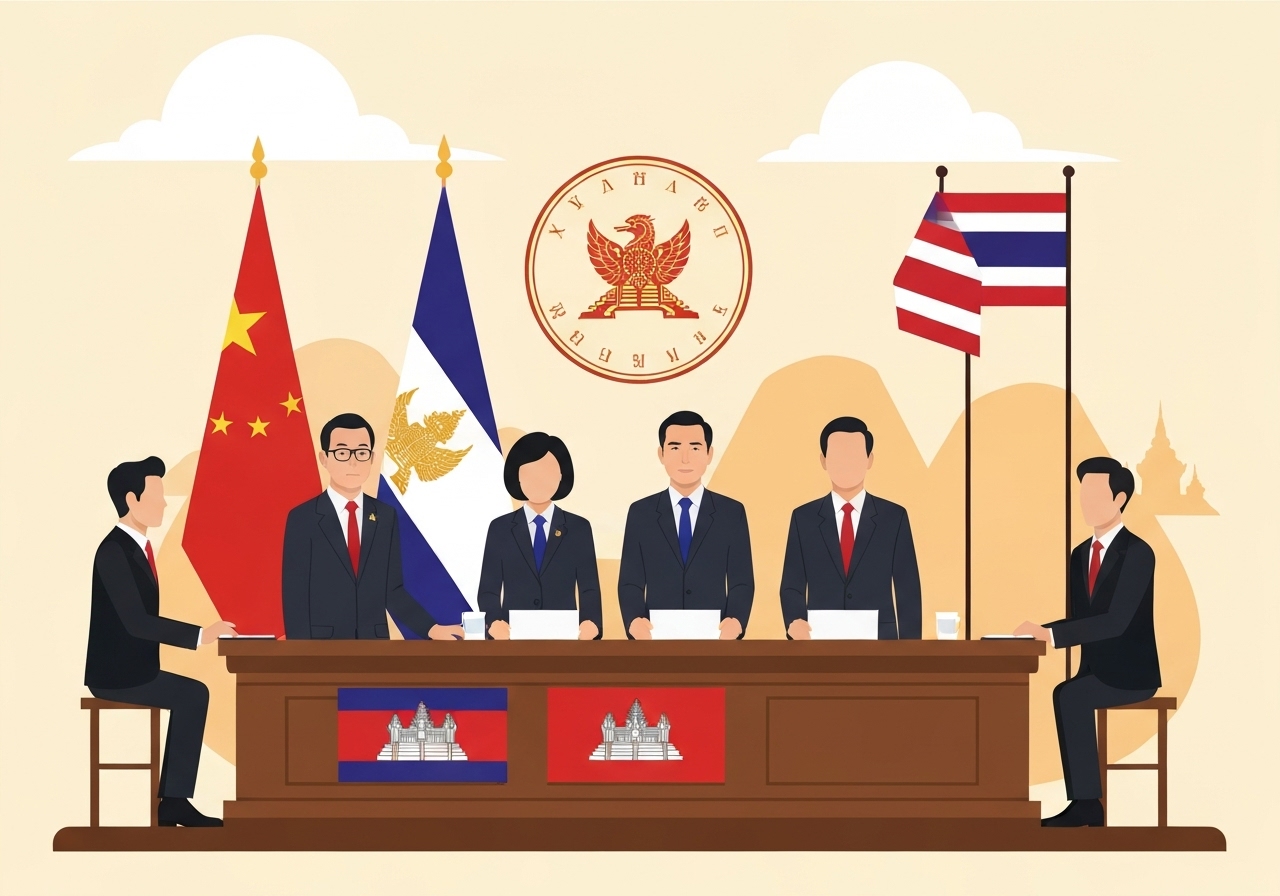
Top diplomats from China, Cambodia and Thailand met in Yunnan on Monday as Beijing sought to solidify a new ceasefire after weeks of deadly fighting along the two countries’ border. The talks came two days after Thailand and Cambodia signed a renewed truce meant to halt clashes that killed more than 100 people and displaced hundreds of thousands. Officials said the meeting aimed to sustain the ceasefire, begin trust-building steps and coordinate humanitarian assistance. China framed its role as a mediator and offered immediate aid for people forced from their homes.
Key Takeaways
- The trilateral meeting took place in Yunnan province, north of the contested Thailand–Cambodia border, two days after a fresh ceasefire was signed.
- More than 100 people have been reported killed in the clashes and hundreds of thousands evacuated on both sides of the border.
- The ceasefire agreement stipulates that Thailand will repatriate 18 Cambodian soldiers after 72 hours without new incidents.
- China pledged to help preserve the ceasefire, provide humanitarian assistance and promote step‑by‑step restoration of cross‑border ties.
- Participants agreed to intensify cooperation against transnational crimes, including telecom and online scams.
- Previous ceasefire efforts included a July preliminary pact brokered by Malaysia and an October follow-up; tensions persisted until renewed heavy fighting in early December.
Background
The border dispute between Thailand and Cambodia has deep historical roots tied to territorial claims, national sentiment and local rivalries. Sporadic clashes and a sustained propaganda campaign preceded a major escalation in early December, following months of low‑level incidents after earlier truces. A July ceasefire was brokered with outside help and a more detailed agreement followed in October, but distrust and isolated violence continued to undermine normalization.
Both capitals have domestic political pressures that make concessions sensitive: authorities must balance national pride and demands for security with the humanitarian cost of prolonged combat. Regional players and global powers have intermittently intervened to defuse tensions; Malaysia helped broker the July pause, and outside pressure—including diplomatic leverage—played a role in earlier agreements. China’s recent involvement represents another external attempt to stabilize the situation while expanding Beijing’s diplomatic footprint in Southeast Asia.
Main Event
The Yunnan meeting convened the foreign ministers of China, Cambodia and Thailand for two days of talks focused on cementing the ceasefire and charting immediate next steps. Chinese Foreign Minister Wang Yi urged collective efforts to promote regional peace and avoid a relapse into fighting, framing China’s role as supportive of stability and development. Thai Foreign Minister Sihasak Phuangketkeow emphasized the need to preserve momentum, saying progress had been made but that work remained to rebuild trust and ensure the truce holds.
Cambodian Foreign Minister Prak Sokhonn expressed confidence the latest ceasefire could endure and create space to resume agreed dispute‑resolution mechanisms. The three sides issued a joint statement, quoted by Chinese and Cambodian state outlets and the Thai foreign ministry, saying they had held in‑depth exchanges on keeping the ceasefire, restoring normal exchanges and cooperating on transnational crime issues.
The statement noted China was prepared to provide prompt humanitarian assistance to displaced residents and that the parties would take additional measures against crimes such as telecom and online fraud. Officials also highlighted practical steps: Thailand said it would repatriate 18 Cambodian soldiers if 72 hours passed with no new incidents, and would seek cooperation on the return of remaining Thai nationals in Poipet, Cambodia.
Analysis & Implications
China’s active facilitation of the Yunnan talks underscores Beijing’s aim to broaden its role as a regional mediator. Hosting the meeting in Yunnan — geographically closer to the conflict zone than Beijing — signaled a hands‑on approach and a desire to be seen as directly engaged with Southeast Asian security matters. For China, successful mediation would enhance its diplomatic stature and provide leverage in regional institutions and bilateral ties.
For Thailand and Cambodia, third‑party facilitation offers a way to de‑escalate without conceding core national claims. A durable ceasefire would reduce civilian suffering, allow displaced people to return home and create space for technical talks on border management, demining and prisoner repatriation. Yet durability depends on enforcing ceasefire terms on the ground, local commanders’ compliance, and clear mechanisms for incident investigation and accountability.
Economically, stability along the border is critical: protracted conflict disrupts cross‑border trade, labor flows and local markets, and risks deterring investment in border provinces. Regionally, if China is perceived as an effective mediator it could reshape partnership patterns in ASEAN‑China relations; if mediation fails, Beijing may face questions about its influence and impartiality.
Comparison & Data
| Item | July | October | Early December / Recent |
|---|---|---|---|
| Ceasefire status | Preliminary pact (Malaysia‑brokered) | More detailed agreement | Renewed ceasefire signed; monitored in Yunnan talks |
| Casualties | — | — | More than 100 killed (cumulative recent clashes) |
| Displaced people | — | — | Hundreds of thousands evacuated on both sides |
| Prisoner issue | — | — | 18 Cambodian soldiers to be repatriated after 72 hours without incidents |
The table summarizes known milestones and the immediate outcomes tied to the latest round of talks. While earlier agreements reduced large‑scale combat for periods, persistent mistrust and sporadic incidents complicated enforcement. The newest arrangement places explicit, short‑term conditions (72 hours) on the repatriation step, reflecting a cautious, phased approach to confidence building.
Reactions & Quotes
Thai officials framed the meeting as progress but warned that implementation would require continued attention from all sides. Cambodian leaders publicly urged adherence to the ceasefire and emphasized repatriation and civilian protection. Chinese commentators highlighted Beijing’s readiness to provide aid and to help mediate a stepwise normalization.
“We haven’t resolved everything, but I think we are making progress in the right direction and we have to keep up the momentum.”
Sihasak Phuangketkeow, Thai Foreign Minister
Sihasak made this comment to reporters after the Yunnan talks, stressing priorities such as maintaining the ceasefire and restoring trust before resuming regular cross‑border exchanges.
“Allowing the flames of war to be reignited is absolutely not what the people of the two countries want.”
Wang Yi, Chinese Foreign Minister
Wang used conciliatory language typical of Beijing’s diplomatic statements, calling for joint efforts to preserve peace and offering China’s assistance for humanitarian needs and mediation processes.
“We don’t want to return to the past…this ceasefire is to be permanent and must be firmly respected and implemented.”
Prak Sokhonn, Cambodian Foreign Minister
Prak spoke to Cambodian state media after the meeting, underlining Phnom Penh’s public expectation that the truce become lasting and that steps like prisoner returns be honored.
Unconfirmed
- Long‑term permanence of the ceasefire remains uncertain; observers say implementation on the ground must be verified by independent monitors.
- Exact scope and timing of China’s proposed humanitarian assistance were not detailed publicly and remain to be confirmed by formal aid manifests.
- Reports of operational arrangements for cross‑border demining and mechanism for incident investigations have not been published with technical specifics.
Bottom Line
The Yunnan talks mark a consequential step toward stabilizing a dangerous border flare‑up that has already caused substantial loss of life and mass displacement. By convening the foreign ministers outside Beijing and offering humanitarian support, China sought to show pragmatic engagement and increase its role as a regional interlocutor.
Success hinges on faithful implementation: a 72‑hour calm will trigger an important prisoner repatriation step, but sustained peace will require verification mechanisms, local compliance, and concrete follow‑through on demining, repatriation and the protection of civilians. Observers will be watching whether the ceasefire holds and whether Beijing’s mediation delivers measurable, lasting reductions in violence.
Sources
- AP News (U.S. news reporting; original coverage of the Yunnan meeting)
- Xinhua (Chinese state news agency; reported joint statements and official Chinese quotes)
- Agence Kampuchea Presse (AKP) (Cambodian state news agency; released Cambodian official remarks)
- Ministry of Foreign Affairs of Thailand (official statements and communications)