
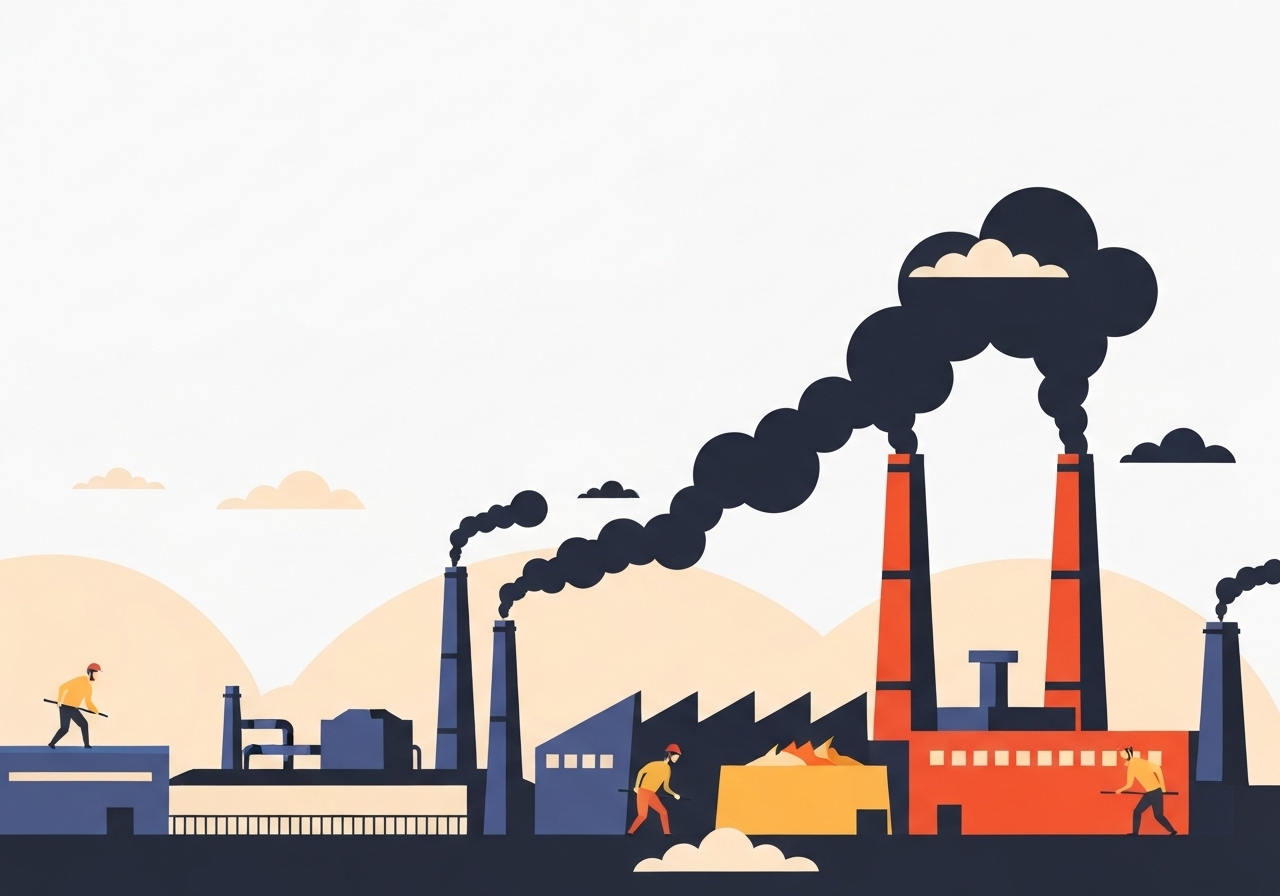
China industrial profits plunge as weak demand and deflation bite
Lead: Chinese industrial enterprises reported a sharp downturn in profits in the latest reporting period, driven by subdued domestic and external demand and persistent deflationary pressure. The deterioration was flagged in recent press coverage and official releases, prompting questions about the strength of the recovery and the ability of firms to restore margins. Policy makers and analysts are weighing targeted support against the risk of inflating asset prices. The immediate result has been renewed market attention to cash flow stress in manufacturing and commodity-linked sectors.
Key Takeaways
- Industrial profits fell noticeably in the most recent reporting period, with analysts linking the drop to weak orders both at home and abroad.
- Price pressure from deflation — notably falling producer prices — compressed firms’ revenue and margins across several heavy and light manufacturing subsectors.
- Demand weakness is broad-based: cyclical sectors tied to property and exports showed pronounced softness while some consumer-oriented manufacturers held up comparatively better.
- Policymakers have signalled preference for targeted liquidity and tax relief measures rather than broad stimulus, raising questions about the speed of any recovery.
- Smaller and mid-sized firms appear particularly vulnerable to cash-flow stress and slower receivables collection, increasing bankruptcy risk in some regions.
- External headwinds, including softer global demand and supply-chain adjustments, amplified the domestic slowdown for export-oriented plants.
Background
China’s industrial sector has been central to the country’s post-pandemic rebound, but the recovery has been uneven. Over recent quarters, real estate distress, cautious consumer spending and a softer global trade backdrop have reduced orders for factories. Producer prices have shown downward pressure at times, which weakens nominal revenue even where physical output is steady.
Historically, China has relied on investment- and export-led growth to sustain industrial activity. Since 2020, policy makers have shifted rhetoric toward higher-quality growth and financial risk control, limiting the scale of blanket stimulus. That strategic pivot increases sensitivity to demand shocks: firms can no longer expect large-scale infrastructure-driven offset when private-sector appetite falters.
Main Event
The most recent reporting cycle exposed the cumulative effect of weak demand and falling prices. Companies across metals, machinery and chemicals reported margin compression as selling prices fell while some input costs remained sticky. Several industrial hubs noted slower order books and elongated inventory turns.
Export-oriented factories also felt the squeeze. Order inflows from key markets slowed amid a weaker external cycle and lingering logistical shifts that changed sourcing patterns. Firms reliant on single large buyers or concentrated markets reported sharper profit swings.
Regional differences emerged: coastal export centres and property-linked industrial clusters reported deeper stress than some inland manufacturers catering to domestic consumer niches. Smaller enterprises reported tighter financing conditions as lenders prioritized larger, state-linked borrowers.
Analysis & Implications
The combination of weak demand and deflation creates a self-reinforcing challenge. When selling prices decline, firms delay investment and cut employment, which in turn suppresses consumption and demand further. That dynamic raises the probability of a protracted earnings recovery for industrial firms unless demand is restored.
Policy responses face trade-offs. Large-scale stimulus could revive demand but risks re-inflating asset bubbles and undermining long-term financial stability goals. Targeted measures — such as tax relief, temporary credit guarantees and support for distressed small and medium enterprises — can alleviate acute stress without loosening macro discipline, but may be slower to boost aggregate demand.
For global supply chains, a weaker Chinese industrial profit outlook could shift sourcing and inventory strategies. Multinational buyers may accelerate diversification, while commodity-exporting countries could see softer demand. Financial markets will watch for credit stress signals in regional banking and shadow-lending channels, which could transmit domestic corporate weakness to the broader economy.
Comparison & Data
| Factor | Recent Trend |
|---|---|
| Domestic demand | Softening |
| Export orders | Moderating |
| Producer prices | Downward pressure |
| Margins | Compressed |
The table above provides a concise, qualitative snapshot of the pressures facing China’s industrial sector. While not a substitute for detailed time-series data, it highlights that multiple demand- and price-related factors moved together, increasing downside risk for corporate earnings.
Reactions & Quotes
“Declining orders and price pressure are squeezing margins across multiple manufacturing lines.”
Industry economist (analysis)
Analysts noted the simultaneous hit to volumes and prices as particularly problematic because it limits the ability of firms to offset lower unit prices with higher output.
“Small firms face acute cash-flow stress and need temporary relief on financing and taxes to avoid spillovers.”
Business association representative
Trade groups and local chambers have urged targeted measures to support employment and production continuity among smaller manufacturers.
Unconfirmed
- Exact percentage decline and the precise reporting period cited by some press reports are behind paywalls and have not been independently verified in this article.
- Specific firm-level insolvency counts and regional bankruptcy rates referenced in commentary remain unconfirmed without full access to regional court filings and official disclosures.
Bottom Line
The recent deterioration in industrial profits highlights a fragile phase in China’s economic recovery where weak demand and price weakness intersect to depress corporate earnings. The episode underscores the limits of relying on transitory policy fixes and the importance of restoring sustainable demand through structural and targeted fiscal measures.
For investors and policy makers, the priority is to monitor cash-flow stress among small and medium firms and assess whether targeted support can prevent broader credit contagion. Global markets and supply chains should prepare for continued moderation in Chinese industrial buying until clearer signs of demand recovery emerge.
Sources
- Financial Times (media, paywalled) — primary press reporting summarised above.