
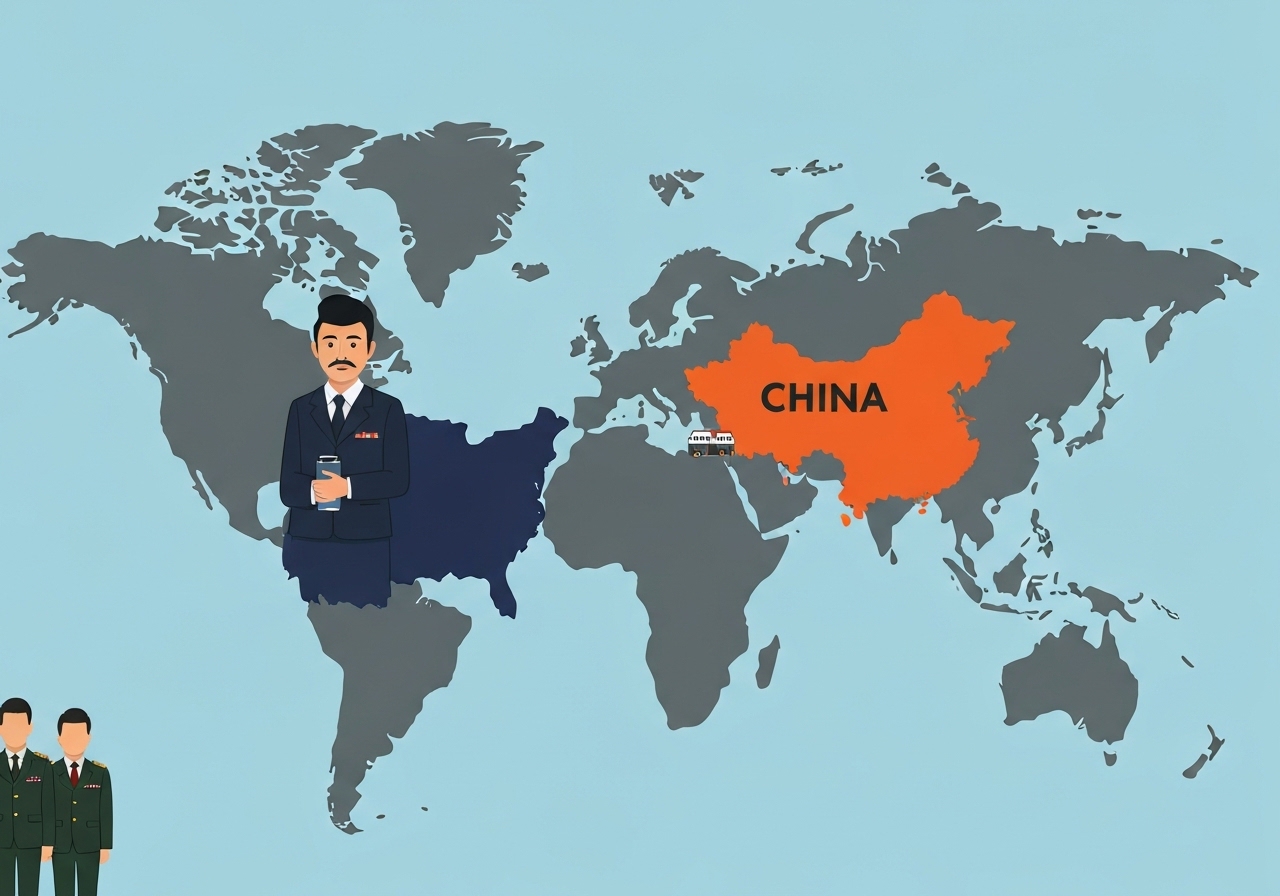
Lead: The Pentagon’s newly released National Defense Strategy, a 34-page review published on Friday, shifts the department’s chief concern from China to the security of the US homeland and the Western Hemisphere. The document, issued as part of the four-year strategy cycle, says Washington has for years under-emphasized Americans’ “concrete interests” and will therefore recalibrate where its forces and commitments are focused. It also signals a narrower U.S. support posture for allies and a rhetoric of realism over expansive global aims. Key policy lines include protecting access to strategic terrain such as the Panama Canal, the Gulf of America, and Greenland.
Key Takeaways
- The new National Defense Strategy is 34 pages long and was published on a Friday as part of the Pentagon’s four-year cycle.
- The top priority is now the security of the U.S. homeland and Western Hemisphere, replacing China as the single chief security concern.
- The document promises “more limited” support to allies while urging greater burden-sharing, particularly among European partners.
- Taiwan is not named in this version, though the strategy stresses preventing any power from dominating the United States or its partners.
- A recent U.S. arms sale to Taiwan worth $11 billion is noted as background to regional tensions and Chinese military drills around the island.
- The strategy reiterates access guarantees for critical terrain, explicitly naming the Panama Canal, the Gulf of America, and Greenland.
- Russia is described as a “persistent but manageable” threat to NATO’s eastern members rather than an existential threat to the United States.
- North Korea deterrence is assigned a relatively smaller U.S. role, with South Korea described as capable of primary responsibility.
Background
Shifts in U.S. strategy come against a backdrop of evolving threats and domestic political priorities. Historically, the Pentagon’s public strategy documents have moved in step with perceived great-power competition: the 2018 strategy identified “revisionist powers” such as China and Russia as central challenges, while the 2022 document named China’s multi-domain capabilities the top defense priority. Those earlier frameworks underpinned expanded U.S. engagement in the Indo-Pacific and investments in high-end deterrence capabilities.
Domestic politics and recent White House policy choices have shaped the new emphasis on homeland and hemispheric security. The strategy signals dissatisfaction with long-standing expectations that the United States will underwrite global security without reciprocal contributions from partners. At the same time, ongoing crises — from the Russian invasion of Ukraine to heightened activity around Taiwan — continue to test alliance cohesion and the boundaries of U.S. commitments.
Main Event
The Department of Defense released the 34-page National Defense Strategy on Friday, framing the United States’ primary security priority as protecting the homeland and the Western Hemisphere. The text argues that Washington has long prioritized broad global objectives over “concrete interests” at home, and that correcting that balance requires a more focused allocation of defense resources. The document explicitly promises to “guarantee US military and commercial access to key terrain, especially the Panama Canal, Gulf of America, and Greenland.”
Language used in the strategy adopts a sharply pragmatic tone. An administration line in the paper declares, “Out with utopian idealism; in with hardnosed realism,” and instructs that relations with China should be managed “through strength, not confrontation.” The strategy states its aim is neither to dominate nor to humiliate China, but to prevent any actor from being able to dominate the United States or its allies.
The paper also narrows how the United States intends to support allies. It calls for increased burden-sharing and indicates the U.S. will offer “more limited” direct support in some theaters, while encouraging partners — particularly in Europe and East Asia — to lead responses to threats that are more acute for them. Notably, Taiwan is not mentioned by name in this edition, though the document notes the U.S. objective to prevent domination by any single power.
Analysis & Implications
The pivot from China as the Pentagon’s top priority to a homeland-and-hemisphere emphasis carries several strategic implications. First, it could reallocate resources away from some Indo-Pacific initiatives toward missile defense, maritime security in the hemisphere, and infrastructure protection around key chokepoints such as the Panama Canal. This reallocation may affect procurement decisions and deployment patterns in coming budget cycles.
Second, the call for stronger burden-sharing could strain relations with traditional allies that have grown accustomed to U.S. security guarantees. Europe, where the strategy says partners will “take the lead” against threats more severe for them, may face pressure to increase defense spending and forward posture. NATO cohesion could be tested as allies reconcile regional priorities with U.S. retrenchment on certain commitments.
Third, the deliberate omission of Taiwan by name, while still affirming the aim of preventing domination, introduces ambiguity into the U.S. position. That ambiguity could reduce immediate escalatory signals but also leave partners and regional planners uncertain about the exact limits of U.S. response, potentially prompting accelerated indigenous or multilateral deterrence measures in East Asia.
Finally, describing Russia as a “persistent but manageable” threat signals confidence in NATO’s ability to absorb and deter Moscow’s aggression while freeing U.S. policy bandwidth for hemispheric and homeland concerns. That characterization, however, depends on continuing European resolve and sustained defense investments by NATO members.
Comparison & Data
| Year | Document | Top Prioritized Threat |
|---|---|---|
| 2018 | National Defense Strategy | Revisionist powers (China, Russia) |
| 2022 | National Defense Strategy | China (multi-domain threat) |
| 2024 | National Defense Strategy (new) | U.S. homeland & Western Hemisphere |
The table above summarizes how emphasis has shifted across successive Pentagon strategies. The 2024 document marks a clear reorientation compared with the 2022 priority-setting. This change will be measured in budget proposals, force posture adjustments, and alliance consultations over the next 12 to 24 months.
Reactions & Quotes
Domestic and international reaction was immediate and mixed. Officials in allied capitals are likely to press for clarity on what “more limited” U.S. support means in practice, while analysts will scrutinize budget and posture signals.
“Middle powers must act together because if we’re not at the table, we’re on the menu.”
Mark Carney, speech at World Economic Forum (Davos)
Former central bankers and middle-power leaders echoed a call for cooperative action among countries like Canada, South Korea, and Australia to compensate for narrower U.S. involvements. Carney framed the strategy’s shift as a prompt for these nations to coordinate more closely on security and economic resilience.
“We are seeing a shift towards a world without rules.”
Emmanuel Macron, remarks at Davos
French President Emmanuel Macron warned that a changing U.S. posture could accelerate global fragmentation and urged stronger collective responses to uphold rules-based systems. European leaders will likely weigh increased defense commitments against domestic political constraints.
“We will protect U.S. interests and guarantee access to key terrain while seeking realistic partnerships abroad.”
Department of Defense, strategy summary
The Pentagon framed the move as a pragmatic reprioritization rather than isolationism, emphasizing targeted commitments that align with American interests and capabilities.
Unconfirmed
- Precise budgetary reallocations implied by the strategy are not yet confirmed and will be determined in upcoming budget submissions and congressional negotiations.
- The practical impact on U.S. deployments in the Indo-Pacific, including ship and base allocations, is not specified in the document and remains subject to separate decisions.
- The strategic rationale for omitting Taiwan by name is not publicly explained; internal deliberations or classified guidance may clarify intent later.
Bottom Line
The Pentagon’s new strategy represents a deliberate reorientation toward defending the U.S. homeland and the Western Hemisphere while asking partners to shoulder more regional responsibilities. Its pragmatic rhetoric and specific mentions of strategic terrain signal concrete priorities that will shape planning and procurement choices in the near term.
For allies and regional partners, the shift is a call to clarify responsibilities, increase burden-sharing, and invest in local deterrence capabilities. Policymakers should expect debates in Congress and allied capitals over funding, force posture, and what the new U.S. emphasis means for longstanding security commitments.