
Lead
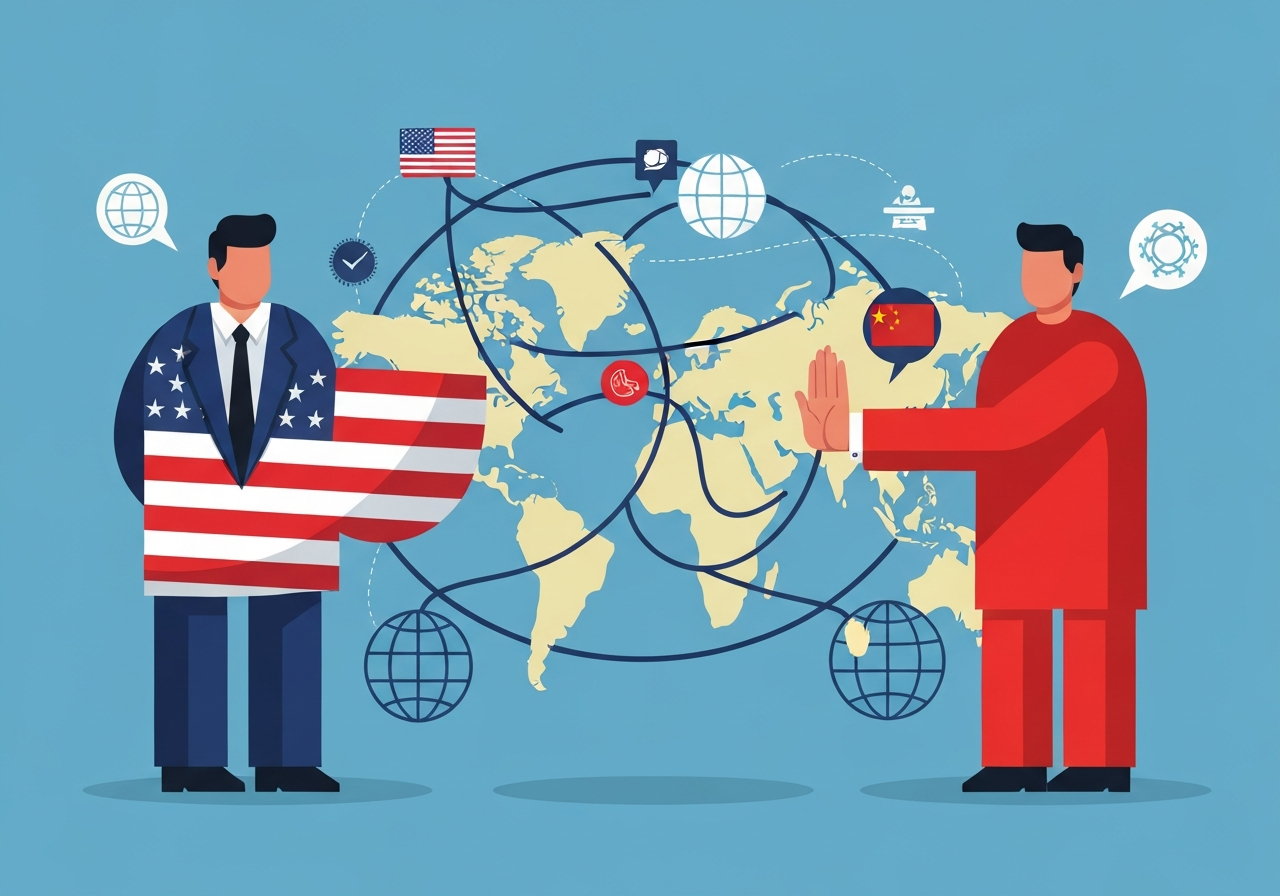
Beijing pushed back this week against a notion President Donald Trump has invoked repeatedly: that the United States and China should jointly run global affairs as a so-called “G2.” At a news conference during China’s annual legislative session, Foreign Minister Wang Yi acknowledged the two powers’ outsized influence but rejected any framework that would let major states dictate outcomes for the rest of the world. The statements came as Trump prepares a multi-day trip to China beginning March 31 and as both capitals signal a year of intensive high-level contact. Chinese officials framed their stance as both a defense of smaller states’ interests and a reluctance to be drawn into broader security commitments.
Key Takeaways
- China publicly rebuffed the “G2” idea at the National People’s Congress news conference, emphasizing that there are “more than 190 countries” whose voices matter.
- Foreign Minister Wang Yi said China “will never seek hegemony or expansion,” positioning Beijing for a multipolar order rather than a bilateral duopoly.
- The White House has scheduled President Trump’s three-day trip to China to begin March 31; U.S. and Chinese leaders may meet up to four times this year, including at the G20 in Miami and APEC in Shenzhen.
- Wang warned that turning U.S.-China ties into confrontation could have global consequences, noting the relationship’s “far-reaching and global implications.”
- China signaled concern about being drawn into regional conflicts, citing the ongoing U.S.-Israeli strikes in Iran and calling for an immediate halt to military action.
- Despite tensions such as tariffs and strategic rivalry, Beijing praised top-level interactions between Presidents Trump and Xi as a stabilizing factor for bilateral ties.
Background
The “G2” concept dates to 2005, when economist C. Fred Bergsten used the term to highlight the need for strong U.S.-China communication given their economic size. While some policymakers once saw merit in a closer bilateral steering role, the idea lost traction in Washington as political and trade frictions with Beijing intensified. During his first term, Trump pursued tariffs and competitive economic measures that widened mistrust between the two capitals.
Beijing’s diplomacy has long emphasized solidarity with the Global South and opposed major-power arrangements that appear to limit the agency of smaller states. That posture shapes China’s public messaging now: accepting a co-lead role in global governance could undercut Beijing’s appeal to developing-country partners and risk entangling China in overseas conflicts it prefers to avoid.
Main Event
On the sidelines of the annual legislative session in Beijing, Wang Yi addressed questions from foreign media about the bilateral relationship and Trump’s repeated references to a “G2.” He said China recognizes the significance of U.S.-China ties but rejected the idea that the world should be governed by a pair of great powers. The remarks were notable because the annual news conference is a rare venue for a top Chinese diplomat to speak directly and at length to international reporters.
Wang reiterated Beijing’s longstanding line that history shows great-power rivalry brings suffering, and he framed China’s policy as explicitly non-expansionist. He called for an “equal and orderly multipolar world” and pushed back on any logic that would allow the strongest countries to run global affairs unilaterally.
Chinese commentary also referenced current flashpoints. Wang urged an immediate halt to fighting in the Middle East and criticized what he described as “abuse of force” and violations of international law amid U.S.-Israeli strikes in Iran. He tied those concerns to the broader need to avoid actions that could derail planned high-level exchanges between Beijing and Washington.
Analysis & Implications
China’s public rejection of a G2 reflects both substantive policy and political signaling. Substantively, Beijing wants to avoid formal obligations that might compel it to participate in far-flung security commitments or to accept primary responsibility for stabilizing regions outside its strategic comfort zone. Politically, opposing a bilateral governance model helps China maintain influence with developing countries that are wary of great-power dominance.
For U.S. allies, the debate is fraught. An informal U.S.-China duopoly could marginalize middle powers and dilute multilateral institutions, prompting anxiety in Europe, Southeast Asia and other regions that prefer rule-based, inclusive forums. Allies worry that bilateral deals struck by Washington and Beijing might prioritize great-power bargaining over alliance commitments or multilateral norms.
Economically, closer U.S.-China top-level cooperation could help manage trade and investment frictions, but it also risks locking in bargains that favor the two largest economies at the expense of others. Beijing’s insistence on a multipolar order suggests China will resist any arrangement that appears to legitimize exclusive decision-making by the United States and China alone.
Diplomatically, Wang’s language plants Beijing firmly in the post-colonial and developing-country narrative. That posture aims to blunt criticisms that China is seeking global dominance, while leaving room for Beijing to expand its institutional influence—through infrastructure finance, trade partnerships and diplomatic initiatives—without accepting the responsibilities of a co-manager of global security.
Comparison & Data
| Forum | Members | Primary Focus |
|---|---|---|
| G7 | 7 | Advanced economies; economic policy coordination |
| G20 | 19 countries + EU | Broad global economic governance |
| “G2” (proposed) | 2 | Bilateral U.S.-China coordination (informal concept) |
The table shows the difference in scale between established multilateral groups and the hypothetical G2. While a smaller bilateral forum can speed negotiation between two powerful states, it lacks representation and legitimacy for much of the world—precisely the critique Wang raised. Multilateral formats spread responsibility and provide avenues for smaller states to shape outcomes, a core part of Beijing’s public defense against exclusive duopolies.
Reactions & Quotes
Wang’s lines were delivered in a tightly managed press session, but they carry weight because they reflect an official framing of China’s international posture ahead of scheduled summits and bilateral meetings.
“There are more than 190 countries on our planet…World history has always been written by many countries together.”
Wang Yi, Chinese Foreign Minister
This remark underscored Beijing’s argument for inclusivity and for multilateral decision-making rather than a narrow bilateral arrangement.
“China will never seek hegemony or expansion.”
Wang Yi, Chinese Foreign Minister
Wang used this phrase to counter narratives that China’s growing influence equates to an intent to dominate, linking the statement to historical lessons about great-power rivalry.
“It is heartening to see that the presidents of the two countries have led by example, by maintaining good interactions at the top level.”
Wang Yi, summarizing U.S.-China leader interactions
Wang credited top-level exchanges for stabilizing bilateral ties, even as he warned of the risks of confrontation. His mix of praise for leader-level contact and rejection of a G2 framework signals Beijing’s preference for managed engagement without formalized duopoly arrangements.
Unconfirmed
- How a formalized G2 would operate in practice—decision-making rules, representation of other states, or enforcement mechanisms—remains unspecified and untested.
- Whether the planned high-level meetings between Presidents Trump and Xi will produce concrete agreements on trade, security or regional crises is not yet confirmed and may change with developments on the ground.
- The extent to which China would accept expanded global responsibilities that might draw it into military or security commitments abroad is uncertain and subject to internal policy debates.
Bottom Line
China’s public refusal of a G2 arrangement is both a policy position and a strategic signal: Beijing wants recognition of its power but resists any bilateral framework that would allow two capitals to define the international order without broader participation. The messaging protects China’s ties to developing countries and preserves its ability to expand influence through multilateral and bilateral channels that do not require direct custodianship of global security.
For allies and smaller states, the episode highlights a durable tension: bilateral U.S.-China engagement can reduce friction and manage crises quickly, but it can also sideline other actors and institutions. The coming months—marked by scheduled visits and summit meetings—will test whether the two powers can balance intense top-level diplomacy with inclusive, multilateral governance mechanisms.
Sources
- NBC News (international news coverage)
- Chinese Foreign Ministry (official statements and press briefings)
- The White House (official announcements on presidential travel)