
Lead
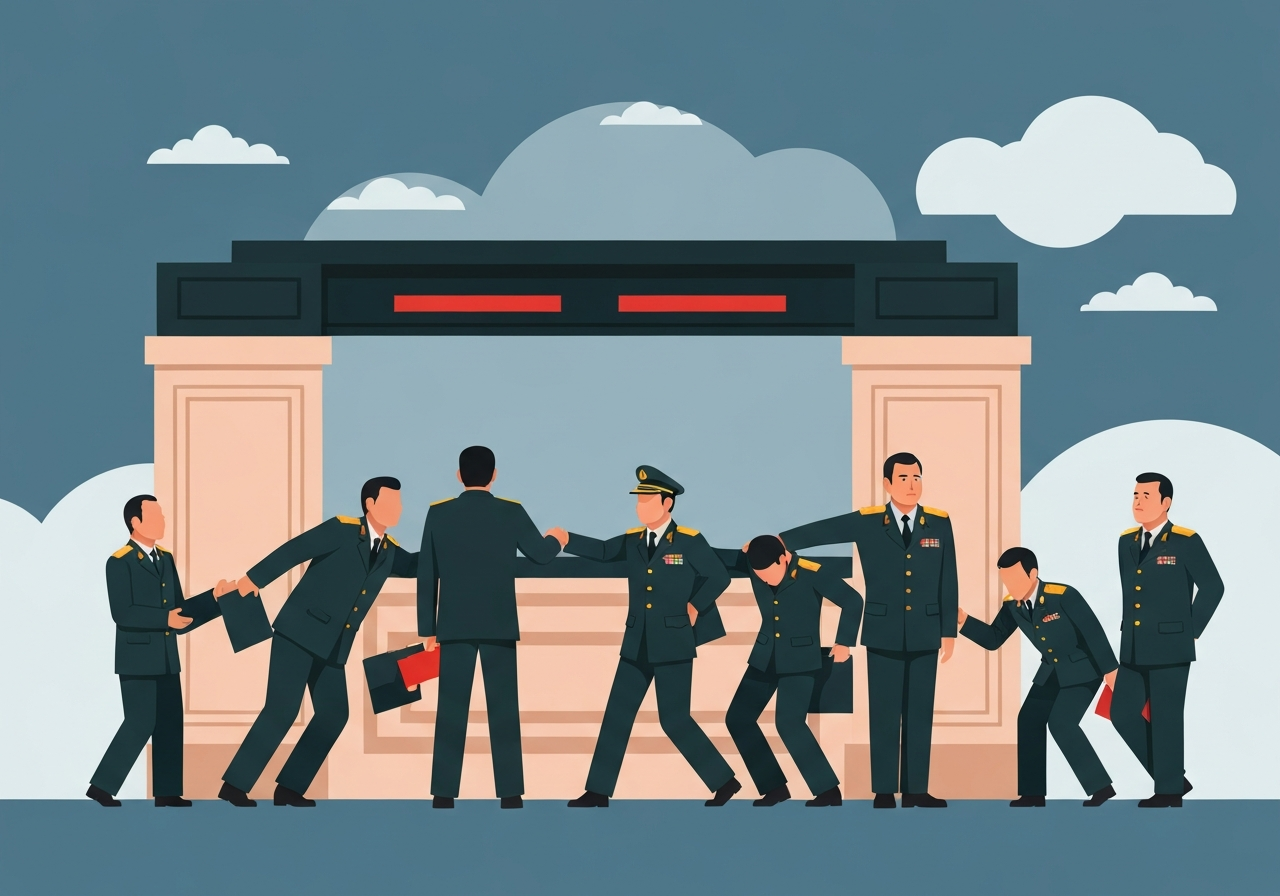
China’s top legislature, the National People’s Congress (NPC) Standing Committee, announced the removal of 19 lawmakers — including nine military officers — from the list of delegates ahead of the Two Sessions set for 4–11 March. The removals were disclosed in the days leading up to the annual political gatherings in Beijing and follow the recent sidelining of senior general Zhang Youxia. State outlets named several figures on the list, such as Li Qiaoming and Shen Jinlong, but offered no formal explanation. The moves come amid Xi Jinping’s long-running anti-corruption campaign and raise fresh questions about military oversight and political consolidation.
Key Takeaways
- NPC Standing Committee removed 19 officials from the lawmakers’ list; nine of those were military officers, announced shortly before the Two Sessions (4–11 March).
- Notable names reported by state media include Li Qiaoming (PLA Ground Force commander) and Shen Jinlong (former PLA Navy commander); several provincial officials, including Sun Shaochong, were also listed.
- The removals follow the ouster of Zhang Youxia, a top general and close ally of President Xi, who was removed weeks earlier for “serious violations of discipline and law.”
- October 2025 saw a separate crackdown that resulted in nine top generals being removed from their posts, authorities framed that purge as anti-corruption action.
- Xi has made anti-corruption a central policy since 2013 with the “tigers and flies” campaign; he has called corruption “the biggest threat” to the Communist Party.
- The timing — just before the Two Sessions when China sets its five-year plan and annual economic targets — increases political sensitivity around the removals.
Background
Since taking power, Xi Jinping has prioritized anti-corruption efforts, launching a campaign in 2013 that targeted both high-ranking officials and lower-level cadres. The drive, often called the “tigers and flies” campaign, has been presented by authorities as a governance and party-discipline measure. Critics and some analysts contend, however, that disciplinary actions have at times been used to sideline rivals and consolidate political control.
The PLA has been a prominent site of purges and reshuffles in recent years. High-profile military personnel have been disciplined, reassigned, or removed in waves, including an October 2025 sweep that saw nine senior generals lose their posts. Those prior actions were officially described as anti-corruption efforts, reinforcing the narrative that the party is tightening oversight of the armed forces.
Main Event
The NPC Standing Committee issued the most recent removals from the lawmakers’ roster in the run-up to the Two Sessions, the twin assemblies of the National People’s Congress and the Chinese People’s Political Consultative Conference. State media reported names and ranks but did not publish formal charges or detailed explanations for each removal. The Standing Committee announcement was procedural in form, removing the listed individuals from the delegate list ahead of the March meetings.
Among those named in state reports were Li Qiaoming, identified as commander of the PLA Ground Force, and Shen Jinlong, a former PLA Navy commander; provincial-level figure Sun Shaochong was also listed. The removals followed within weeks of Zhang Youxia’s exit from his post, where authorities cited “serious violations of discipline and law” — the standard phrase used in party disciplinary disclosures when corruption or other breaches are alleged.
The timing matters: thousands of delegates and officials will converge on Beijing from 4 to 11 March for policy-setting sessions that will outline the five-year plan and annual economic targets. Removing sitting delegates ahead of those meetings changes the composition of the assemblies and can limit the public profile of certain figures during a politically important week.
Analysis & Implications
On one level, the removals fit the pattern of Xi’s wider anti-corruption emphasis, reinforcing the party’s stated priority of rooting out graft within both civilian and military ranks. Formal disciplinary rhetoric and periodic high-profile purges signal to cadres that the central leadership is asserting control over personnel and standards. Maintaining the integrity of the delegate list is also a procedural measure before the Two Sessions.
On another level, the scale and recurrence of military removals carry implications for civil-military relations and PLA morale. Repeated high-level personnel changes can disrupt institutional continuity within commands and raise questions among officers about promotion criteria and political reliability. For foreign observers, regular purges complicate efforts to read Beijing’s military intent by blurring professional and political lines within the armed forces.
Politically, the sidelining of several generals shortly before a major policy forum strengthens the center’s ability to manage the narrative and personnel outcomes during a sensitive planning period. If these actions are understood domestically as targeted discipline, they bolster the party’s anti-corruption credentials. If seen as factional consolidation, they may signal continued internal realignments ahead of the new five-year cycle.
Comparison & Data
| Event | Year/Date | Officials Removed | Military Officers Removed |
|---|---|---|---|
| Recent NPC delegate removals | March 2026 (pre-Two Sessions) | 19 | 9 |
| Previous PLA crackdown | October 2025 | — | 9 top generals removed |
The simple tabulation above highlights two recent waves: the March 2026 removals from the NPC lawmakers’ roster and a separate October 2025 action that targeted senior generals. Authorities consistently frame such measures as anti-corruption efforts, but the timing and targets vary, affecting both military command structures and provincial-level political representation.
Reactions & Quotes
Officials and state media have framed disciplinary disclosures in formal language; independent analysts and critics offer contrasting interpretations focused on political effects. Below are representative short quotes with context.
“Corruption is the biggest threat to the Party’s survival and must be resolutely combated.”
President Xi Jinping (state remarks)
The leadership has repeatedly used formulations like this to justify sustained disciplinary campaigns across the party and military. Such statements are used to legitimize personnel actions and to emphasize institutional priorities.
“These removals risk eroding continuity in command if replacements are driven by politics rather than merit.”
Military affairs analyst (independent)
Analysts warn that frequent high-level changes can affect institutional professionalization inside the PLA and complicate planning at critical command levels.
“Allegations were described as ‘serious violations of discipline and law’ in the case of Zhang Youxia, a phrase that typically signals party disciplinary measures.”
State disciplinary report (media)
That phrasing is standard in official disclosures and often precedes internal party discipline or legal processes; the specifics of many investigations remain internal to party and judicial bodies.
Unconfirmed
- Whether each of the 19 removals is linked to formal corruption investigations remains unspecified by authorities and has not been independently verified.
- The extent to which political factional considerations rather than conduct-based findings motivated the removals is disputed and not confirmed.
- It is unclear whether further removals or criminal proceedings will follow from the current roster changes.
Bottom Line
The removals of 19 officials, nine from the military, ahead of the Two Sessions are consistent with recent patterns of disciplinary action and personnel management under Xi Jinping. While authorities frame such steps as necessary anti-corruption measures, the timing and recurrence of military-targeted removals intensify debate about the balance between discipline, political control, and institutional stability.
Observers should watch how the Two Sessions address military oversight, the composition of delegates who now attend, and whether state media follow with more detailed disclosures or prosecutions. These developments will influence domestic governance narratives and international assessments of Chinese civil-military relations in the months ahead.
Sources
- BBC News (media)