
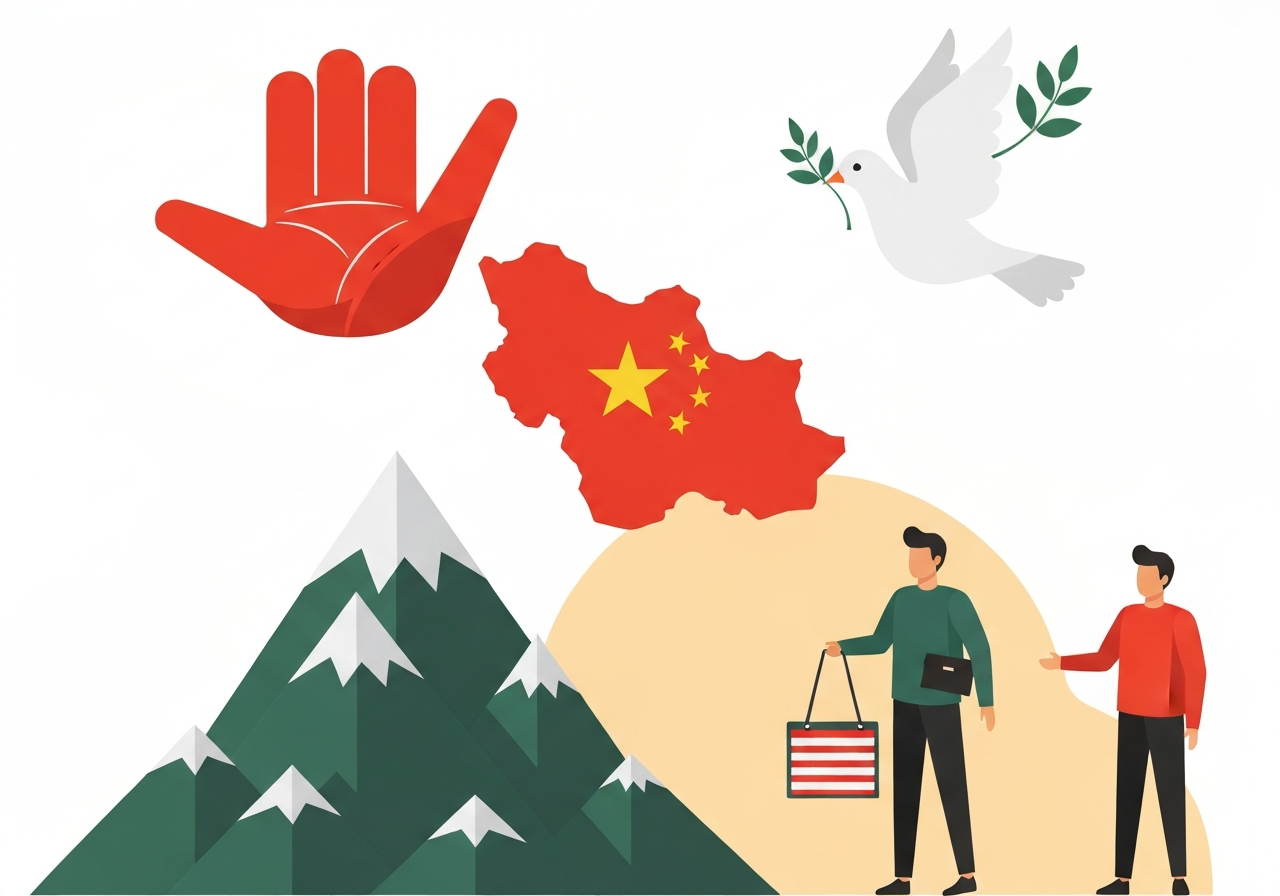
Lead: When the United States and Israel struck Iran, Beijing waited several hours before issuing its first formal reaction, expressing that it was “highly concerned” and urging an immediate halt to military operations and renewed dialogue. The following day, Foreign Minister Wang Yi publicly called the strikes unacceptable and again pressed for talks. China gave no sign of direct military intervention, instead emphasizing diplomacy while protecting long-term economic and strategic ties, including a highly anticipated visit by U.S. President Donald Trump to Beijing expected around early April. Analysts say the measured response reflects Beijing’s calculus of influence, risk and priority interests.
Key Takeaways
- China issued an initial statement hours after the strikes calling itself “highly concerned” and urging an immediate cessation of hostilities and a return to negotiations.
- Foreign Minister Wang Yi condemned the strikes the next day as unacceptable and reiterated calls for diplomatic engagement rather than escalation.
- Beijing showed no willingness to intervene militarily; analysts note China prefers limited power projection beyond its immediate periphery.
- Energy exposure: China imported about 1.4 million barrels per day from Iran last year, representing roughly 13% of its seaborne oil imports, with Kpler estimating transit stocks could cover four to five months of supply.
- China has deepened Middle East diplomacy recently (notably helping broker Iran–Saudi rapprochement in 2023) but avoids becoming a security guarantor in volatile regions.
- U.S.-China ties — including a planned presidential visit to Beijing in early April — weigh heavily on Beijing’s public posture and limit options for confrontation.
Background
China’s armed forces have expanded rapidly over the past two decades and Beijing has taken on selected overseas roles, such as opening a logistics base in Djibouti in 2017 and conducting military drills with regional partners including Iran. Still, Chinese planners prioritize defense of strategic interests close to home — from Taiwan to the South China Sea — and remain wary of expeditionary military commitments. Beijing has engaged in diplomatic initiatives in the Middle East where it sees economic and political opportunity, notably helping to broker a 2023 detente between Iran and Saudi Arabia.
Beijing’s caution is shaped by secondhand lessons from U.S. interventions in Afghanistan and Iraq, which Chinese analysts and officials often cite as cautionary examples. At the same time, China has provided political and economic support to partners such as Russia and Venezuela while refraining from military involvement in conflicts in Ukraine or Latin America. That combination of selective diplomacy and reluctance to use hard power informs its response to the latest strikes on Iran.
Main Event
The strikes by U.S. and Israeli forces prompted a delayed official response from Beijing: an initial expression of deep concern, calls for an immediate stop to military action, and demands for a resumption of dialogue. Within roughly 24 hours, Foreign Minister Wang Yi publicly described the strikes as unacceptable and urged renewed negotiations. Chinese statements framed the response in diplomatic and legal terms rather than as a threat of retaliation.
There were no signs China would provide direct military assistance to Iran or otherwise enter the fighting. Instead, Beijing signaled diplomatic displeasure while carefully calibrating its public language to avoid escalating tensions with Washington — particularly given ongoing high-level planning for a U.S.-China presidential meeting. Analysts watching the diplomacy noted Beijing’s emphasis on stability and commercial continuity rather than taking sides in a kinetic confrontation.
On energy and logistics, Beijing is sensitive to any disruption that could raise global oil and LNG prices or threaten shipments through chokepoints such as the Strait of Hormuz. China’s immediate public messaging focused on urging restraint and dialogue, while private planning by state-owned companies and independent refiners would emphasize supply adjustments and using alternative sources if necessary.
Analysis & Implications
China’s restrained posture underscores its strategic priorities: protect economic interests, avoid direct military entanglement far from home, and preserve the space for diplomacy. Beijing assesses that direct confrontation with the United States over a Middle East campaign would risk major economic and political costs, especially with a high-profile presidential visit on the calendar. That calculation drives a public stance of condemnation without coercive follow-through.
The energy dimension gives Beijing a mixed incentive. Iran is a significant crude supplier — around 1.4 million barrels per day last year, or about 13% of China’s seaborne imports — but Beijing has spent years diversifying sources and stockpiling reserves. Kpler estimates already-transiting cargoes could cover roughly four to five months, giving China short-term breathing room to shift purchases to discounted Russian crude or other suppliers if necessary.
Politically, China’s limited power-projection capacity beyond East Asia constrains its ability to alter on-the-ground outcomes once military force is used. Analysts say Beijing can register displeasure, pursue diplomatic initiatives, and adjust economic levers, but it cannot reliably deter U.S.-Israeli military action. That reality will shape Beijing’s use of rhetoric, sanctions, arms transfers and multilateral diplomacy going forward.
Still, Beijing’s diplomatic maneuvering is consequential: sustained Chinese mediation or economic pressure could influence regional alignments over months to years, even if it cannot stop immediate kinetic operations. How Beijing balances ties with Tehran, energy security, and the U.S.-China relationship in coming weeks will affect trade, regional stability and diplomatic precedence for future crises.
Comparison & Data
| Item | Figure/Year |
|---|---|
| Iran crude to China | 1.4 million barrels/day (last year) |
| Share of China’s seaborne oil imports | ~13% |
| Transit shipments in hand | Estimated 4–5 months’ supply (Kpler) |
| Chinese overseas base | Djibouti, established 2017 |
The table shows the immediate quantitative exposure China has to Iranian oil and the buffer provided by shipments already en route. That buffer reduces the urgency for sudden economic retaliation or emergency purchases, giving Beijing time to coordinate alternatives such as increased Russian imports and drawing down strategic reserves.
Reactions & Quotes
Chinese officials framed the response in diplomatic language and urged restraint while avoiding overt confrontation with Washington.
“China is reluctant to project military power beyond its immediate periphery and is unwilling to play the role of security guarantor in unstable regions like the Middle East.”
William Yang, International Crisis Group (analyst)
Analysts in Washington emphasize Beijing’s limited capacity to influence kinetic outcomes once military force is employed.
“Beijing’s response has been predictably restrained, underscoring China’s limited ability to shape events once hard power is in motion.”
Craig Singleton, Foundation for Defense of Democracies (senior fellow)
Private-sector analysts highlight energy market mechanics that reduce China’s immediate exposure.
“Enough oil is already in transit to last another four to five months, giving independent refiners time to adjust and seek alternatives.”
Muyu Xu, Kpler (senior analyst)
Unconfirmed
- Whether Beijing will formally postpone or cancel the planned presidential visit in early April remains unconfirmed; Chinese and U.S. officials have not announced a change.
- Any reports of imminent Chinese arms transfers or rapid battlefield support to Iran are unconfirmed and lack open-source corroboration.
- The full extent and duration of damage to regional LNG facilities and the precise timeline for production resumption are still being assessed.
Bottom Line
China’s measured public response—expressing concern and urging dialogue while steering clear of military involvement—reflects a deliberate strategic choice to prioritize economic stability and manage great-power relations with the United States. Beijing has tools short of direct force—diplomacy, trade adjustments, and energy procurement shifts—but these are calibrated to avoid a direct clash with Washington.
In the near term, China appears prepared to absorb limited supply disruptions using transit stocks, alternative suppliers and strategic reserves. Over the medium term, Beijing’s actions in diplomacy and regional economic engagement will matter for the balance of influence in the Middle East, but China’s reluctance to serve as a security guarantor means its impact on immediate battlefield dynamics will be constrained.
Sources
- Associated Press (news report)
- Kpler (energy data & analytics)
- International Crisis Group (think tank analysis)
- Foundation for Defense of Democracies (policy research)
- The Asia Group (policy advisory)