
Lead
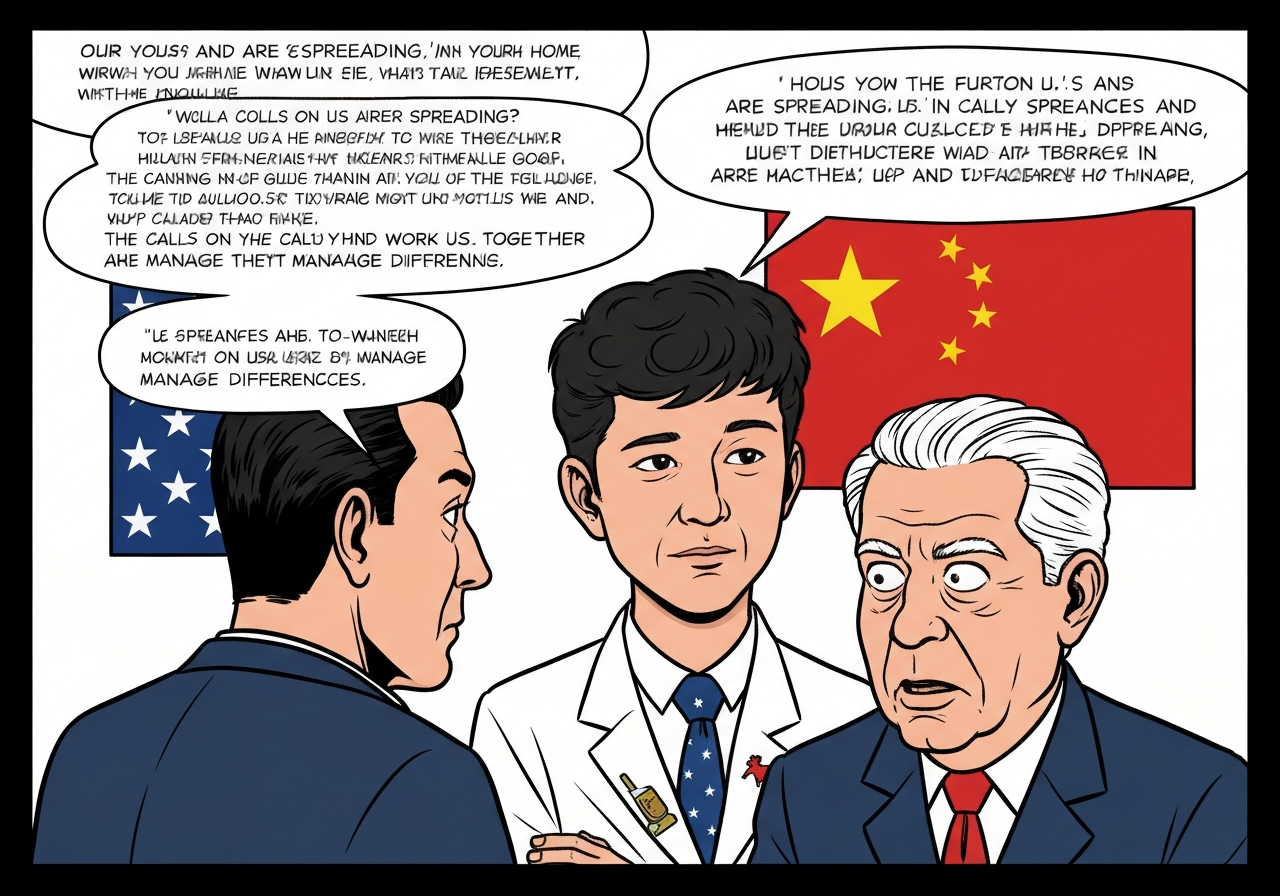
China’s top diplomat framed Beijing as a stabilizing force on March 7, 2026, urging an immediate ceasefire as the Middle East war around Iran continues to escalate. Speaking on the sidelines of the annual session of China’s legislature in Beijing, Foreign Minister Wang Yi called for parties to return to the negotiating table to avoid spillover and “the spread of the flames of war.” He struck a conciliatory tone toward the United States ahead of a high‑profile Xi–Trump summit planned for later this month in Beijing. Wang also emphasized China’s role in defending multilateral institutions while urging Washington to help manage bilateral differences.
Key Takeaways
- Wang Yi delivered remarks on March 7, 2026, at the annual legislative meeting in Beijing urging an immediate ceasefire over the Iran conflict and warning against escalation.
- He described China as “the world’s most important force of peace, stability and justice,” and urged all parties to resume negotiations promptly.
- The comments precede a summit between Chinese leader Xi Jinping and US President Donald Trump scheduled for late March 2026, where trade, Taiwan and regional security are expected agenda items.
- Wang criticized efforts to bypass the United Nations and pledged to defend multilateralism, positioning China against initiatives portrayed as exclusive blocs.
- The speech did not address several regional flashpoints directly, including heightened military pressure on Taiwan and maritime tensions with the Philippines and Japan.
- Wang reiterated the durability of China–Russia ties, saying their political trust is high and the relationship remains stable amid external pressure.
- President Trump recently stated there would be no deal with Iran except for “unconditional surrender,” a stance Wang said lacked specificity and risks further escalation.
Background
The remarks came at the annual meeting of China’s legislature in early March 2026, a regular setting for senior officials to outline Beijing’s foreign policy posture. China has been balancing close economic and diplomatic ties with Tehran against its growing strategic interactions with the United States and other global powers. The Iran conflict has introduced a new and acute variable into U.S.–China relations as both capitals weigh the diplomatic and economic fallout.
Since President Trump took office, bilateral ties have been punctuated by trade friction, tariff rounds and competing strategic initiatives. Beijing has sought to portray itself as a reliable global partner even as it confronts criticism over trade practices, rare‑earths policy and increased military activity in the Indo‑Pacific. Recent high‑level visits by leaders from France, the U.K. and Germany have reinforced Beijing’s argument that many governments continue to engage closely with China.
Main Event
At the March 7 briefing, Wang characterized the Iran conflict as “a war that should never have happened” and said it benefited no one, urging an immediate ceasefire to prevent escalation. He called for equal dialogue among parties and framed China as offering stability at a time he described as globally turbulent. The remarks were made in response to a question from CNN’s Steven Jiang and were delivered on the sidelines of the National People’s Congress session in Beijing.
Wang also addressed the upcoming summit between Xi Jinping and Donald Trump, saying both leaders should prepare thoroughly and create conditions to manage existing differences. He urged both sides to eliminate “unnecessary interference” and to change how they interact, stressing that while neither power can change the other, they can alter their relationship dynamics. That framing signals Beijing’s preference for managed competition rather than open confrontation.
The foreign minister criticized proposals that, in his view, seek to bypass the United Nations or create exclusive security blocs, pledging China’s defense of multilateralism. He made no new policy announcements on Taiwan, the South China Sea, or specific trade measures during the briefing. On Russia, Wang reiterated that bilateral political trust with Moscow remains high and described the relationship as “unmoved by wind and rain.”
Analysis & Implications
Beijing’s messaging aims to achieve multiple objectives: domestically, it bolsters the government’s image as prudent and stabilizing; internationally, it seeks to capture diplomatic space as other capitals reassess alliances in light of the Iran conflict. By calling for ceasefire and talks, China positions itself as an interlocutor for de‑escalation while reminding audiences of its preference for multilateral forums such as the United Nations.
Strategically, the comments are calibrated ahead of the Xi–Trump summit. Beijing benefits from framing the meeting as an opportunity to manage differences pragmatically — particularly on trade, technology, and Taiwan — while tying Washington to the risks of instability in the Middle East. The summit’s outcome will influence markets, supply chains (notably rare‑earths and semiconductors), and the diplomatic choreography among Europe, Asia and the United States.
Economically, a deepening Iran war has already contributed to higher oil prices and threatens global trade continuity. Wang’s appeal to avoid spillover reflects Beijing’s interest in minimizing shocks to export and energy channels on which China and many trading partners depend. If tensions persist, expect accelerated hedging by firms and possible policy adjustments from Beijing to secure resource and supply‑chain resilience.
Comparison & Data
| Issue | Why It Matters for Xi–Trump Summit |
|---|---|
| Trade and tariffs | Central bilateral friction affecting tariffs, market access and tech controls. |
| Taiwan and Indo‑Pacific security | Major regional flashpoint with implications for military posture and alliances. |
| Middle East conflict (Iran) | Risks global oil markets and tests coordination on de‑escalation. |
| Multilateral institutions | Competing visions for global governance shape cooperation on crises. |
The table summarizes areas likely to be focal points in Xi and Trump’s talks. Each issue carries trade‑offs for cooperation and contention; for example, trade talks must proceed amid strategic mistrust, and any sudden escalation in the Middle East would complicate diplomatic bandwidth and economic calculations for both capitals.
Reactions & Quotes
“This was a war that should never have happened, and a war that benefited no one.”
Wang Yi, Chinese Foreign Minister
Wang used this formulation to underline China’s call for an immediate halt to fighting and to contrast Beijing’s stance with what he characterized as destabilizing actions by other powers. The remark was framed as part of a broader appeal for multilateral crisis management.
“There would be no deal with Iran except unconditional surrender.”
Donald J. Trump, President of the United States
President Trump’s comment, cited by officials and reported in press coverage, reflects a maximalist posture that Beijing and other actors warn risks hardening positions and complicating diplomatic resolution. Details on concrete demands accompanying that phrase were not specified in public statements.
“China provides a source of stability amid global chaos,”
Wang Yi, Chinese Foreign Ministry
Wang framed recent visits by European leaders to Beijing as evidence that many governments view China as a necessary partner rather than merely a competitor. Analysts note that such visits are part of broader diplomatic balancing by European capitals.
Unconfirmed
- Claims that Iran’s Supreme Leader Ayatollah Ali Khamenei was killed appear in some text excerpts; this specific assertion contradicts widely available reporting and remains unverified. Confirmation from independent, reliable sources is absent.
- Details underpinning President Trump’s reference to “unconditional surrender” — such as precise demands or negotiating terms — were not provided publicly and therefore cannot be verified.
Bottom Line
Wang Yi’s March 7, 2026 remarks seek to cast China as a conciliatory broker amid a volatile Middle East while setting expectations for pragmatic engagement with the United States at the upcoming Xi–Trump summit. Beijing’s messaging aims to protect its economic interests, defend multilateral norms, and shape the diplomatic narrative ahead of high‑stakes talks.
How both capitals translate rhetoric into concrete outcomes will determine near‑term risks to energy markets, supply chains and regional security. Observers should watch summit preparations for signals on trade concessions, crisis‑management mechanisms related to the Middle East, and any steps to reduce tensions in the Indo‑Pacific.