
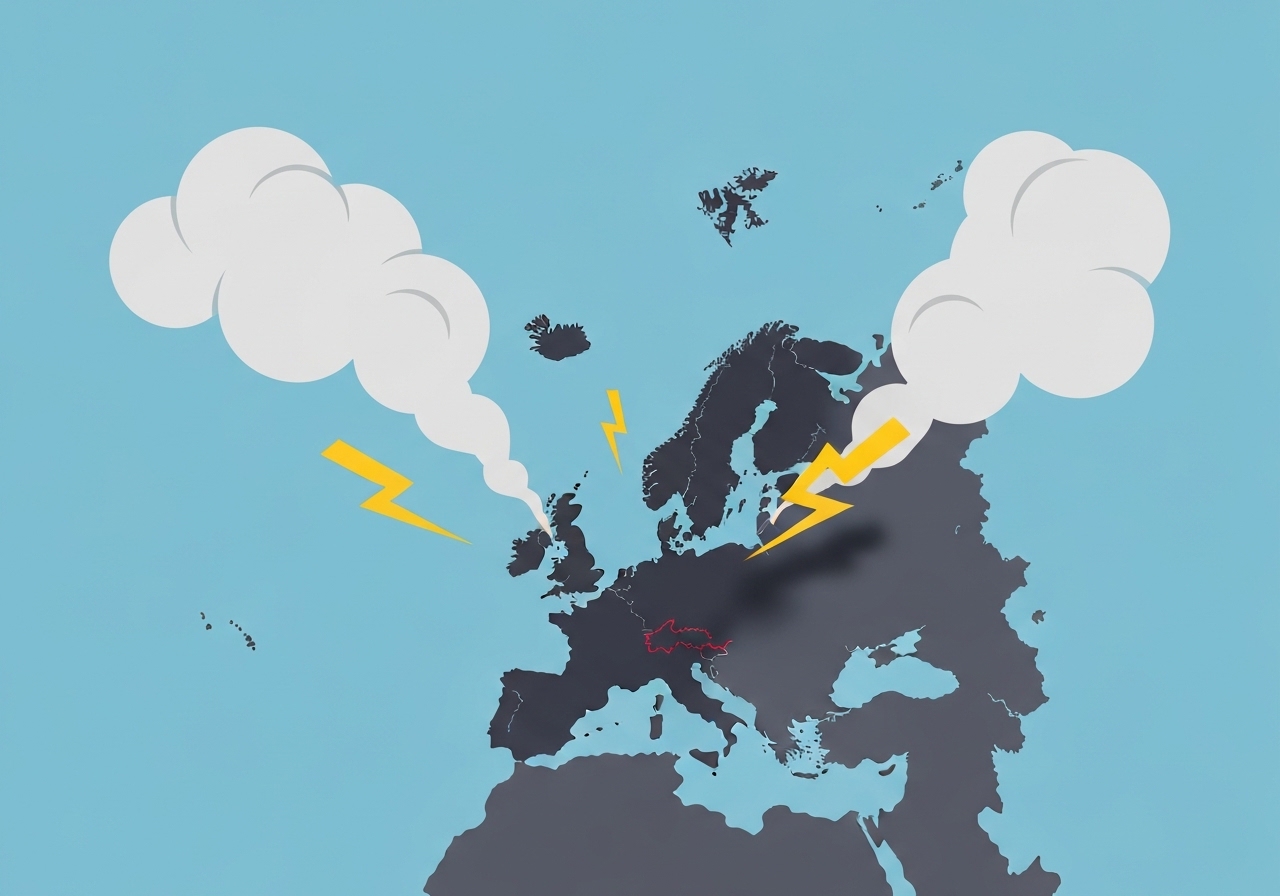
Lead
On January 20, 2026, Citigroup’s research team lowered its recommendation on European equities for the first time in over a year, blaming a sharp rise in friction between Brussels and Washington tied to President Donald Trump’s push to seize Greenland. The bank’s strategists — including Beata Manthey — said the escalation in transatlantic tensions and renewed tariff uncertainty has weakened the near-term investment case and clouded earnings prospects for firms across the continent. The move reflects a political shock being transmitted into market risk assessments rather than a change in cyclical fundamentals, according to the note issued Monday.
Key Takeaways
- Citigroup downgraded European equities on January 20, 2026 — its first downgrade of the region in more than a year.
- The firm cited growing transatlantic tensions over President Trump’s actions toward Greenland and increased tariff uncertainty as central drivers.
- Strategists on the note included Beata Manthey; the research memo flagged a weaker near-term investment case and a more challenging earnings outlook for European companies.
- Citi framed the downgrade as a response to policy and geopolitical risk rather than immediate macroeconomic deterioration in Europe.
- The bank warned that tariff threats and diplomatic rifts could pressure exporters and multi-national supply chains that link the EU and U.S.
Background
Relations between the United States and the European Union have periodically been strained by trade disputes and security disagreements; the Greenland episode represents a sudden intensification tied to U.S. policy toward a geopolitically strategic territory. In 2019, then-President Trump publicly explored acquisition of Greenland, and in 2026 the latest push has rekindled debates over sovereignty, strategic bases and Arctic resources. Those developments coincided with public talk of unilateral trade measures, reviving investor concerns about sudden tariff actions and regulatory retaliation.
Financial institutions monitor geopolitical shocks because policy moves can quickly alter corporate cost structures, access to markets and investor risk premia. Equity strategists incorporate those risks into ratings and target prices: a perceived rise in political risk often prompts lower recommended exposure even where earnings trends remain stable. Citigroup’s note follows that logic, treating heightened diplomatic friction as a new input into portfolio positioning for Europe.
Main Event
Citigroup’s Monday research note — circulated January 20, 2026 — marked a downgrade of European equities after more than a year without such a move. The strategists explicitly linked their decision to the recent escalation between Brussels and Washington prompted by President Trump’s push concerning Greenland. The memo stressed that the interplay of rhetoric and potential policy measures creates tariff uncertainty that is difficult for companies to price into guidance.
The team noted that the immediate consequence is a softer investment case: investors generally demand higher compensation for political risk, which can lower multiple expansion and make earnings disappointments more damaging. While the note did not publish a precise numerical hit to aggregate earnings in the short term, it described the outlook as ‘hurt’ for firms on the continent and urged clients to reassess exposure to cross-border trade sensitivity.
Citi named Beata Manthey among the strategists behind the assessment, framing the downgrade as precautionary. The bank appears to treat this development as a material change in the policy risk profile rather than as confirmation of deteriorating macro data in Europe, which differentiates this action from cyclically-driven downgrades.
Analysis & Implications
Political disputes that raise the prospect of tariffs or regulatory barriers can translate rapidly into financial stress for corporations with integrated transatlantic supply chains. Export-oriented sectors and firms reliant on U.S.-EU market access are most exposed; higher trade costs and policy unpredictability can compress margins and prompt earnings guidance revisions. Even absent immediate tariffs, elevated uncertainty raises the equity risk premium and can slow capital investment decisions.
From a portfolio perspective, the downgrade signals that global asset managers should reweight risk exposures to account for policy volatility as a persistent factor. If diplomatic tensions persist, the cost of hedging and the preference for domestic-oriented equities could increase, producing sectoral and regional performance divergence within Europe. Central banks may be constrained in responding if the shock remains political rather than macroeconomic, leaving markets to absorb valuation adjustments.
On the diplomatic front, this episode could spur accelerated talks within the EU to coordinate responses or retaliatory measures, which in turn would extend the policy uncertainty window. For companies, the credible risk to cross-border operations underscores the value of contingency planning and scenario-based guidance in upcoming earnings seasons. Investors should watch official announcements on tariffs, sanctions, or trade reviews as key triggers for material market moves.
Comparison & Data
| Date | Event |
|---|---|
| Jan 20, 2026 | Citi downgrades European equities citing U.S.-EU tensions over Greenland |
| 2019 | Then-President Trump publicly explored acquisition of Greenland (historical precedent) |
The table places Citi’s action in context: the 2019 episode set an earlier precedent for Arctic-related tensions, but the January 2026 note represents the first sell-side downgrade of European equities from Citigroup in over a year. The comparison underscores that political events — not just macro data — can prompt shifts in sell-side recommendations and market positioning.
Reactions & Quotes
Citi strategists said the recent spike in U.S.-EU frictions and the resulting tariff uncertainty have reduced the near-term attractiveness of European equities and clouded company earnings forecasts.
Citigroup research note (strategists including Beata Manthey)
An EU trade official noted that Brussels is monitoring U.S. statements closely and that any move affecting trade or sovereignty claims would be met with coordinated review by member states.
European Commission (official statement — paraphrased)
A market analyst at an independent advisory firm warned that continued political unpredictability makes forecasting corporate guidance harder, increasing the chance of surprise downgrades at the sector level.
Independent market analyst (paraphrase)
Unconfirmed
- Whether the U.S. will impose actual tariffs or concrete trade measures tied specifically to the Greenland dispute remains unconfirmed.
- The precise magnitude of any earnings hit to European corporate aggregates has not been quantified publicly by Citigroup in the circulated note.
- Potential retaliatory steps from the EU or member states and their timing are not yet publicly detailed.
Bottom Line
Citi’s downgrade on January 20, 2026, emphasizes that political and policy shocks — in this case linked to the Greenland dispute — can swiftly alter the investment case for a whole region even when underlying macro indicators are not deteriorating. The action is precautionary: strategists are asking investors to price in elevated policy risk that could compress valuations and complicate company earnings trajectories.
Investors and corporate managers should watch for concrete policy moves (tariffs, trade reviews, sanctions) and official diplomatic responses from both Brussels and Washington. If tensions persist or escalate, expect sectoral re-ratings, greater market volatility, and a prolonged premium on political-risk exposures in portfolio construction.