
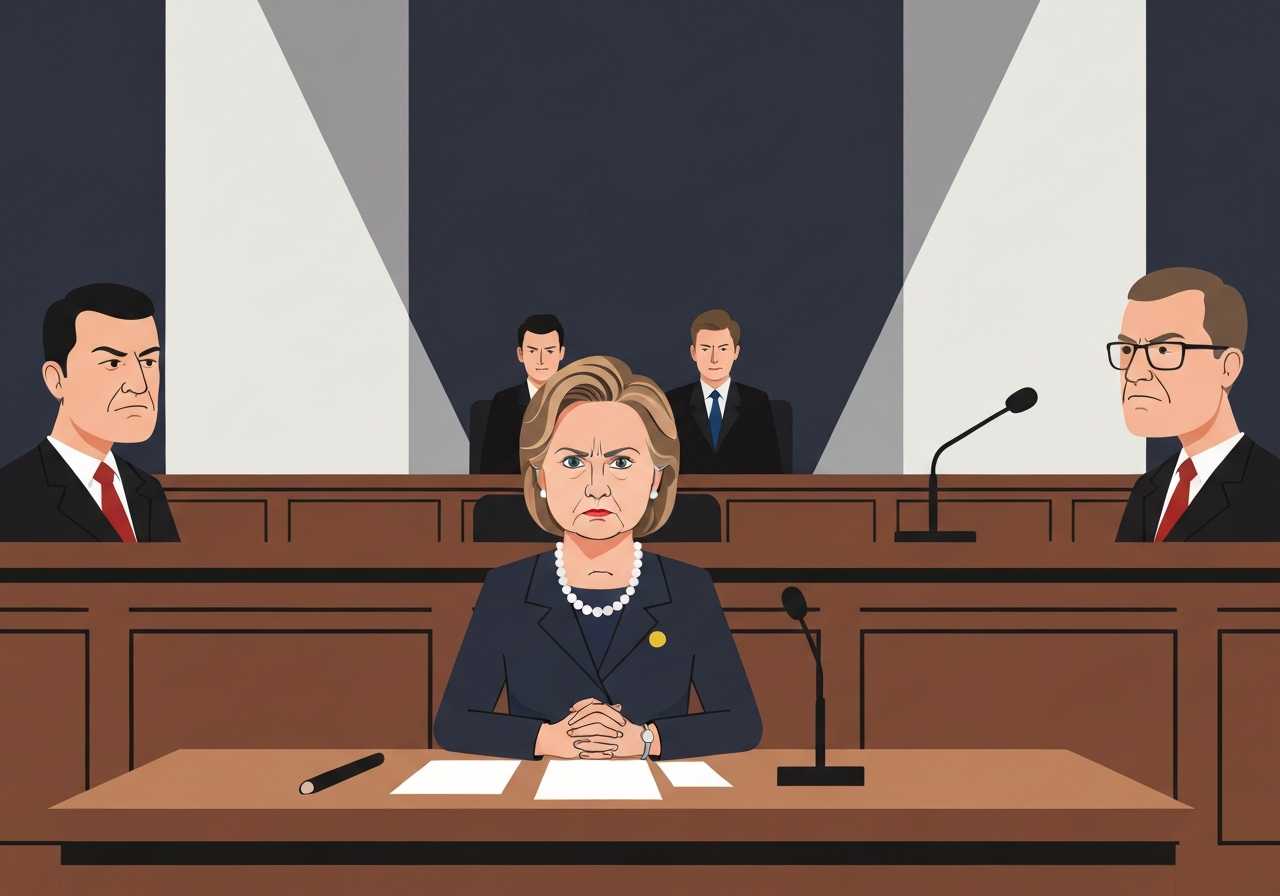
On Feb. 26, 2026, former secretary of state Hillary Clinton testified under oath for more than six hours at the Center for Performing Arts in Chappaqua, N.Y., before the House Oversight Committee. She said she never met Jeffrey Epstein and denied any knowledge of his crimes, and she abruptly paused the deposition after learning that a Republican lawmaker had leaked a photograph from inside the room. The session followed months of legal wrangling over subpoenas from Republican Chairman James R. Comer; former President Bill Clinton is scheduled to appear the next day. The hearing ended without a public breakthrough and with heightened partisan rhetoric from both sides.
Key Takeaways
- Hillary Clinton testified Feb. 26, 2026, in a closed deposition at the Center for Performing Arts in Chappaqua, N.Y., and said she never met Jeffrey Epstein.
- The deposition lasted more than six hours and was conducted by the House Oversight Committee led by Rep. James R. Comer (R-Ky.).
- Rep. Lauren Boebert (R-Colo.) leaked a photograph from inside the room; the image was posted online by podcaster Benny Johnson, prompting Clinton to halt testimony temporarily.
- Clinton and her aides have argued the subpoenas were politically motivated and resisted testifying for months before complying.
- Bill Clinton is slated to appear before the same panel on Feb. 27, 2026, continuing the committeeâs inquiry into connections to Jeffrey Epstein.
- Clinton accused Republicans of staging “partisan political theater,” saying the probe appears aimed at protecting a party and a public official rather than seeking justice for victims.
Background
The House Oversight Committee, under Republican leadership, has pursued a wide-ranging inquiry into Jeffrey Epsteinâs network since Epsteinâs 2019 conviction and death in custody. Committee Republicans have subpoenaed a range of figures they say may have information about Epsteinâs contacts and potential enabling behavior. Democrats and some legal experts have criticized the subpoenas as overbroad and politically motivated, particularly when they target high-profile former officials.
Hillary Clinton and former President Bill Clinton fought the subpoenas for months, calling them invalid and unenforceable; legal motions and negotiations delayed both depositions. Committee Chairman James R. Comer framed the inquiry as a probe of accountability, while Clintonâs camp characterized it as a partisan exercise timed near election cycles to damage certain political figures. The dispute reflects broader partisan tensions over congressional oversight and the use of subpoenas.
Main Event
Clinton arrived in Chappaqua appearing defiant after weeks of refusing to comply with the panelâs demands. She delivered a prepared opening statement distributed by aides that strongly criticized the committeeâs motives and emphasized her denials of any relationship with Epstein. Under oath, she repeatedly said she never met Epstein and denied knowledge of his criminal activities, according to attendees and a readout provided by her team.
Roughly an hour into the session, the deposition was interrupted when Clinton learned that Representative Lauren Boebert had leaked a photograph taken inside the room. The image was quickly shared on social media by right-wing podcaster Benny Johnson, creating an immediate uproar over courtroom privacy and committee procedures. Clinton stopped answering questions briefly and conferred with counsel before the session resumed.
Committee Republicans pressed a range of questions about Clintonâs social and professional contacts during the years when Epstein was active. Clinton acknowledged public interactions tied to her public life but maintained she had no personal connection to Epstein or knowledge of his offenses. The session closed without any new evidence disclosed publicly and with plans for further testimony, including that of former President Bill Clinton on the following day.
Analysis & Implications
The deposition underscores how investigations into Jeffrey Epstein remain politically combustible more than six years after his death. For Republicans, pursuing high-profile figures serves both oversight and political messaging purposes; for Democrats, the effort risks appearing retaliatory. That dynamic raises questions about Congressâs ability to conduct fact-finding without perception of partisan bias, especially when hearings are closed and key materials remain undisclosed.
Legally, compelling testimony from former presidents and secretaries of state stretches congressional oversight norms and prompts litigation over the validity of subpoenas. The push-and-pull seen here could set precedents for how far committees may go when investigating private criminal networks that intersect with public figures. Courts may ultimately be asked to resolve disputes over scope and enforcement.
Practically, the leak of a deposition photograph highlights operational vulnerabilities in closed proceedings and fuels demands for clearer rules and sanctions. The rapid circulation of the image transformed a controlled legal setting into a social-media flashpoint, undermining confidence in committee safeguards and giving partisan actors material to mobilize supporters. The episode may prompt committees to revise protocols regarding electronic devices, photography and room access.
Comparison & Data
| Date | Event |
|---|---|
| 2019 | Jeffrey Epstein dies in federal custody |
| 2024â2016 | Committee issues subpoenas and litigates compliance |
| Feb. 26, 2026 | Hillary Clinton deposition in Chappaqua, N.Y. |
| Feb. 27, 2026 | Bill Clinton scheduled to testify |
The timeline above shows the long tail of oversight activity stemming from Epsteinâs crimes and death. While the committee has issued multiple subpoenas over months, public disclosures from closed sessions remain limited. This partial visibility complicates assessments of whether the panelsâ efforts are producing new, verifiable evidence.
Reactions & Quotes
Clintonâs published opening remarks, circulated by her aides before testimony, accused the committee of partisan motives; the passage below captures her core characterization and was distributed to reporters in advance.
“This was designed to protect one political party and one public official, rather than to seek truth and justice for the victims and survivors.”
Hillary Clinton, statement distributed to reporters
Committee Republicans defended the subpoenas as essential oversight. A senior Republican aide argued the panel is following leads and that high-profile witnesses can illuminate unresolved questions tied to Epsteinâs network.
“Our responsibility is to follow evidence wherever it leads, regardless of office or status.”
House Oversight Committee spokesperson
Public reaction was immediate on social media, with commentators across the spectrum using the leaked image and testimony excerpts to reinforce preexisting narratives about the committeeâs intent and fairness. Supporters of Clinton said the inquiry was performative; critics portrayed it as overdue scrutiny.
“The leak demonstrated how oversight can quickly spill into partisan spectacle.”
Independent legal analyst
Unconfirmed
- No public evidence has been produced during the deposition to contradict Clintonâs denial of meeting Epstein; assertions of new documents or witnesses remain unverified.
- Reports that the leaked photograph originated from a staffer inside the room are not independently confirmed; the committee has not released a formal finding on the source.
Bottom Line
The Feb. 26 deposition reinforced existing partisan divisions: Republicans pressed for accountability and potential disclosures tied to Jeffrey Epstein, while Clinton framed the inquiry as politically motivated and denied any personal involvement. The leak of a photograph magnified tensions and raised procedural questions about how closed congressional proceedings are protected from unauthorized dissemination.
With Bill Clinton scheduled to testify the next day and limited public evidence emerging from closed sessions, the immediate prospect of a decisive factual breakthrough appears slim. The episode is likely to prompt procedural reviews, possible legal challenges over subpoena scope, and sustained public debate about the role of congressional oversight when investigations intersect with highly polarized politics.
Sources
- The New York Times (news report)
- House Oversight Committee (official committee site)