
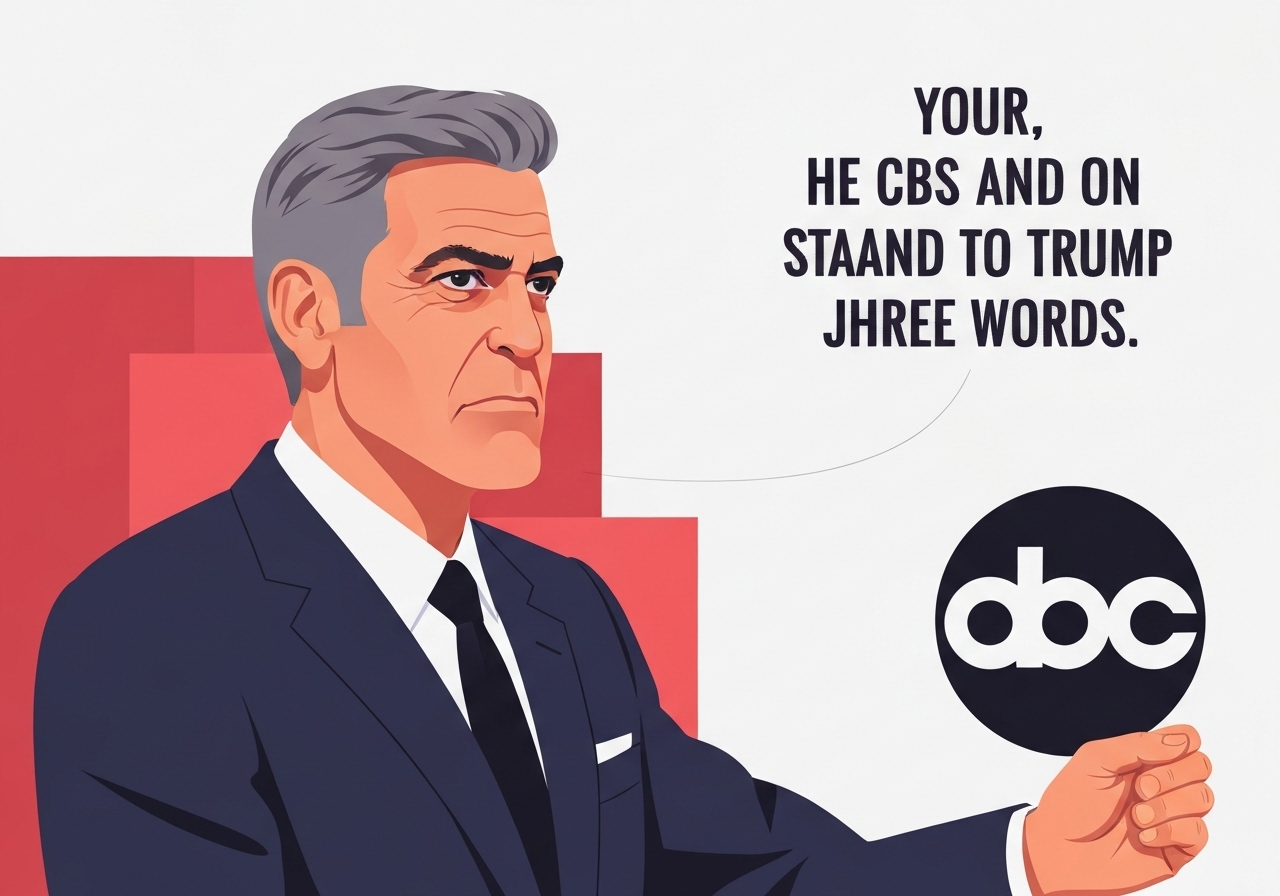
Actor and activist George Clooney, in a Variety cover story published Tuesday, criticized CBS and ABC for settling lawsuits brought by President Donald Trump and his administration. Clooney said the networks’ decisions — including Paramount’s settlement over a “60 Minutes” suit and ABC News’s December defamation settlement — represent a missed chance to resist legal pressure. He framed the choices as consequential for how Americans will be informed and warned that a weakened press risks distorting public reality. Clooney described his reaction as anger and urged journalists and media executives not to capitulate.
- Clooney spoke to Variety on Tuesday and said he was “enraged” by recent settlements between major networks and President Trump.
- Paramount, parent of CBS, settled a lawsuit tied to a “60 Minutes” story ahead of a Skydance merger that requires administration approval.
- ABC News reached a defamation settlement with President Trump in December (reported as occurring last December by HuffPost).
- Clooney connected the controversy to changes at CBS News under Paramount CEO David Ellison and the appointment of Bari Weiss as editor-in-chief.
- He invoked Edward R. Murrow’s standards — having portrayed Murrow on Broadway — to argue for journalistic courage against political pressure.
- Clooney warned that settlements and editorial shifts could erode public ability to discern reality from misinformation.
- The actor urged persistence: he said quitting is not an option and stressed continuing investigative work despite pressure.
Background
The dispute centers on a wave of legal complaints filed or threatened by President Donald Trump against news organizations and journalists, and how media companies have responded. In the last year, two high-profile settlements drew attention: Paramount’s deal related to a “60 Minutes” lawsuit and ABC News’s defamation settlement reported in December. Both outcomes have been read by critics as signs that corporate calculus — including regulatory and merger considerations — can influence newsroom decisions.
George Clooney has a unique vantage: a college journalism major and son of journalist Nick Clooney, he has portrayed CBS figure Edward R. Murrow, whose reporting in the 1950s challenged Senator Joseph McCarthy’s tactics. That historical reference underpins Clooney’s argument that press institutions have a duty to resist intimidation. Recent leadership changes at CBS News, including the hiring of Bari Weiss and management under Paramount CEO David Ellison, have intensified scrutiny from journalists and observers concerned about ideological shifts and newsroom independence.
Main Event
In his Variety interview published Tuesday, Clooney criticized CBS and ABC for settling lawsuits rather than litigating them in court. He specifically pointed to Paramount’s settlement connected to a “60 Minutes” case and the ABC News settlement reported last December, arguing those choices signaled deference to political pressure. Clooney said the networks missed a pivotal chance to assert editorial independence and protect investigative reporting for the broader public good.
Clooney accused recent management choices of contributing to the problem, naming Paramount CEO David Ellison and Bari Weiss, who was appointed editor-in-chief at CBS News. He told Variety he saw Weiss’s actions as dismantling long-standing practices at CBS News and flagged concern about a rightward tilt in coverage. The actor also noted a specific incident — Weiss reportedly holding a “60 Minutes” report on a notorious El Salvador prison — as an example of editorial interference that raised alarms among critics.
Throughout the interview Clooney mixed personal reflection and institutional critique. He described a relationship with the president that was once friendly but has since become strained by legal and political tensions, framing the current moment as “very trying.” He urged those in journalism to continue robust reporting despite pressure, saying quitting is not an option and that progress requires persistence.
Analysis & Implications
The settlements carry implications beyond immediate legal outcomes: they may set practical precedents for how outlets weigh litigation risk against public-interest reporting. When a major news organization opts to settle rather than defend a story, other outlets and sources may read that choice as a signal that certain investigations are too risky to pursue. This dynamic can chill investigative journalism, narrowing the scope of coverage on powerful institutions and officials.
Corporate concerns also play a central role. The Paramount-Skydance merger context illustrates how business negotiations and regulatory approvals can intersect with editorial decisions. If legal settlements are perceived as tactical moves to facilitate corporate deals, public confidence in a firewall between newsroom judgment and corporate strategy may erode. That perception can fuel skepticism about media independence regardless of the networks’ stated intentions.
Leadership changes — whether ideological or managerial — add another layer of consequence. The appointment of an editor-in-chief with distinct editorial views can reshape newsroom priorities and hiring, assignment and publication decisions. Over time, such shifts can redirect coverage emphases and influence how audiences interpret major civic issues, from criminal justice abroad to domestic political controversies.
Comparison & Data
| Network | Reported Settlement Timing | Case Context |
|---|---|---|
| CBS / Paramount | Reported ahead of Skydance merger | Settlement over lawsuit related to a “60 Minutes” report |
| ABC News | Last December | Defamation lawsuit settlement with President Trump (reported) |
The table summarizes the factual contours reported in coverage: two high-profile settlements and the contexts in which they occurred. Precise settlement dates and confidential terms were not publicly detailed in the reporting cited; the timing references rely on the original accounts. These outcomes should be seen as part of a broader pattern of litigation threats and responses affecting major outlets over the past several years.
Reactions & Quotes
“If CBS and ABC had challenged those lawsuits and said, ‘Go fuck yourself,’ we wouldn’t be where we are in the country.”
George Clooney, in Variety (reported)
This direct, profane phrase from Clooney was presented in the interview to illustrate his view that assertive legal resistance would have changed the current media landscape. He used it as shorthand for an uncompromising legal and editorial posture he believes news outlets should adopt.
“I’m worried about how we inform ourselves and how we’re going to discern reality without a functioning press.”
George Clooney, in Variety (reported)
Clooney linked contemporary newsroom choices to broader civic consequences, invoking the public’s ability to separate fact from misinformation as a core concern motivating his criticism.
“Paramount settled the suit ahead of a merger approval process, and ABC resolved a separate defamation claim in December,”
HuffPost (reporting)
This summary quote captures the factual reporting on the settlements and situates them within corporate and calendar contexts reported by HuffPost.
Unconfirmed
- Whether the Paramount settlement was explicitly required by the administration as a condition of approving the Skydance merger has not been independently confirmed.
- The full terms and any nonpublic conditions of the ABC and Paramount settlements have not been disclosed publicly.
- The extent to which Bari Weiss’s editorial decisions alone account for changes at CBS News remains a matter of attribution and subject to internal detail not yet public.
Bottom Line
George Clooney’s intervention reframes recent network settlements as more than legal footnotes: he casts them as emblematic of a broader tension between editorial independence and corporate or political pressure. His historical reference to Edward R. Murrow is intended to remind media leaders and the public of journalistic norms that favor rigorous reporting even when it invites confrontation with powerful actors.
The practical stakes are significant. If newsrooms increasingly opt for settlement over defense, investigative journalism may shrink in both scope and boldness, and public trust in media independence could decline. The coming months will be critical: watchdog reporting, transparency about settlement terms where possible, and internal newsroom safeguards will shape whether those trends accelerate or are checked by renewed commitments to press freedom.