
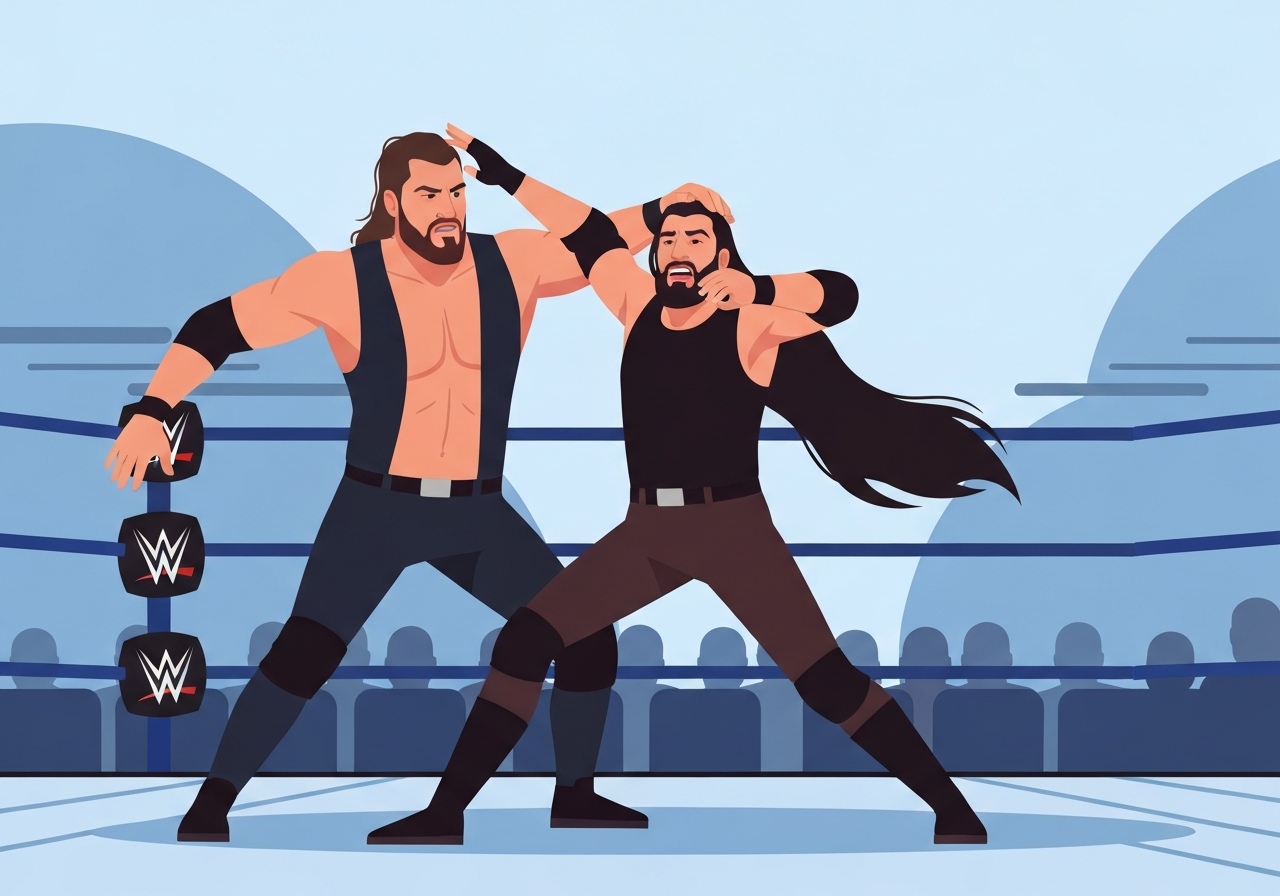
On Feb. 6 SmackDown in WWE, Cody Rhodes interrupted WWE Champion Drew McIntyre’s entrance, attacking the champion before officials separated them. Rhodes — adopting the nickname “Raheem” on the mic — delivered a brazen, profanity-laced boast and warned that McIntyre will not reach WrestleMania 42. General Manager Nick Aldis responded by announcing Rhodes must qualify for the Elimination Chamber in a match next week, and he cautioned Rhodes to control his intensity. The exchange sets a clear storyline thread toward the Feb. 28 Elimination Chamber and raises stakes for the road to WrestleMania.
Key Takeaways
- Feb. 6 SmackDown saw Cody Rhodes ambush WWE Champion Drew McIntyre during McIntyre’s entrance, forcing a referee and officials intervention.
- Rhodes adopted the moniker “Raheem” on the mic and issued an explicit on‑air taunt before pivoting to a WrestleMania warning.
- Rhodes publicly claimed he had been unfairly eliminated from the Royal Rumble; the angle frames his comeback narrative.
- GM Nick Aldis announced Rhodes must win an Elimination Chamber qualifying match next week to pursue a path to WrestleMania 42.
- The Elimination Chamber match is scheduled for Feb. 28; Rhodes’ qualification is presented as uncertain if he cannot control his conduct.
- Officials separated the combatants after the attack and McIntyre left the arena, leaving Rhodes to close the segment.
Background
The exchange builds on the post‑Royal Rumble storylines that have dominated WWE programming this season. Cody Rhodes has been cast as a fired‑up challenger since that pay‑per‑view, and he has repeatedly argued he was eliminated from the Royal Rumble under unfair circumstances. Drew McIntyre, as WWE Champion, is booked as a focal target on the road to WrestleMania 42; protecting the titleholder while elevating emerging challengers is a recurring WWE creative objective.
Elimination Chamber has become a conventional gatekeeper event on the way to WrestleMania, often producing a contender for a world title match. General Managers and on‑screen officials typically use qualifiers and disciplinary story beats to create unpredictability and narrative tension. Nick Aldis’ on‑air role here is to both enforce rules and manage storyline logistics, telling Rhodes that emotional discipline will be a condition for maintaining his WrestleMania path.
Main Event
The segment opened with Drew McIntyre’s customary confident entrance; moments later Rhodes struck, using the element of surprise to land multiple strikes before production and ringside staff intervened. Referees and security separated the two men, and McIntyre retreated from the scene, selling the impact of the attack. Rhodes then seized the microphone, introduced himself as “Raheem,” and used a mix of swagger and provocation to up the ante with the audience and the champion.
After a crude on‑air boast that drew strong crowd reaction, Rhodes refocused his promo on McIntyre’s title and his own grievance stemming from the Royal Rumble. He framed his actions as correcting an earlier injustice and explicitly declared that McIntyre would not make it to WrestleMania. Producers cut the in‑ring tension into a backstage exchange that allowed television to pivot to official consequences.
Nick Aldis later confronted Rhodes with an on‑camera directive: Rhodes must qualify for the Elimination Chamber in a match next week if he wants a shot on the WrestleMania path, and he must exhibit better control or risk having plans altered. Rhodes agreed to leave the building to cool off, ending the segment with his status as a potential qualifier intact but contingent on next week’s result.
Analysis & Implications
From a storytelling perspective, the segment advances a classic challenger arc: provoke the champion, stake a claim to grievance, and insert a gatekeeping obstacle (the qualifier). Making Rhodes work his way into the Elimination Chamber preserves suspense while positioning him as both a sympathetic figure and an unpredictable presence. Promoters often use such beats to build buy‑in for a long‑term pay‑off at WrestleMania.
For Drew McIntyre, the attack serves two functions: it reiterates his status as a marked champion and gives him a ready‑made grievance to carry forward. If McIntyre is booked to retaliate, the physical and narrative momentum could culminate in a marquee match that helps sell WrestleMania tickets and streaming buys. The short timeline—Feb. 6 to a Feb. 28 Chamber—means the company must balance quick escalation with credible booking.
There is also a character management risk: Rhodes’ crude taunt and the new “Raheem” label could energize segments but might also alienate portions of the audience or complicate merchandising and mainstream promotion. WWE will need to weigh short‑term buzz against brand considerations as it decides whether the nickname and tone become recurring elements.
Comparison & Data
| Event | Date | Consequence |
|---|---|---|
| SmackDown segment (ambush) | Feb. 6 | Rhodes attacks McIntyre; on‑air warning issued |
| Elimination Chamber | Feb. 28 | Qualifier determines route toward WrestleMania |
| WrestleMania 42 | — | Long‑term destination for top storylines |
The timeline shows a compressed promotional window: three weeks separate the SmackDown altercation and the Chamber match, which forces rapid creative decisions. Historically, WWE has used this length of time to launch credible chase stories that resolve at WrestleMania; success depends on clear stakes and consistent booking over television and pay‑per‑view weeks.
Reactions & Quotes
Immediately after the segment, social media and fan forums split between praise for the heat generated and concern over the crude elements. Broadcast partners and mainstream advertisers monitor such segments for brand fit, while core wrestling audiences tend to reward high‑emotion promos that advance a clear storyline.
“Drew McIntyre, don’t worry about a thing, because you won’t make it to WrestleMania!”
Cody Rhodes (on SmackDown, Feb. 6)
Rhodes’ on‑air warning crystallized his intent and established a direct challenge to McIntyre’s WrestleMania trajectory. The line frames Rhodes not just as an antagonist but as an active threat to the champion’s plans.
“You need to control your emotions, otherwise plans might have to change.”
Nick Aldis (WWE General Manager, on SmackDown)
Aldis’ directive introduced a conditional narrative device: Rhodes’ path is contingent on both in‑ring success and in‑character discipline. That gives creative flexibility to reward or punish Rhodes based on the match outcome and subsequent segments.
“Tonight’s ambush raised the stakes for the road to WrestleMania.”
Cain A. Knight (Cageside Seats analyst)
Independent analysts summarized the segment as a compact escalation intended to create momentum toward the February Chamber and, ultimately, WrestleMania.
Unconfirmed
- Whether Cody Rhodes will win his Elimination Chamber qualifier on Feb. 28; WWE has not announced the match card in full.
- Whether the “Raheem” nickname and the explicit taunt will become a sustained character direction or remain a one‑off promo beat.
- Any backstage disciplinary steps or altered creative plans beyond the on‑air warning from Nick Aldis have not been publicly confirmed.
Bottom Line
The SmackDown segment on Feb. 6 advanced a direct storyline linking Cody Rhodes to Drew McIntyre’s WrestleMania plans while inserting an immediate hurdle: an Elimination Chamber qualifier. This structure creates both short‑term television stakes and a clear path toward a potential WrestleMania confrontation, provided Rhodes can navigate the qualifier and any creative adjustments.
For viewers and bookers alike, the key watch points are next week’s qualifier, how WWE balances heat with brand concerns around explicit promos, and whether the promotion builds Rhodes into a top contender for WrestleMania 42. The coming three weeks will determine whether this beat becomes a headline‑level rivalry or a transient segment.