
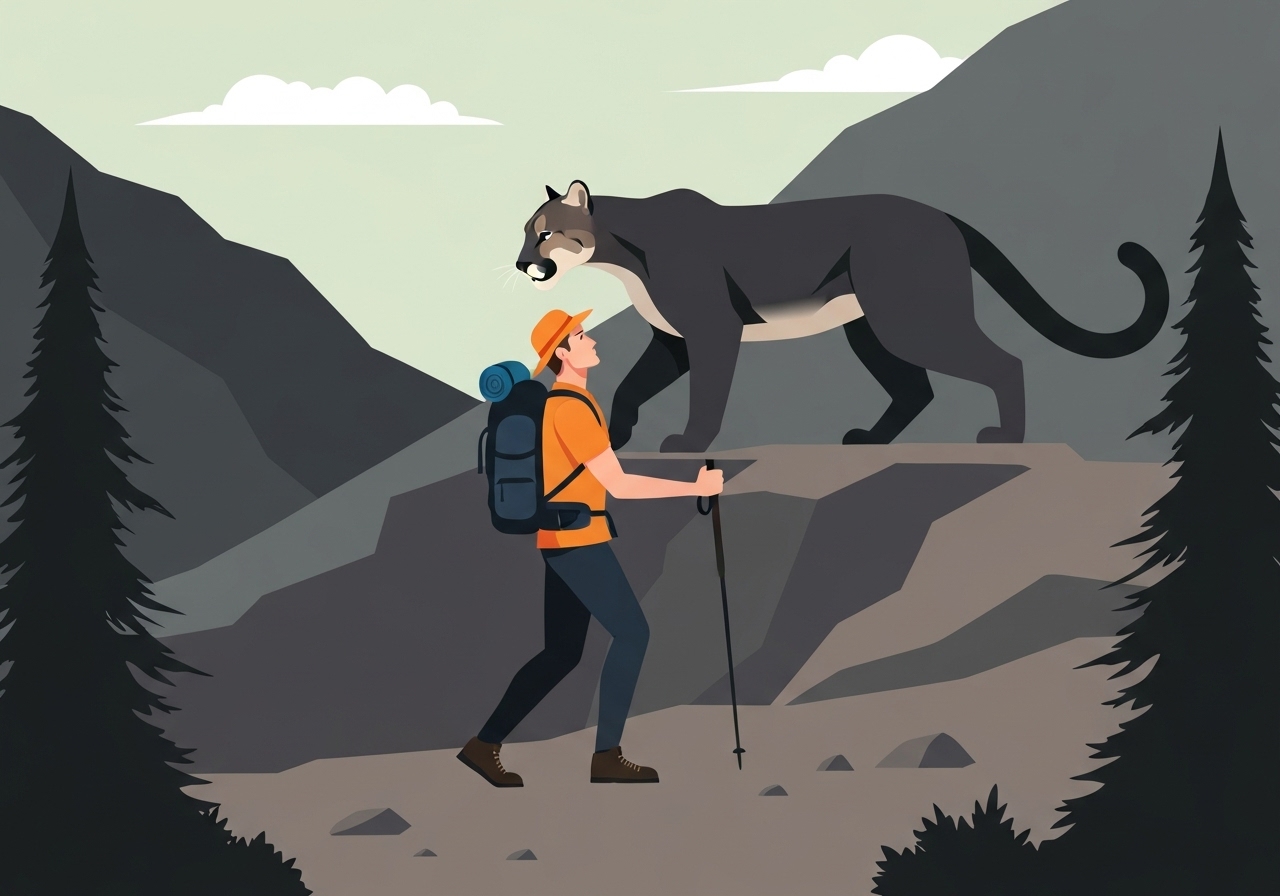
Lead: On Wednesday, a woman believed to be hiking alone was found dead on the Crosier Mountain Trail north of Denver after a group of hikers encountered a mountain lion nearby and then discovered her body, Colorado Parks and Wildlife (CPW) officials said. The incident, if confirmed as a mountain lion attack, would be the first fatal cougar attack in Colorado since 1999. Responders tracked and euthanised two mountain lions during an extensive search; both animals are being examined for human DNA. Local authorities have notified next of kin and continue an active investigation.
Key Takeaways
- The body was found on the Crosier Mountain Trail, a remote route north of Denver near the Wyoming border and Rocky Mountain National Park.
- If verified as a mountain lion attack, it would be Colorado’s first fatal attack since 1999; CPW records show 28 mountain lion incidents in the state since 1990.
- Hikers at the scene threw rocks to drive the cat away and found no pulse on the victim, according to CPW spokesperson Kara Van Hoose.
- CPW officers shot one mountain lion that ran off, tracked it and euthanised it; a second lion was later located and also put down.
- Both euthanised animals are being tested for human DNA to determine involvement; if neither is linked, the search will continue for the attacker.
- Under CPW policy, any wildlife confirmed to have killed a person must be euthanised for public safety.
- Search assistance came from the Larimer County sheriff’s office, Estes Park police, volunteer firefighters, a helicopter biologist and houndsmen using tracking dogs.
Background
Mountain lions (also called pumas, cougars, catamounts or panthers) are solitary predators found across much of North America, now concentrated mainly in 15 western U.S. states. Encounters with people are uncommon, and fatal attacks are rare; Colorado Parks and Wildlife (CPW) notes only 28 recorded mountain lion incidents in the state since 1990. The last confirmed human fatality attributed to a mountain lion in Colorado occurred in 1999, making this case potentially unprecedented in a quarter-century.
Wildlife agencies balance public safety with species conservation. CPW policy requires euthanasia of any animal confirmed to have killed a human, a rule intended to prevent further harm while investigators seek forensic evidence. Remote trail systems such as Crosier Mountain can complicate rapid response: cell signals are often unreliable, and terrain may limit how quickly teams and equipment can reach a scene.
Main Event
According to CPW, a group of hikers discovered the woman’s body on a secluded segment of the Crosier Mountain Trail on Wednesday and observed a mountain lion in the vicinity. The hikers threw rocks and the animal retreated; they then examined the woman and could find no pulse. CPW spokesperson Kara Van Hoose relayed these details in a press briefing and confirmed the woman is believed to have been hiking alone.
CPW officers who responded to the report encountered a mountain lion that fled after officers fired; trackers followed and the animal was located and euthanised. A second mountain lion was found nearby during the same operation and was also euthanised. Both animals are being tested for human DNA to establish whether either was involved in the attack.
If forensic results do not link either euthanised animal to the incident, CPW has said the search for the attacking animal will resume. Larimer County sheriff’s deputies, Estes Park police and volunteer firefighters participated in the field response. A biologist conducting a deer survey by helicopter assisted ground teams and helped ferry personnel, while houndsmen brought tracking dogs that CPW described as an often-effective method for locating mountain lions.
Analysis & Implications
The incident highlights persistent tensions between recreation in backcountry areas and the realities of large-predator ecology. While mountain lions generally avoid humans, isolated trails and lone hikers can increase the potential for surprise encounters; loss of cell service on remote routes further complicates emergency response. Wildlife managers must weigh public safety measures—such as the euthanasia rule and targeted removals—against conservation goals for a large carnivore whose populations remain a priority for many agencies and advocacy groups.
For land managers and local communities, the case may prompt renewed emphasis on public education about hiking in cougar habitat: travel in groups, keep children and pets close, make noise on blind corners, and carry deterrents where permitted. It may also spur additional patrolling or temporary trail advisories near the incident site, particularly if forensic testing confirms a predatory attack linked to a specific animal or animals.
On a policy level, the event could rekindle debate about how strictly to apply «remove-if-linked» rules when animals are suspected of killing people versus investing in non-lethal conflict reduction. For wildlife scientists, DNA testing of the euthanised lions will be a key piece of evidence that shapes both immediate management decisions and longer-term guidance for human-wildlife coexistence in the region.
Comparison & Data
| Metric | Value |
|---|---|
| Recorded mountain lion incidents in Colorado (since 1990) | 28 (CPW) |
| Last confirmed fatal attack in Colorado | 1999 |
| Mountain lions euthanised at this scene | 2 |
These summary figures place the event in the context of generally low incidence but high-impact encounters. Even with relatively few recorded incidents over decades, each fatality prompts large-scale multi-agency responses and forensic investigation given public concern and the conservation status of large carnivores.
Reactions & Quotes
“They checked the body and could find no pulse,”
Kara Van Hoose, Colorado Parks and Wildlife spokesperson
This concise statement from CPW summarized the hikers’ immediate observation and was delivered as part of an official briefing to media and investigators.
“Under CPW rules, wildlife that kills a human being must be euthanised for public safety reasons,”
Colorado Parks and Wildlife (policy statement)
CPW reiterated its longstanding policy to prioritise public safety in confirmed human-fatality incidents; that policy guided the decision to euthanise the two animals found on site pending DNA testing.
“Mountain lion attacks are rare, but encounters can have serious consequences,”
Mountain Lion Foundation (conservation group)
The foundation regularly advises caution in cougar country and emphasizes coexistence strategies to reduce encounters while protecting healthy populations where feasible.
Unconfirmed
- Whether a single mountain lion or multiple animals carried out the attack remains unresolved pending DNA results and forensic analysis.
- The identity and age of the victim have not yet been publicly released; next of kin have been notified but formal identification is pending.
- It is not yet confirmed whether either of the two euthanised lions was the attacking animal; investigators may resume searching if tests are negative.
Bottom Line
The discovery of a hiker’s death on the Crosier Mountain Trail and the subsequent euthanasia of two mountain lions has reopened tough questions about public safety and wildlife management in Colorado’s backcountry. While fatal mountain lion attacks are historically rare in the state, the potential confirmation of an attack will prompt local agencies to revisit trail safety guidance and enforcement of existing policies.
For residents and visitors, the immediate takeaway is practical: exercise heightened caution on remote trails, favor group travel where possible, and report suspicious animal behavior quickly to authorities. For wildlife managers and conservationists, the forensic results will be decisive in shaping follow-up actions and public messaging about coexistence with a large carnivore that remains an important part of the region’s ecosystems.
Sources
- BBC News — media report summarizing CPW statements and on-scene details.
- Colorado Parks and Wildlife (CPW) — state wildlife agency (official site, policy and press resources).
- Mountain Lion Foundation — conservation organization (background on distribution and behavior).