
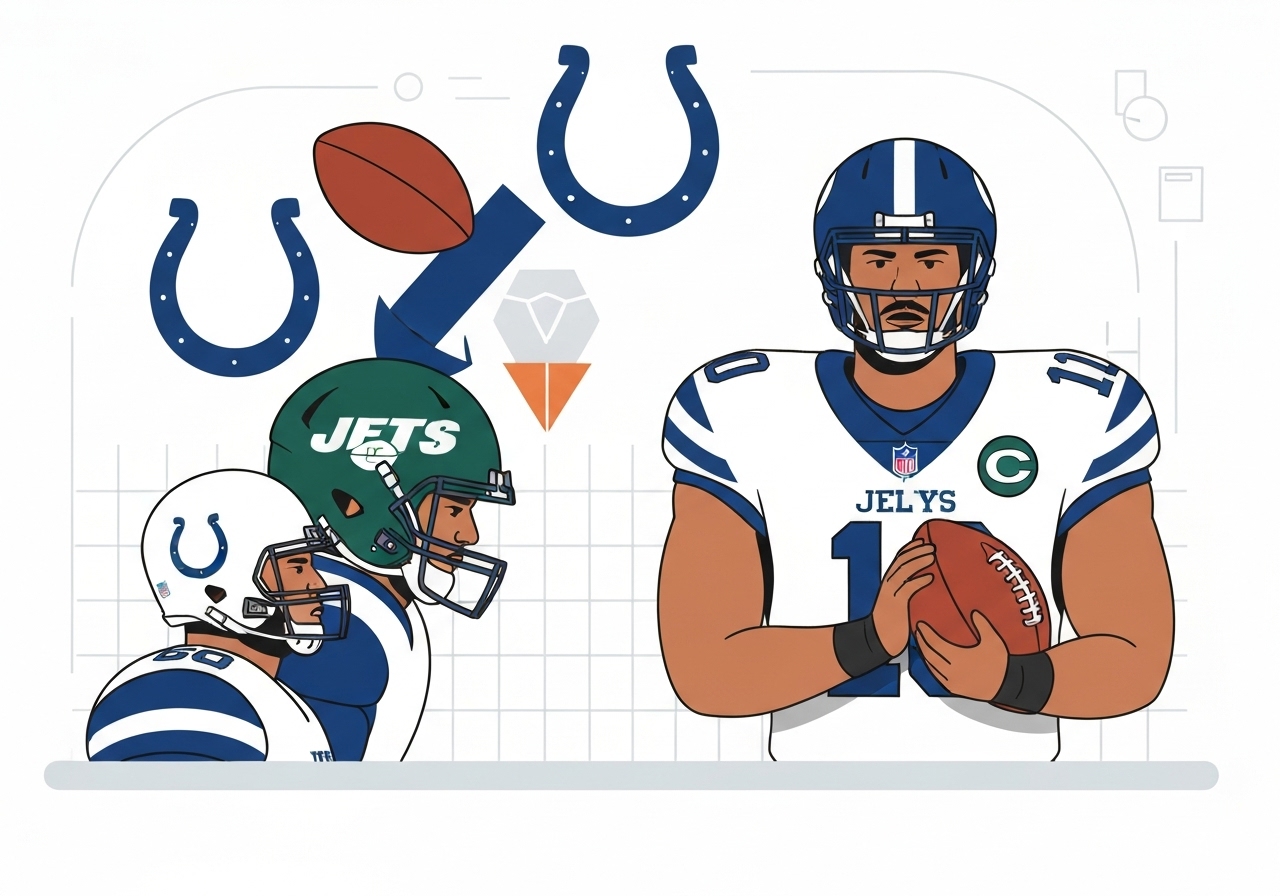
On the heels of a 5–1 start, the Indianapolis Colts scrambled when offseason signing Charvarius Ward suffered a concussion in warmups, compelling the team to seek a long-term cornerback solution. In the run-up to the NFL trade deadline the Colts quietly engaged the New York Jets and ultimately acquired All-Pro corner Sauce Gardner, a move that reshuffled assets across three franchises. The Jets, having rebuilt contract structures and embracing roster flexibility under new GM Darren Mougey, traded Gardner to gain draft capital and a young player. Meanwhile the Dallas Cowboys used that momentum to land interior disruptor Quinnen Williams, altering their defensive core and cap profile.
Key Takeaways
- The Colts traded for Sauce Gardner after Charvarius Ward’s warmups collision and a concurrent injury to rookie starter Justin Walley, addressing a sudden hole at cornerback.
- Gardner arrives in Indianapolis at the league minimum for the rest of the season and an average salary of $23.22 million over the next three years, positioning the Colts to prioritize defense while keeping future quarterback decisions open.
- The Jets prioritized roster flexibility: Gardner’s contract was structured so a 2025 trade would carry roughly an $11 million dead-cap hit, and March 2026 contained a $20 million bonus to limit future dead money.
- The Cowboys pivoted to acquire Quinnen Williams, a player under a contract paying $7.825 million in 2025, $21.75 million in 2026 and $25.5 million in 2027, after reshaping defensive needs following the Micah Parsons negotiations.
- Mougey instituted weekly trade-value reviews for every roster player, a practice traced to lessons learned in Denver and designed to avoid recency bias and be ready for unexpected opportunities.
- Key personnel and ownership in Indianapolis kept the Gardner talks tightly held — only GM Chris Ballard, assistant GM Ed Dodds, coach Shane Steichen and owner Carlie Irsay‑Gordon were fully briefed while the deal was negotiated.
- The Jets leave the deadline with more draft capital and positional flexibility but a roster described as less talented than it was a weekend earlier; the move creates optionality to pursue a quarterback or continue rebuilding.
Background
Indianapolis entered the deadline window at 5–1, and the sudden loss of Charvarius Ward — a 29‑year‑old veteran corner who sustained his second concussion of the season in warmups — exposed a thin position group. Rookie Justin Walley, who had earned a starting job, was already sidelined, forcing the Colts front office to search beyond internal depth for a top-tier solution. That urgency coincided with the league’s trade calendar and created an opening for a high-impact transaction.
In New York, Darren Mougey’s first months as GM involved two major extensions — Sauce Gardner and receiver Garrett Wilson — negotiated with explicit guardrails to preserve tradeability. Gardner’s contract design and the Jets’ weekly roster valuation exercises were intended as insurance: not because the Jets planned to dismantle their defense, but to ensure they could react if a compelling offer arrived. Those internal processes and prior experiences in Denver shaped how New York evaluated and ultimately monetized assets.
Main Event
The sequence accelerated when Colts assistant GM Ed Dodds contacted Mougey while calling around the league for cornerback help. Mougey, who had directed new weekly trade-value meetings, indicated the Jets would listen to offers on any defensive player. That openness kept dialogue alive and allowed Ballard to pursue a higher-end solution rather than a short-term stopgap. Over several weeks, talks intensified and the Colts framed Gardner as a long-term fit in Lou Anarumo’s scheme.
Ballard brought the proposal to owner Carlie Irsay‑Gordon on the Monday before the deadline, asking whether to “Band‑Aid” the problem or fix it for the long term. Irsay‑Gordon chose the latter, greenlighting a package that included young receiver Adonai Mitchell and draft capital. The two clubs agreed to keep negotiations confidential while Jets GM Mougey attended Nick Mangold’s funeral, and confirmed the Gardner trade after the service concluded.
The movement of Gardner immediately altered the landscape. The Cowboys, who had been discussing Micah Parsons and evaluating interior defensive targets, reengaged on Quinnen Williams. Dallas had clarity on Williams’s value and had the draft capital to make a significant offer; they ultimately acquired Williams and reshaped their defensive spending and roster composition. The three-team ripple effect reallocated top‑end defensive talent and picks across the NFC and AFC.
Analysis & Implications
The Colts’ decision to acquire Gardner illustrates a franchise choosing to accelerate competing window timelines. By trading premium assets and a young receiver with developmental upside, Indianapolis signaled confidence in the current roster — and in Daniel Jones, who is in a contract year. The move sacrifices draft capital that could have funded a future quarterback pursuit, underscoring a win-now posture anchored on defensive upgrade and immediate playoff aspirations.
For the Jets, the trade exemplifies intentional asset management. Mougey’s emphasis on tradeability — including structuring Gardner’s bonuses so a 2025 trade would carry about an $11 million dead cap hit — allowed New York to convert a high-cost starter into draft flexibility and a young wideout acquisition. The front office now possesses the capital to chase a quarterback in one of the next two offseasons or to retool via the draft, but it also concedes a short-term talent decline from the version of the roster fielded the previous weekend.
The Cowboys’ inward pivot to Quinnen Williams reflects a durable tactical choice: replace a higher-cost edge presence by moving resources to the interior, where Williams provides constant disruption. Dallas’s contract for Williams (notably lower than some alternative stars) gives the franchise cap flexibility, and the trade represents a bet that interior pressure and run‑stopping will better suit their defensive evolution under coordinator Matt Eberflus.
Comparison & Data
| Player | 2025 Salary | 2026 Salary | 2027 Salary |
|---|---|---|---|
| Sauce Gardner (Colts) | League minimum (rest of 2025) | Part of average $23.22M over next 3 years | Part of average $23.22M over next 3 years |
| Quinnen Williams (Cowboys) | $7.825M | $21.75M | $25.5M |
The table highlights the immediate cap contrast the teams are accepting. Gardner’s deal gives the Colts short-term affordability and medium-term commitments that average roughly $23.22 million across three years, while Williams arrives in Dallas on a schedule that is front-loaded into 2026–27. These figures shaped how each team balanced present competitiveness against future flexibility.
Reactions & Quotes
Team and league figures framed the trades as strategic and considered moves rather than panicked deadline grabs. The Colts emphasized long-term defensive fit and roster construction in internal conversations leading to the trade.
We wanted to fix the position for more than just the immediate need — that guided our thinking throughout talks.
Indy front office (paraphrased)
The Jets’ new leadership framed their weekly trade-value process as a readiness exercise shaped by prior experiences with major player transactions.
We reviewed every player’s trade value every week so we could be ready for opportunities — it’s about preparation, not panic.
Darren Mougey, Jets GM (paraphrased)
Observers in Dallas described the Williams acquisition as a move to restore interior strength and to give defensive coordinator Matt Eberflus more scheme flexibility.
Adding an interior piece of this caliber lets us run more five‑man fronts and creates matchup advantages up front.
Cowboys personnel source (paraphrased)
Unconfirmed
- Precise compensation structure the Colts sent in the Gardner deal beyond public mentions of Adonai Mitchell and draft capital has not been fully disclosed by both teams on the record.
- Whether the Jets will prioritize a quarterback aggressively in 2025 or wait until 2026–27 remains an internal strategic question without a firm timetable announced.
Bottom Line
The trade deadline trades among Indianapolis, New York and Dallas represent deliberate roster reshaping rather than last‑minute scrambling — though the Colts’ initial urgency stemmed from an unexpected injury. Each club accepted tradeoffs: the Colts traded future capital to strengthen a key defensive position; the Jets exchanged a premier corner for flexibility and plans for future quarterback pursuit; and the Cowboys swapped resources to shore up their interior line and defensive identity.
Collectively, the moves underscore how modern GMs deploy contract design, weekly valuation practices and discretion in negotiations to manufacture options. Over the next 18 months the real test will be whether those options convert into sustained team improvement, playoff success, or if the lost draft capital inhibits future roster investments.