
Lead
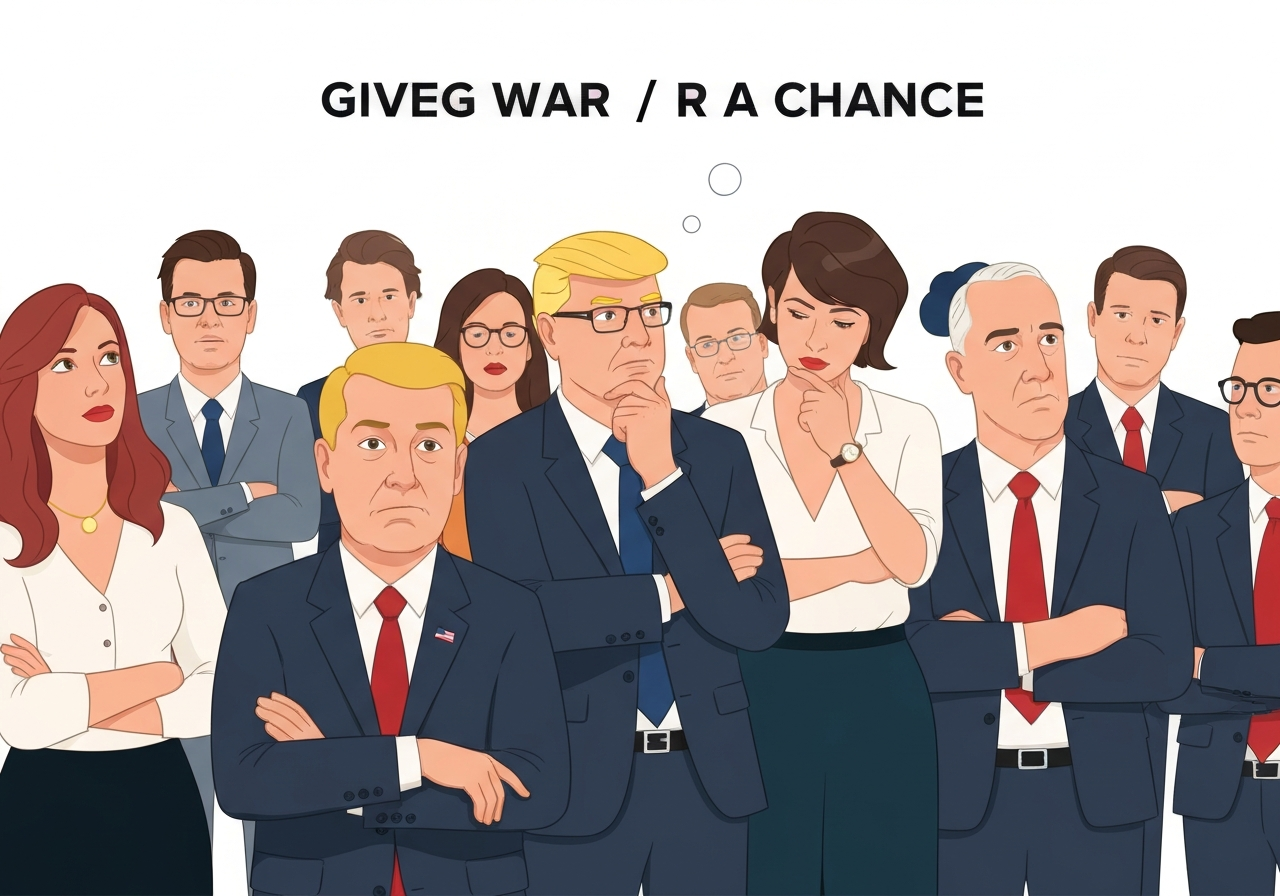
At the Conservative Political Action Conference in Dallas on March 27–28, 2026, Republican activists and officials debated support for the military campaign in Iran that began roughly a month earlier. Organizers aligned with the America First movement pushed attendees toward backing the administration, but informal signals of opinion ranged from wary to willing. An unofficial bean poll run by Republicans for National Renewal shifted late in the event, highlighting unresolved divisions about duration, costs and the prospect of a ground invasion. Economic worries — rising gasoline prices and slipping markets — amplified attendee concerns about a long conflict.
Key Takeaways
- CPAC was held in Dallas on March 27–28, 2026, convening many prominent America First activists and organizers.
- An unofficial booth poll by Republicans for National Renewal used pinto beans to gauge attendee support; the balance moved toward support after a large, late influx of beans.
- Former Rep. Matt Gaetz publicly warned that a ground invasion would harm U.S. security and finances, reflecting anti-intervention sentiment among some attendees.
- Secretary of State Marco Rubio asserted on March 28 that the United States would not need ground troops and predicted the campaign could conclude in weeks rather than months.
- President Trump did not appear on the CPAC schedule this year, removing a focal point for unity or dissent among attendees.
- Attendee unease was heightened by near-term economic indicators: higher gasoline prices and downward pressure on stock markets were frequently cited at panels and in conversations.
Background
CPAC has long been a gathering place for conservative activists, and in recent cycles it became a central forum for America First anti-interventionist arguments. The conference’s leadership this year — including Matt and Mercedes Schlapp — has cultivated close ties to former President Trump and his political orbit. That institutional alignment left organizers with an implicit task: reconcile a base skeptical of foreign wars with an administration pursuing military options in the Middle East.
The current military action in Iran began roughly one month prior to the conference and has already affected international markets, U.S. energy costs and partisan dynamics in Washington. Historically, CPAC audiences have ranged from isolationist-leaning activists to hawkish nationalists; those fault lines reemerged as attendees parsed intelligence claims, strategic aims and exit scenarios. External stakeholders — advocacy groups, pro-Israel organizations, and defense-oriented donors — also pressed messages into the CPAC conversation, increasing the event’s policy stakes.
Main Event
Throughout the first two days, an informal exhibit run by Republicans for National Renewal placed two Mason jars of pinto beans on a table so attendees could register support or opposition to expanded military action. For much of the event the jars were nearly even, with a slight edge for “yes” responses. Late on Thursday or early Friday, a sudden large deposit shifted the unofficial tally toward favoring the war, a change that attendees described to reporters as decisive and controversial.
On the conference floor and at multiple panels, speakers repeatedly returned to the question of ground troops. Former Representative Matt Gaetz took a clearly cautionary tone, saying a U.S. ground invasion would make the country “poorer and less safe,” an argument that resonated with many who prioritize nonintervention. By contrast, conference rhetoric from organizers and some speakers emphasized firmness and the need to appear united behind the administration’s posture.
Secretary of State Marco Rubio addressed the crowd and sought to limit fears of a prolonged occupation, saying he believed ground forces would not be necessary and that the campaign could conclude in weeks rather than months. Still, audience questions and informal conversations exposed skepticism about optimistic timelines and raised practical concerns about costs, troop levels and regional escalation. Panels also discussed the political calculus for Republican officials weighing loyalty to the president against traditional America First opposition to foreign entanglements.
Analysis & Implications
The CPAC debates underscore a pivotal moment for the conservative movement: whether the America First brand adapts to endorse limited overseas military engagements or reasserts a stricter noninterventionist posture. If the movement tilts toward conditional support for the administration’s campaign, it could broaden the room for presidential initiative but risk alienating a segment of the base that prioritizes domestic-first policies. That tension has immediate electoral implications for Republican candidates who must reconcile local economic anxieties — notably higher fuel costs — with national security messaging.
Economically, even short-term military operations can push up energy prices and unsettle markets, which in turn feed back into public opinion. Attendees at CPAC repeatedly linked concerns about gasoline and stocks to broader worries about how long a conflict might last. Politically, Republican leaders who present a short, decisive campaign as likely may avoid intraparty fracture; if operations extend, pressure for reassessment and restraint will grow within activist ranks and among voters worried about economic fallout.
Regionally and globally, a U.S. campaign targeting Iran implicates allies and adversaries in ways that could reshape Middle East alignments. Support from some pro-Israel and security-focused groups at CPAC signaled backing for strong measures, while anti-intervention conservatives warned of escalation risks. That split complicates coalition-building in Washington and may influence congressional deliberations over funding and oversight in the weeks ahead.
Reactions & Quotes
Conference attendees and speakers offered sharply divergent framings of the campaign’s risks and objectives. Speakers who cautioned against escalation were explicit about costs and strategic danger; supporters emphasized leadership and decisive action.
“A ground invasion of Iran will make our country poorer and less safe.”
Matt Gaetz, former U.S. Representative
Gaetz’s remark drew audible agreement from segments of the crowd who have long opposed foreign entanglements, and it framed subsequent conversations about probable U.S. troop commitments and fiscal effects.
“We should not need to deploy ground troops, and the operation can be measured in weeks, not months.”
Secretary of State Marco Rubio
Rubio’s comment was intended to reassure attendees anxious about a protracted occupation; nonetheless, sceptical delegates and several panelists questioned evidence for such a compressed timeline and called for clear metrics for success.
Unconfirmed
- The exact circumstances and authorship of the late bean influx at the Republicans for National Renewal booth remain unverified; organizers and attendees offered conflicting accounts.
- Precise internal White House deliberations about a potential ground invasion were not publicly disclosed at CPAC and remain subject to confirmation from official sources.
- No reliable, conference-wide survey of attendee views on the war was conducted; the bean jars were an informal indicator rather than a representative poll.
Bottom Line
CPAC revealed a conservative movement at an inflection point: institutional forces within the conference atmosphere tilted toward supporting the administration’s campaign in Iran, but substantial anti-interventionist currents persisted. Economic anxieties and doubts about the length and cost of military operations made many attendees cautious about unqualified backing.
How the movement resolves this tension will influence Republican politics in the near term — affecting messaging, fundraising and primary dynamics — and will shape whether CPAC’s America First brand redefines itself around conditional support for military action or reasserts a stricter isolationist posture. For now, the conference highlighted disagreement more than consensus, leaving the question of long-term alignment unresolved.
Sources
- The New York Times — media report on CPAC coverage and remarks (news)
- Conservative Political Action Conference (CPAC) — event organizer and program information (organization)