
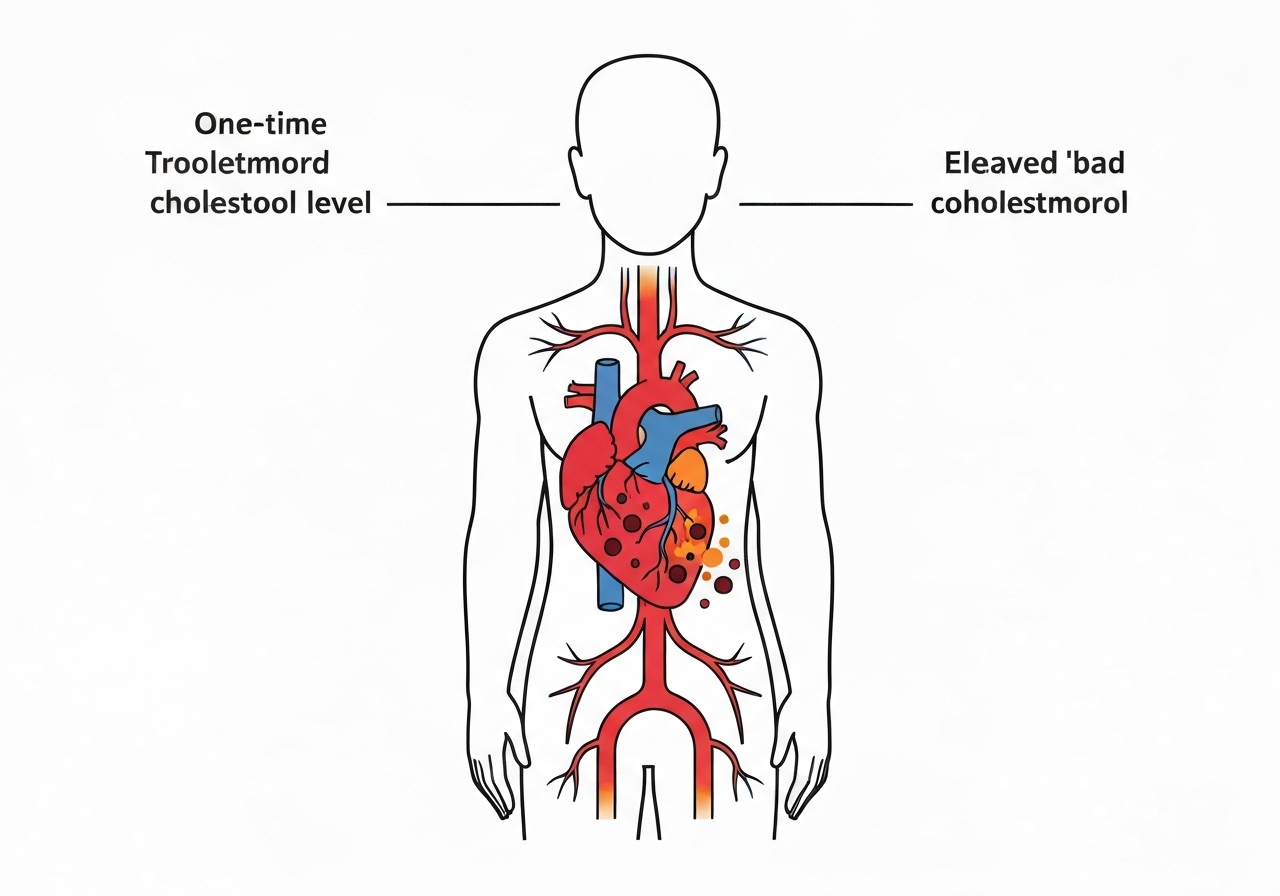
Lead: A small human trial presented at the American Heart Association meeting on November 8, 2025, reports that a single CRISPR-based intervention targeting the liver gene ANGPTL3 cut low-density lipoprotein (LDL) cholesterol and triglycerides by about 50% within weeks. The trial enrolled adults whose cholesterol remained high despite existing therapies and used an in‑vivo gene edit to mimic naturally protective mutations. Results, published in The New England Journal of Medicine and shared at the AHA annual meeting, suggest one-time molecular approaches could alter how some cases of high cholesterol are managed. Researchers and clinicians caution the findings are preliminary and long-term safety and wider applicability remain under study.
Key Takeaways
- The trial used CRISPR to disable ANGPTL3 in liver cells; participants saw roughly a 50% fall in LDL cholesterol and triglycerides within weeks after a single treatment.
- The study cohort was small and made up of adults with persistently high lipids despite standard therapies; safety follow-up is ongoing beyond the initial weeks reported.
- Results were published in The New England Journal of Medicine (peer-reviewed) and presented at the American Heart Association annual meeting on November 8, 2025 (official conference presentation).
- The intervention is an in‑vivo gene edit intended to recreate protective, naturally occurring ANGPTL3 loss‑of‑function variants associated with lower cardiovascular risk.
- Clinical translation will require long-term safety data, regulatory review, and scale-up; the treatment is not yet available for routine care.
- Experts highlight that even if one‑time edits are effective for some, prevention through diet, activity, sleep and stress management remains central to population heart health.
Background
Cardiovascular disease is the world’s leading cause of death, and elevated LDL cholesterol and triglycerides are established, modifiable risk factors. For decades, most patients have been managed with daily pharmacologic regimens—statins, ezetimibe, PCSK9 inhibitors—and lifestyle measures. Adherence gaps and genetic drivers of lipid disorders mean some patients continue to have high levels despite guideline care, creating a search for complementary approaches.
ANGPTL3 is a liver-produced protein that helps regulate lipid metabolism; rare people with loss‑of‑function variants in ANGPTL3 have markedly lower LDL and triglycerides and lower cardiovascular risk. CRISPR and related gene‑editing platforms have moved quickly from laboratory models to targeted human trials, with the present study testing whether a one-time edit can safely reproduce that protective effect in adults with stubborn hyperlipidemia.
Main Event
The trial enrolled a limited number of adults whose lipids remained elevated despite treatment. Investigators delivered a CRISPR editing payload directed at ANGPTL3 into the liver in a single procedure. Within weeks, measured LDL cholesterol and triglycerides fell by approximately half compared with baseline in the treated cohort, a magnitude that, if durable, would be clinically meaningful.
Investigators reported the biochemical changes at the AHA meeting on November 8, 2025, and the data are published in The New England Journal of Medicine. The research team emphasized intensive safety monitoring, describing routine laboratory follow-up and targeted assays to detect unintended edits or immune reactions. No major immediate safety signals were reported in the short follow‑up window described, but the team underlined that surveillance must continue.
Participants chosen for the trial were adults with persistent dyslipidemia despite standard care; the protocol excluded certain groups and used controlled conditions to limit risk. The approach is presented as gene editing rather than traditional gene therapy: it attempts to make a precise change to an existing gene in the patient’s liver cells to reduce lipid production pathways that raise LDL and triglycerides.
Analysis & Implications
If replicated and shown durable and safe over years, a single in‑vivo edit that halves a patient’s LDL could transform management for a subset of people with genetically or biologically driven hyperlipidemia. For individuals who struggle with adherence, access, or response to daily medications, a durable molecular intervention could reduce lifetime exposure to high lipids and lower cardiovascular events.
However, population impact depends on several factors beyond short‑term efficacy: the proportion of patients who are appropriate candidates, the durability of effect over many years, the absence of delayed adverse effects, and cost and distribution logistics. Regulatory authorities will require long follow‑up and larger randomized trials before approving a broadly available clinical use.
Ethical and access questions will follow: who will qualify, how will equity be protected, and how will health systems pay for or prioritize one‑time high‑cost interventions versus lifelong low‑cost medicines and public‑health prevention? The technology could widen choice but also risks magnifying disparities if availability is limited to well‑resourced centers initially.
Comparison & Data
| Intervention | Typical LDL reduction (reported) |
|---|---|
| Single CRISPR ANGPTL3 edit (trial) | ~50% reduction in LDL and triglycerides within weeks (small cohort) |
| High‑intensity statins | ~40–50% LDL reduction depending on agent and dose (established clinical range) |
| PCSK9 inhibitors | ~50–60% LDL reduction on top of background therapy (monoclonal antibody class) |
Context: the trial’s reported ~50% lipid drop is comparable to high‑intensity lipid‑lowering strategies, but the evidence here comes from a small and early study with limited follow‑up. Established drug classes have much larger safety and outcome datasets, while gene edits will need long‑term outcome trials to show reduced heart attacks and strokes and to confirm durability beyond months or years.
Reactions & Quotes
“This represents an important proof of concept that a targeted in‑vivo edit can materially change lipid levels in humans,” the study team said when presenting the results.
Study authors / trial investigators (presentation, AHA 2025)
“The findings are exciting but not yet practice‑changing; regulators will need long‑term data on safety and efficacy before this can be offered widely,” a cardiology expert commented.
Cardiology specialist (expert reaction)
“Patients who struggle with daily medicines may welcome new options, but access and affordability must be addressed up front,” said a patient advocacy representative.
Patient advocate (community organization)
Unconfirmed
- Durability beyond the initial weeks and months is unknown; long‑term lipid control and cardiovascular outcome benefits are unconfirmed.
- Rates and clinical significance of any rare off‑target edits or delayed adverse events remain to be determined in larger studies.
- Which patient subgroups (by age, comorbidity, genetic background) will benefit most has not been established.
- Exact timelines for regulatory approval, pricing and broad clinical availability are unconfirmed and depend on further trial results and policy decisions.
Bottom Line
The trial is an important milestone: it shows that a one‑time CRISPR edit targeted to ANGPTL3 can sharply lower LDL and triglycerides in a small group of adults. That biological proof of concept opens possibilities for people whose cholesterol cannot be controlled with current therapies, but it does not replace decades of evidence supporting statins, lifestyle interventions and routine risk monitoring.
For most people today, the immediate takeaway is pragmatic: continue evidence‑based prevention—healthy diet, regular physical activity, good sleep and stress management—and keep regular lipid and blood pressure checks. If you have persistent high cholesterol despite treatment or a strong family history, discuss referral to a lipid clinic or genetic testing with your clinician; emerging molecular therapies may become options for selected patients in the future.
Sources
- Times of India — Manage heart disease without pills or diet (media)
- The New England Journal of Medicine (peer‑reviewed journal; article reporting trial results)
- American Heart Association — Annual Scientific Sessions (official conference)
- National Heart, Lung, and Blood Institute (official health agency; prevention guidance)