
Lead
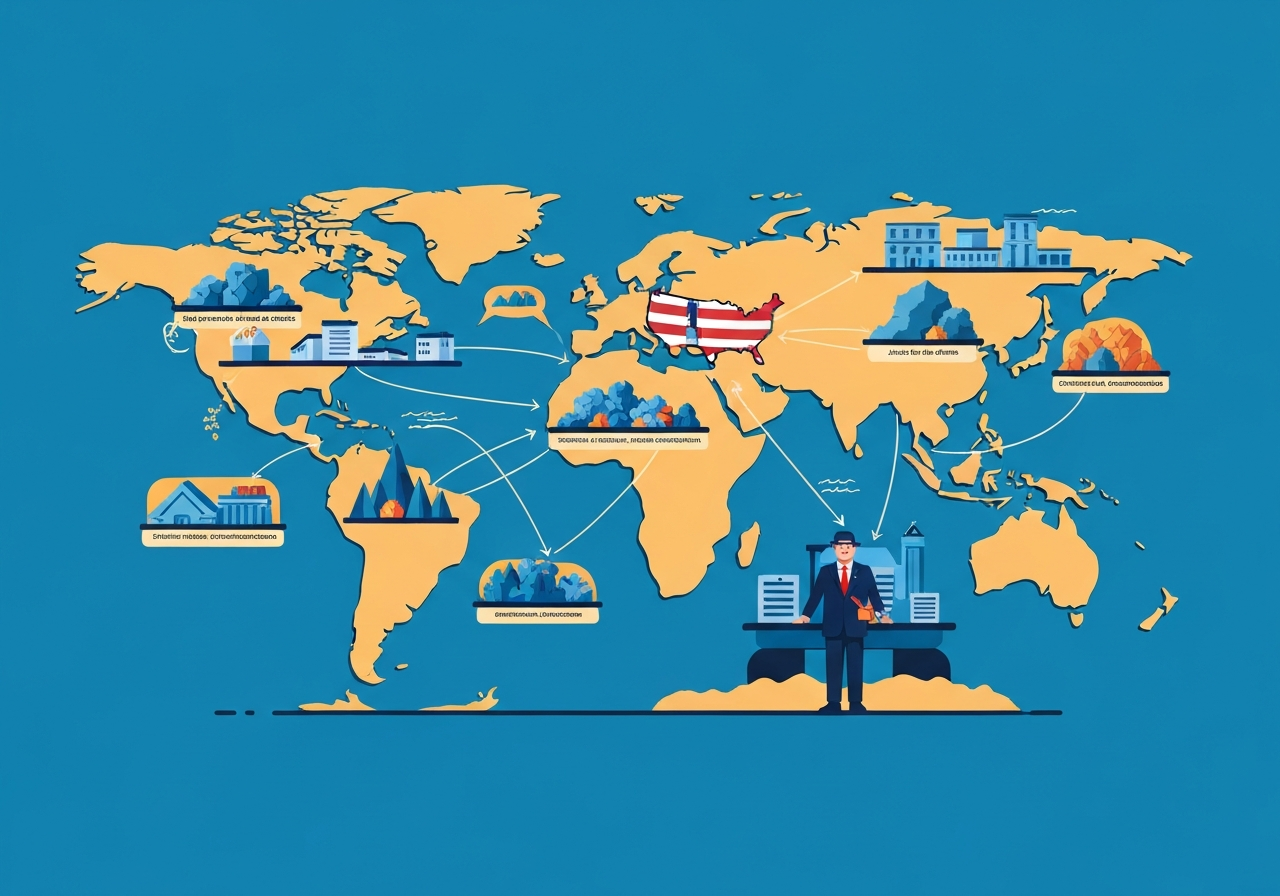
On Feb. 4, 2026, the Trump administration announced plans to rebuild U.S. supply chains for critical minerals used in jet engines, electric vehicles and smartphones, proposing both bilateral purchase agreements and a $12 billion strategic reserve. The initiative — tied to a new program called Project Vault — would be financed in part by a $10 billion Export-Import Bank loan and about $1.67 billion in private capital. Vice President J.D. Vance is slated to deliver a keynote at a multilateral meeting hosted by Secretary of State Marco Rubio, where the administration expects to sign logistics and procurement agreements with European, Asian and African partners. Officials framed the move as an effort to reduce dependence on China for processed minerals and bolster industrial resilience.
Key takeaways
- The administration proposes a $12 billion U.S. strategic reserve for critical minerals to reduce reliance on foreign processors and address national-security concerns.
- Project Vault will be capitalized through a reported $10 billion loan from the U.S. Export-Import Bank and roughly $1.67 billion in private investment.
- Vice President J.D. Vance will keynote a meeting convened by Secretary of State Marco Rubio with officials from several dozen countries to pursue purchase and logistics agreements.
- Rubio met foreign ministers from South Korea and India to discuss mining and processing cooperation ahead of the expected accords.
- The effort targets minerals used across defense and consumer sectors — from jet engines to smartphones — citing concerns about China’s dominant position in processing and refining.
- Details of the bilateral purchase agreements and exact reserve procurement levels have not been disclosed by the administration.
- The announcement coincides with other headline items in Washington, including a short-term DHS funding extension through Feb. 13, 2026, and ongoing legal and oversight developments involving senior political figures.
Background
Critical minerals — including rare earths, nickel, cobalt and lithium — are essential inputs for modern defense systems and civilian technologies. Over the past two decades, China built a dominant global position in processing and refining many of these materials, creating supply-chain vulnerabilities for the United States and allied economies. Previous U.S. efforts have focused on permitting reforms, domestic mining incentives, and targeted stockpiles, but industrial analysts say processing capacity and reliable international partners remain limited.
The Trump administration’s push reflects bipartisan concern in Washington about supply security after several pandemic-era disruptions and geopolitical tensions. Past administrations created strategic commodity reserves for fuel and agricultural products; applying the model specifically to processed critical minerals represents an escalation in economic-statecraft tools. Major private-sector mining and battery companies have lobbied for clearer federal policies and financing mechanisms to scale processing and downstream manufacturing in friendly jurisdictions.
Main event
On Feb. 4, 2026, the White House circulated details of Project Vault and announced that Vice President J.D. Vance would deliver a keynote address at a diplomatic meeting hosted by Secretary of State Marco Rubio. The gathering brings representatives from several dozen European, Asian and African nations, reflecting Washington’s effort to forge cooperative procurement and logistics arrangements rather than rely on single-source suppliers. Administration officials described planned purchase agreements as a complement to the proposed U.S. strategic reserve.
Rubio held preparatory talks with foreign ministers from South Korea and India on Feb. 3, focusing on mining, processing and secure transport corridors. U.S. diplomats aim to leverage allied industrial capacity — particularly in countries with mining potential or existing refining infrastructure — to create diversified, resilient supply chains. Precise procurement volumes, timeline for reserve build-out, and the identity of private partners were not disclosed at the announcement.
The administration said Project Vault’s financing package includes a reported $10 billion loan from the U.S. Export-Import Bank alongside approximately $1.67 billion in private capital commitments. Officials framed the move as both an economic measure and a national-security step to reduce dependence on a small number of processing hubs. The announcement comes amid broader U.S. policy activity, including short-term appropriations that fund the Department of Homeland Security only through Feb. 13, 2026.
Analysis & implications
Strategic reserves can blunt near-term supply shocks, but they are not a long-term substitute for domestic or allied processing capacity. A $12 billion reserve could provide purchasing power and a buffer for critical shortfalls, yet analysts note that building upstream processing plants and refining capacity requires years and substantial ongoing private investment. If Project Vault focuses on concentrate purchases and stockpiling processed materials, it could ease near-term constraints while governments and firms scale industrial projects.
Diplomatic procurement agreements could shift global trade patterns by encouraging investment in friendly jurisdictions and creating guaranteed off-take arrangements that lower project risk. Such contracts often underpin new mines and refineries; however, they can be complicated by permitting, environmental reviews and local opposition. Cooperation with South Korea, India and European partners would diversify routes away from China but will require harmonized standards and secure logistics for high-value, low-volume materials.
Economically, the program could stimulate domestic supply-chain employment and downstream manufacturing if paired with tax incentives and workforce development. Politically, the administration positions Project Vault as a national-security priority that can attract bipartisan support — though contentious domestic issues, including debates over immigration enforcement and independent federal authority, are testing cross-aisle cooperation in Congress. Internationally, the plan may deepen strategic competition with China, which could respond with export controls or competitive pricing strategies for processed minerals.
Comparison & data
| Item | Reported figure |
|---|---|
| U.S. strategic reserve proposed | $12 billion |
| Export-Import Bank loan (reported) | $10 billion |
| Private capital (reported) | ~$1.67 billion |
Context: previous U.S. strategic commodity efforts have varied in scale; here, the proposed $12 billion reserve targets processed critical minerals rather than bulk commodities. The financing package as reported blends public loan authority and private investment to mobilize capital quickly; exact procurement targets and replenishment rules were not released.
Reactions & quotes
Senate and congressional leaders reacted cautiously. Some Republicans warned against federal overreach on unrelated election administration proposals, while Democrats pressed for broader oversight of enforcement agencies in return for cooperation on other priorities.
“I’m not in favor of federalizing elections.”
Sen. John Thune (R-S.D.), as reported by Associated Press
Administration spokespeople emphasized the national-security rationale for Project Vault and the need to work with allies to create diversified processing networks. Industry groups welcomed financing tools but stressed that permitting and workforce development remain bottlenecks.
“The plan aims to reduce dependence on single-source processors and shore up supply-chain resilience.”
White House/Administration statement (as reported by Associated Press)
Outside analysts noted that procurement guarantees are a common tool to mobilize private investment in capital-intensive mining and processing projects, but warned of the long lead times to reach full-scale output.
“Off-take deals can de-risk projects, but building processing capacity takes years and consistent policy support.”
Industry analyst (commentary reported by Associated Press)
Unconfirmed
- Exact terms of the bilateral purchase agreements — including volumes, pricing and delivery timelines — have not been publicly released.
- Which countries will sign formal procurement or logistics pacts at the multilateral meeting remains unspecified beyond preparatory talks with South Korea and India.
- Precise allocation of the $12 billion reserve across specific mineral types and the schedule for withdrawals or replenishment have not been disclosed.
Bottom line
Project Vault marks an escalation in U.S. industrial policy to secure processed critical minerals by combining financing, diplomacy and stockpiling. The proposed $12 billion reserve and reported Export-Import Bank loan signal a willingness to deploy public finance to catalyze private investment and allied cooperation.
Implementation will determine impact: procurement agreements and seed financing can accelerate projects, but durable independence from concentrated processors requires years of investment, permitting reform, and sustained diplomatic coordination. Watch for details on contract terms, partner countries, and timelines to assess whether the plan materially reduces supply-chain risk or primarily serves as a short-term buffer.