
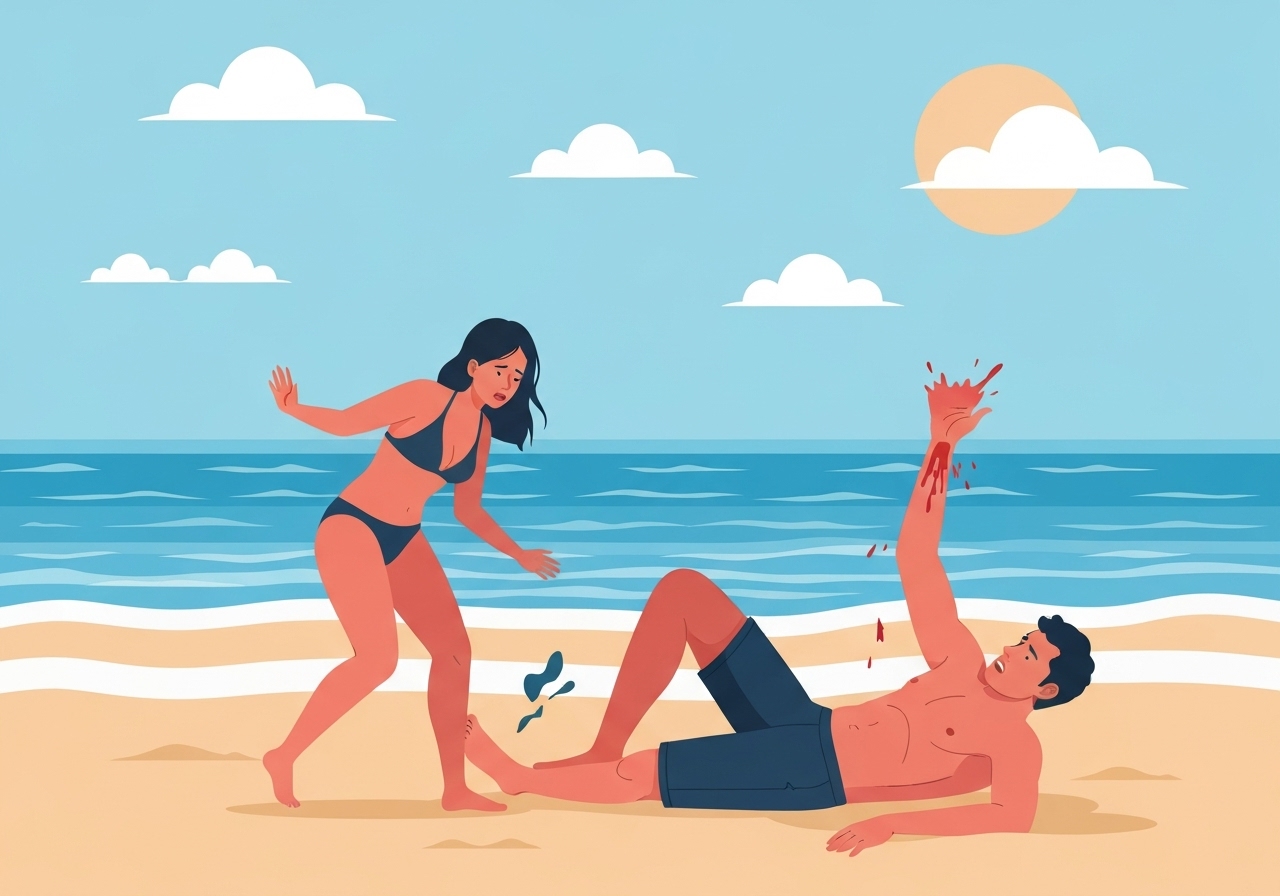
On Nov. 27, 2025, a shark attack at Kylies Beach in Crowdy Bay National Park, about 224 miles north of Sydney, left a woman dead and a man in his mid-20s seriously injured after the pair went for an early morning swim, police and state officials said. Emergency responders reached the scene after a bystander pulled both victims from the water; the woman died at the beach and the man was airlifted to hospital in serious but stable condition. Authorities and scientists identified the predator as a large bull shark, and local officials closed beaches north and south of the site while deploying baited drumlines. The Swiss Federal Department of Foreign Affairs confirmed the victims were Swiss nationals; consular staff are assisting relatives.
Key Takeaways
- The attack occurred at Kylies Beach, Crowdy Bay National Park, on Nov. 27, 2025, at about 6:30 a.m.; the woman died at the scene and the man was flown to hospital.
- Both victims were in their mid-20s and were known to each other, according to New South Wales police statements.
- State scientists identified a large bull shark as the attacking animal; five baited drumlines were set at Kylies Beach and lines already existed at Port Macquarie and Forster.
- A bystander applied a makeshift tourniquet to the man’s leg before paramedics arrived; NSW Ambulance said that action likely helped stabilize him.
- Authorities closed beaches in the area indefinitely while they search and monitor; surf life-saving services noted the location is remote and unpatrolled.
- The incident follows recent fatal and nonfatal encounters, including a fatal mauling off Sydney in September 2025 and two snorkelers injured by a single shark in 2019.
- Long-term data show more than 1,280 recorded shark incidents around Australia since 1791, with over 250 fatalities recorded in that span.
Background
Crowdy Bay National Park is a popular but remote stretch of coastline known for beach camping, fishing and hiking tracks; Kylies Beach sits within that park roughly 224 miles (about 360 km) north of Sydney. The area lacks permanent lifeguard services, a factor officials and surf-rescue representatives cited when discussing response times and safety considerations. New South Wales has used baited drumlines and targeted mitigation at several locations—Port Macquarie to the north and Forster to the south—to reduce the immediate risk after shark sightings or attacks.
Shark encounters in Australia are uncommon relative to the number of people who use the water, but recent years have seen high-profile incidents that reignited public debate over beach safety and mitigation strategies. The International Shark Attack File and national databases keep long-term records; those records show spikes and clusters but no simple trend that explains every local event. State agencies, academic researchers and ocean-users all have different priorities: public safety, ecological protection and preserving coastal recreation, which complicates response choices in places without lifeguards.
Main Event
Police and emergency services responded to reports of two people bitten at Kylies Beach at approximately 6:30 a.m. local time on Thursday. A bystander helped get both victims ashore and applied first aid before New South Wales Ambulance crews arrived; paramedics described the man’s condition as serious but stable and said the woman died at the scene.
Police Inspector Timothy Bayly confirmed the pair were known to each other and were swimming together when the attack occurred, but he declined to comment on detailed injury descriptions while the investigation continued. The state government later said scientists had determined the animal involved was a large bull shark, a species known to enter shallow, murky coastal waters and estuaries.
Officials deployed five baited drumlines off Kylies Beach to attempt to capture the shark and reduce immediate risk; drumlines had already been placed at Port Macquarie and Forster. Surf Life Saving NSW emphasized the remoteness of the site and the lack of life-guarding services in that stretch of coast, noting that rapid professional rescue resources were limited by distance.
Analysis & Implications
In the short term, the most visible consequences are beach closures and heightened local search-and-monitor operations using drumlines and aerial patrols. Those measures aim to reduce the immediate chance of a repeat incident but are controversial: drumlines can catch target and non-target animals and their use often prompts debate between conservation groups and public-safety advocates. Policymakers must weigh the limited, immediate risk-reduction benefits of such measures against ecological impacts and community sentiment.
From a public-health perspective, the bystander’s first aid—reportedly a makeshift tourniquet—likely changed the outcome for the male victim. Rapid, effective hemorrhage control and prompt airlift to trauma care are proven to reduce preventable death in severe limb-injury scenarios. In remote coastal locations without lifeguards, bystander response and coordinated emergency medical retrieval are often decisive.
Scientifically, experts say it is unusual for a single shark to bite two people in one event, so investigators will try to reconstruct the sequence of strikes, environmental conditions (water visibility, tide, bait or fish activity) and the animals present. Bull sharks are among the species most frequently implicated in nearshore attacks because they tolerate low-salinity water and often use estuaries and inshore zones for foraging.
Comparison & Data
| Selected incidents | Date | Outcome |
|---|---|---|
| Crowdy Bay (Kylies Beach) | Nov. 27, 2025 | 1 fatality, 1 serious injury |
| Sydney coast (surfer) | Sept. 2025 | Fatal mauling |
| Great Barrier Reef (snorkelers) | 2019 | Two injured by single shark |
Long-term databases show Australia has recorded more than 1,280 shark incidents since 1791, with over 250 fatalities in that period. While those cumulative figures are large historically, annual incident counts fluctuate and concentrated regional patterns matter more for policy. The International Shark Attack File has also noted a disproportionately high share of global shark-bite fatalities in Australia in 2023, a point researchers are still analyzing for context and causation.
Reactions & Quotes
Emergency and rescue officials publicly acknowledged the speed of bystander aid and the limitations of rescue presence at remote beaches.
“At this stage, all I’m prepared to say is they were known to each other and they were going for a swim and the shark attacked.”
Police Chief Inspector Timothy Bayly (NSW Police)
“I just really need to have a shoutout to the bystander on the beach who put a makeshift tourniquet on the male’s leg which obviously potentially saved his life.”
Paramedic Josh Smyth (NSW Ambulance)
“This area is so remote, there’s no life guarding services up there at all.”
Steven Pearce, Surf Life Saving NSW
Scientists also urged caution about drawing broad lessons before the investigation and forensic analysis of wounds and shark behavior are complete. Gavin Naylor of the University of Florida—who manages the International Shark Attack File—said multiple factors must be reviewed to understand why a large shark would bite more than one person in a single episode.
Unconfirmed
- Whether a single individual shark was responsible for both bites remains under investigation pending forensic and observational evidence.
- The precise sequence of events in the water—what the victims were doing immediately before each bite and the shark’s behavior pattern—is not yet publicly confirmed.
- While a bystander’s tourniquet correlated with the male survivor’s stabilization, definitive attribution of his survival to that action alone is not confirmed.
- The full identities of the victims have not been released publicly; nationality was confirmed by the Swiss Federal Department of Foreign Affairs, but other personal details remain private.
Bottom Line
The fatal Nov. 27, 2025 attack at Kylies Beach underscores two linked realities: serious shark incidents remain rare but can occur suddenly in remote, unpatrolled coastal areas, and rapid bystander and emergency medical action materially affects survival odds. Authorities have taken immediate steps—beach closures and deployment of drumlines—to reduce short-term risk while investigators and scientists reconstruct the event.
Longer term, the incident will likely renew debates about safety measures for remote beaches, the ecological costs and benefits of mitigation tools like drumlines, and investment in community education and accessible rescue resources. For swimmers and coastal communities, the practical takeaways are to heed local closures and warnings, prefer patrolled beaches when available, and be aware that in remote locations emergency timelines are longer and individual preparedness can be decisive.
Sources
- CBS News (news report, CBS/AP)
- International Shark Attack File (academic/database, University of Florida)
- Swiss Federal Department of Foreign Affairs (official consular statement reference)
- NSW Police Force (official)