
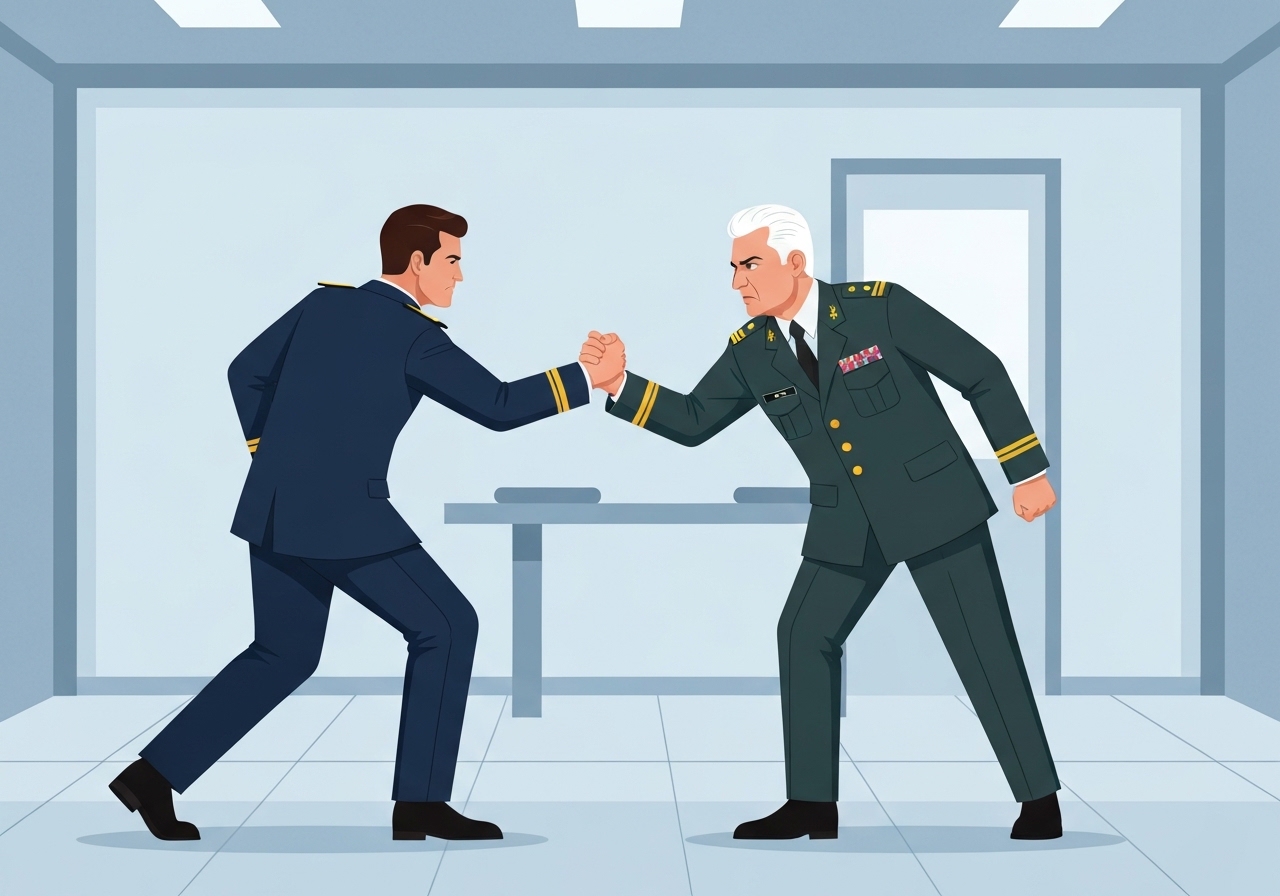
Lead: Cuban President Miguel Díaz‑Canel publicly rejected U.S. pressure after President Donald Trump said Havana must “make a deal” while warning that Venezuelan oil and funds that have long supported the island would be cut off. The exchanges took place over the weekend after a U.S. operation captured Venezuelan leader Nicolás Maduro, and Trump said Washington will take possession of 30–50 million barrels of Venezuelan oil. Havana responded by insisting no outside power dictates Cuban policy and by noting the human and economic costs it faces. The dispute adds strain to already tense U.S.–Cuba relations and raises immediate worry about fuel supplies on the island.
Key Takeaways
- President Trump announced a U.S. plan to receive 30–50 million barrels of Venezuelan oil following a U.S. operation that captured Nicolás Maduro; he warned there would be “no more oil or money going to Cuba.”
- President Miguel Díaz‑Canel said on X that “no one dictates what we do,” rejecting demands that Cuba negotiate with Washington on U.S. terms.
- The Cuban government reported that 32 Cuban citizens were killed “in combat actions” connected to the U.S. operation to seize Maduro, according to Havana’s account.
- Cuban Foreign Minister Bruno Rodríguez denied allegations that Cuba exchanged “security services” for Venezuelan oil and asserted Cuba’s right to import fuel from partners without U.S. interference.
- Trump said the U.S. was “talking to Cuba” about issues including migrants he described as having left Cuba under duress, but Havana said only technical migration contacts have occurred.
- Residents in Havana expressed mixed reactions to the prospect of losing Venezuelan fuel, with some warning of immediate economic pain and others insisting they are prepared for shortages.
Background
Cuba and Venezuela have had a close strategic relationship for decades, including large-scale Venezuelan energy shipments and economic assistance to Havana. That support helped prop up Cuba’s economy after the Soviet era and became a key feature of Caracas–Havana ties. U.S.–Cuba relations have been strained since the 1960s; Cuba has been governed under a one‑party socialist system since 1961, and many U.S. administrations have pursued policies aimed at changing the island’s political course.
The Trump administration has long included officials who favor a tougher stance toward Havana, with high-profile voices in Washington advocating measures to pressure the Cuban government. Marco Rubio, U.S. Secretary of State in the current administration, has been a notable proponent of policies seeking political change in Cuba, reflecting a decades‑long stance within Miami’s exile community. Those political dynamics shape how each Washington statement is received in Havana and among Cuban communities abroad.
Main Event
On Sunday, President Trump used social media to say that Venezuela would transfer 30–50 million barrels of oil to the United States and to announce an end to oil and money flows to Cuba. In the same posts he contended that Cuba had provided “security services” to Venezuelan leaders, a claim the Cuban government has rejected. Trump also demanded that Cuba “make a deal,” without providing specifics about what terms he envisions.
President Díaz‑Canel responded on X by asserting Cuba’s sovereignty and rejecting what he described as external interference. He framed the exchange in historical context, saying Cuba has been the target of U.S. aggression for 66 years and that the island prepares to defend itself. The Cuban foreign minister, Bruno Rodríguez, publicly denied the exchange-of-services allegation and defended Cuba’s right to purchase fuel from international partners.
U.S. officials traveling with the president said discussions with Cuban interlocutors were underway, but the level and content of any talks were unclear; Havana, for its part, said there have been no government‑level negotiations beyond technical migration contacts. Cuban state media and officials emphasized the immediate economic risk of losing Venezuelan support, while residents in Havana reported anxiety over possible fuel, power and cooking‑gas shortages.
Analysis & Implications
Short term, an abrupt cutoff of Venezuelan oil shipments would likely deepen fuel shortages in Cuba, aggravate electricity blackouts and disrupt transportation and essential services. Cuban officials and residents cited shortages in electricity and liquefied gas already affecting daily life; losing a substantial external energy source would force difficult domestic adjustments and could intensify humanitarian strains. The government’s emphasis on preparedness signals both a domestic mobilization for contingencies and an effort to project resilience.
Politically, the exchange highlights a clash of narratives: Washington frames the move as leverage to change behavior and address migration and security concerns, while Havana frames it as coercion and illegitimate interference. For U.S. policy, redirecting Venezuelan oil to the United States is a tangible lever, but it also risks collateral effects on civilians in Cuba and could harden anti‑U.S. sentiment. That dynamic complicates any attempt to use economic pressure as a path to negotiated political outcomes.
Regionally, the capture of Nicolás Maduro and the U.S. seizure of Venezuelan oil mark a significant recalibration of influence in Latin America. Allies and neighbors will watch how Washington balances strategic objectives with humanitarian impacts and whether mechanisms—diplomatic or multilateral—emerge to mitigate civilian hardship. For Cuba, diminished Venezuelan support would force either new economic partners, internal austerity measures, or policy shifts; each option has political and social trade‑offs.
Comparison & Data
| Reported action | Quantity/description |
|---|---|
| U.S. announcement on Venezuelan oil | 30–50 million barrels reportedly redirected to the United States (Trump statement) |
| Venezuelan support to Cuba (historical) | Large volumes of oil and financial transfers over many years; exact aggregated public figures not specified in official Cuban statements |
This simple comparison underscores the asymmetry: a specific U.S. claim about a quantified oil transfer versus longstanding but less quantified Venezuelan assistance to Cuba. Public reporting has so far provided concrete figures only for the U.S. statement; Havana emphasizes the substantial but variably documented nature of prior Venezuelan support.
Reactions & Quotes
“No one dictates what we do.”
Miguel Díaz‑Canel, President of Cuba
Díaz‑Canel used the remark to reject external direction and to reaffirm Cuban sovereignty, framing U.S. pressure as a continuation of decades‑long antagonism. His commentary also invoked national defense and historical grievances that shape domestic perceptions.
“THERE WILL BE NO MORE OIL OR MONEY GOING TO CUBA — ZERO!”
Donald J. Trump, President of the United States (social media)
Trump’s social‑media declaration framed the oil redirection as both punitive and leverage. He also called for Cuba to negotiate a deal with Washington but did not provide details on what such an agreement would include.
“The U.S. is behaving like a criminal and uncontrolled hegemon that threatens peace and security…”
Bruno Rodríguez, Cuban Foreign Minister
Rodríguez used strong language to condemn U.S. actions and to deny the specific allegation that Cuba traded security services for Venezuelan oil. His statement underscores Havana’s attempt to delegitimize the U.S. narrative.
Unconfirmed
- Specific contents of the “deal” Trump demanded: the president suggested Cuba should “make a deal” but did not outline concrete terms, so precise U.S. objectives are unconfirmed.
- Claims that Cuba provided formalized “security services” to Venezuelan leaders: this allegation was made by the U.S. side and rejected by Cuban officials; independent confirmation of a formal exchange is not provided in public reporting.
- Details of diplomatic talks: Trump said the U.S. was “talking to Cuba,” but Havana reports only technical migration contacts; the level and participants of any substantive negotiations remain unclear.
Bottom Line
The public confrontation between Washington and Havana over Venezuelan oil underscores both the potency and the limits of economic leverage in geopolitics. Redirecting 30–50 million barrels of Venezuelan oil to the United States, if implemented, would be a material blow to Cuba’s energy supplies; at the same time, the absence of a clear negotiation framework makes outcomes uncertain and risks humanitarian spillovers.
Policymakers and regional actors face a choice: escalate pressure that could deepen civilian hardship and destabilize relations further, or pursue more calibrated measures and diplomatic channels that seek targeted outcomes while mitigating humanitarian impacts. For observers, the episode is a reminder that shifts in energy flows can rapidly reshape political dynamics across the hemisphere.