
Lead
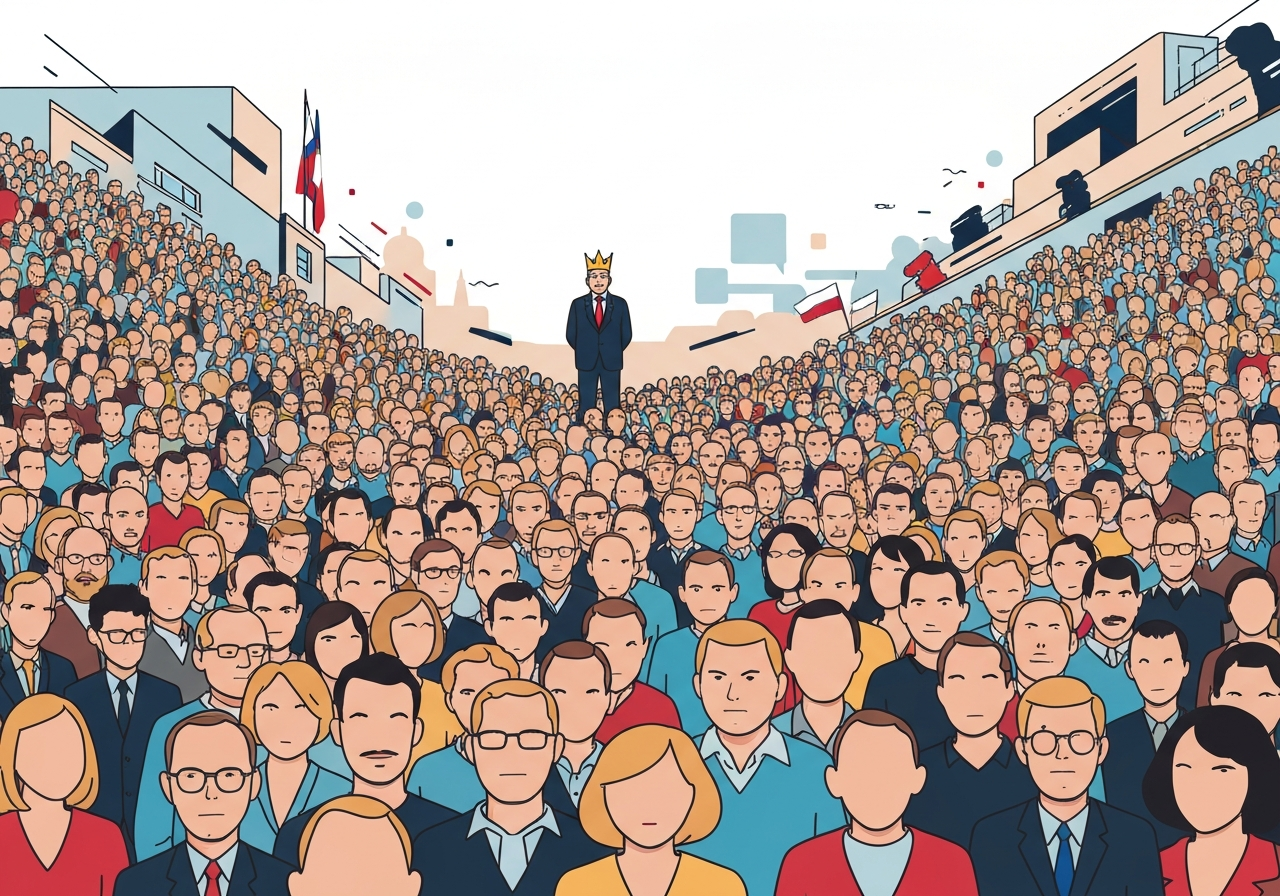
On Sunday tens of thousands of Czechs rallied in support of President Petr Pavel amid a public clash with Foreign Minister Petr Macinka over a contested cabinet appointment. Organisers put turnout at roughly 80,000–90,000, while police gave no official figure. The demonstration came after Pavel published messages from Macinka that he described as an attempt to blackmail him over the nomination of Filip Turek to a ministerial post. The rally underscored deepening tensions within the new governing coalition and heightened scrutiny of the candidate and the coalition’s agenda.
Key Takeaways
- Organisers estimated 80,000–90,000 people attended the Sunday rally in support of President Petr Pavel; police provided no official crowd estimate.
- Pavel made public messages from Foreign Minister Petr Macinka this week, calling them an attempt at blackmail over a cabinet appointment.
- The disputed nominee is Filip Turek, put forward by the Motorists for Themselves party; Pavel has repeatedly refused to approve him.
- Turek faces allegations related to racist, homophobic and other inflammatory posts; he has apologised for some content and denied being a racist or Nazi sympathiser.
- The governing coalition was sworn in on 15 December after the October election; it includes ANO, Freedom and Direct Democracy, and Motorists for Themselves.
- The coalition’s platform signals a shift away from previous pro-EU and pro-Ukraine stances, in contrast with Pavel’s public support for Ukraine.
- Macinka described his messages as standard political bargaining and warned of severe political consequences if the veto persisted.
Background
After the October election, Andrej Babiš’s ANO movement formed a majority coalition with two smaller parties, and President Pavel swore in the new government on 15 December. The coalition includes the eurosceptic, conservative Motorists for Themselves and the anti-migrant Freedom and Direct Democracy party, groups that have signalled policy shifts on EU issues and support for Ukraine. Pavel, a retired army general and vocal supporter of Ukraine, holds formal veto power over ministerial appointments under the Czech constitution; he has used that authority to block the nomination of Filip Turek. Turek was proposed for the Environment Ministry by Motorists for Themselves and has been the subject of media scrutiny over social-media posts and past behaviour that critics say raise questions about his suitability.
The clash has both political and institutional dimensions: it pits the president’s constitutional prerogative against a coalition intent on seating its chosen ministers. Macinka, who holds both the foreign and environment portfolios, argues political negotiation sometimes requires hard bargains. Civil society groups and independent movements have mobilised in response, framing the dispute as a test of democratic norms. Organisers of the Sunday demonstration said they planned further rallies in other towns on 15 February, signalling the dispute could widen beyond elite institutions.
Main Event
The rally, described by organisers as a show of support for the president, featured participants waving Czech, European and Ukrainian flags. Organisers reported attendance between 80,000 and 90,000; police did not supply an estimate. Pavel publicly thanked demonstrators on his X account, praising those who stand up “for decency, truth, solidarity and mutual respect.” The Million Moments for Democracy movement framed Macinka’s messages as an unprecedented attempt at blackmail and said such conduct is incompatible with democratic norms.
The immediate trigger for the public uproar was the release of messages from Macinka earlier in the week in which he warned of political consequences if Pavel continued to veto Turek’s appointment. In one released text, Macinka wrote that if Turek were kept out of the Environment Ministry, he would “burn our bridges” in a way that would become a textbook example of extreme cohabitation — a line that Pavel and his backers interpreted as an explicit threat. Macinka later defended the messages as part of hardball politics and told Czech television that top-level politics requires resilience and tough negotiation.
The protest reflected broader public unease about the new coalition’s policy direction, particularly its scepticism toward EU positions and its stated intention to reconsider support for Ukraine. For many demonstrators, the dispute is less about individual personalities than about checks and balances: whether a president can use veto power to block nominees whose past conduct raises constitutional concerns. Organisers indicated the movement intends to sustain public pressure while the institutional dispute plays out in official channels.
Analysis & Implications
The dispute tests the Czech constitutional balance between the presidency and the parliamentary-led government. Pavel’s veto power is a legal tool, but repeated refusals to confirm a minister nominated by a parliamentary majority raise questions about cohabitation and operational governance. If the coalition persists in pressing its nominee, the standoff could lead to protracted political paralysis around the Environment Ministry and related portfolios, complicating policy delivery.
Internationally, the rift carries significance because it involves divergent views on Ukraine and EU policy. The coalition’s stated agenda to move away from previous pro-Ukraine positions contrasts with Pavel’s pro-Ukraine stance and could alter Czech foreign policy if the coalition prevails. Such a shift would have diplomatic implications within the EU and among NATO partners, particularly as Prague has hosted Ukrainian refugees and engaged in allied support since Russia’s 2022 invasion.
Domestically, the episode may recalibrate party dynamics within the coalition: yielding on Turek could embolden smaller partner parties and signal that controversial figures can gain office despite public outcry. Conversely, sustained popular mobilisation and an assertive presidency could constrain the coalition and encourage negotiations that produce less polarising candidates. Legal or parliamentary mechanisms could also be invoked if the impasse endures, but outcomes depend on political will and public pressure.
Comparison & Data
| Source | Attendance |
|---|---|
| Organisers | 80,000–90,000 |
| Police | No official estimate |
The organisers’ estimate gives a quantitative impression of scale but differs from official crowd counting practices, which typically involve police estimates or independent analysis. The absence of a police figure means the exact size remains subject to interpretation, yet the organisers’ range indicates a large, nationwide mobilisation. Comparing organiser figures to police or academic crowd estimates is standard practice in protest reporting; where only one figure exists, analysts treat it cautiously and corroborate with media, photographic, and transport data where available.
Reactions & Quotes
Organisers and civil society framed the messages and the president’s stance as a defence of democratic norms, while the foreign minister defended his conduct as negotiation. These competing narratives have shaped media coverage and public reaction.
The unprecedented blackmail of the president by Petr Macinka is absolutely unacceptable. This has no place in a democratic culture.
Million Moments for Democracy (movement statement)
On social media Pavel expressed gratitude for demonstrators and emphasised civic responsibility, portraying the rally as a defence of shared values rather than a partisan event.
I deeply appreciate all those who do not remain indifferent to what is happening around them and who feel responsible for the state of our country.
Petr Pavel (post on X)
Macinka, by contrast, described the exchange as part of hard bargaining and warned that prolonged refusal to accept the nominee would have serious political consequences.
Politics is not a discipline for princesses… it is a very demanding discipline. Everyone who is in top politics should show greater resilience.
Petr Macinka (television interview)
Unconfirmed
- Whether Macinka’s messages meet a legal definition of criminal blackmail has not been established; formal investigations or legal findings were not reported at the time of writing.
- The precise crowd size cannot be independently verified because police did not publish an official estimate and no third-party crowd analysis has been cited.
- Some specifics about Filip Turek’s past actions (for example, the exact context and intent behind alleged gestures and posts) remain contested in media reporting and have not been subject to final legal adjudication.
Bottom Line
The confrontation between President Pavel and Foreign Minister Macinka has mobilised significant public support for the president and highlighted a deeper institutional conflict within the new Czech coalition. At stake are not only one ministerial nomination but also how the country balances constitutional checks with the governing majority’s mandate. The outcome will shape domestic policy cohesion and could affect Prague’s orientation on international issues such as support for Ukraine and relations with the EU.
In the near term, expect continued public demonstrations and political bargaining as parties seek a way to resolve the impasse. Absent a negotiated settlement, the dispute could produce prolonged governance friction or force procedural remedies; either scenario will be watched closely by Czech partners and EU allies.
Sources
- Deutsche Welle — international news outlet (primary reporting for this article)