
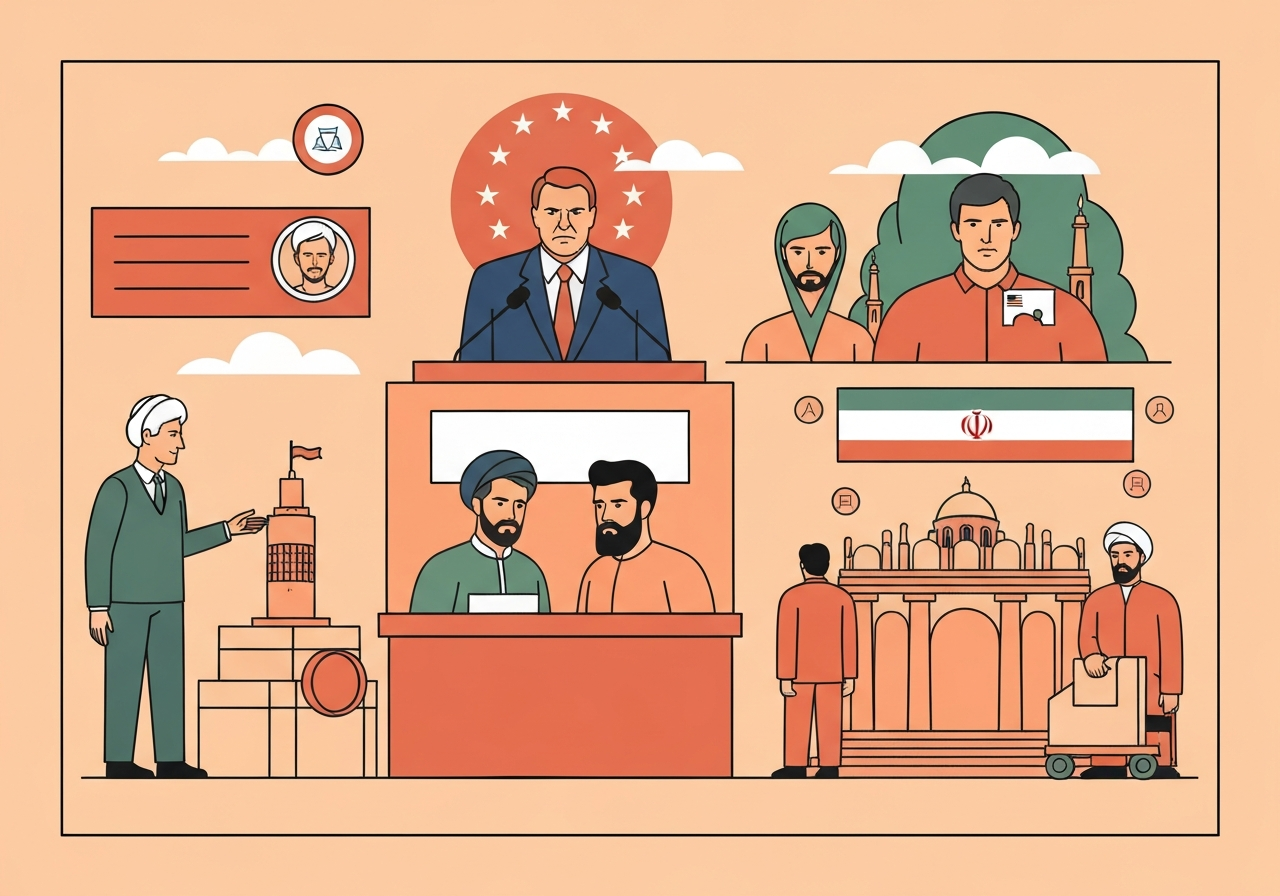
On Day 38 of the Middle East conflict, President Donald Trump held a White House press conference on Monday as Iranian officials rejected a draft 45‑day ceasefire proposal circulated by mediating states. Trump reiterated a deadline for Tehran to reopen the Strait of Hormuz and warned that Iran could be “taken out in one night,” while Iranian authorities dismissed the plan and demanded a permanent end to hostilities. The fighting has included air strikes inside Iran, targeted assassinations of senior figures and claims of substantial civilian casualties, according to Iranian authorities. International actors and regional neighbors issued urgent appeals for de‑escalation even as both sides signalled hardened positions.
Key takeaways
- President Trump set a public deadline tied to reopening the Strait of Hormuz, saying Iran could be “taken out in one night,” and suggested US plans to target bridges and power plants by midnight Tuesday.
- Tehran rejected a proposed 45‑day ceasefire, calling instead for a permanent end to the war, per Iranian state media reporting on Monday.
- Iranian authorities reported civilian tolls: 220 children killed and 1,959 injured; 254 women killed and 4,830 injured; broader health‑system impacts include 481 hospitalizations and 1,220 surgeries.
- Iranian and Israeli forces reported targeted strikes and assassinations, including the confirmed killing of Maj. Gen. Majid Khademi and a claimed elimination of Asghar Bagheri.
- The IRGC warned the US that threats are “baseless” and vowed wider retaliation if non‑civilian targets are hit; Israeli sources say a contingency target list of Iranian energy and infrastructure sites was approved.
- Iran called for domestic public demonstrations to protect infrastructure, with the deputy sports minister urging a “human chain” around power plants on Tuesday at 14:00 local time.
- Reports indicate damage to an Iranian yellowcake production facility in Yazd province; the Atomic Energy Organization described the strike as a violation of protections for peaceful nuclear sites.
Background
The current confrontation began at the end of February and has since expanded beyond localized exchanges into strikes and covert actions across the region. Key flashpoints include the Strait of Hormuz, a strategic corridor for global oil shipments, and multiple Iranian nuclear‑related and industrial sites. Israel and the United States have coordinated operations against Iranian targets, and Tehran has responded with asymmetric attacks and mobilization of domestic resources. Diplomatic efforts by third countries have produced draft ceasefire texts, but core demands — notably restoration of the strait and Iran’s nuclear commitments — remain unresolved.
Iran’s political leadership is publicly unified in rejecting partial pauses and pressing for a definitive end to hostilities; Supreme Leader Mojtaba Khamenei emphasized that assassinations of commanders would not deter Iran’s forces. On the US side, the administration frames strict deadlines and infrastructure pressure as leverage to force Iranian concessions. Regional states such as Qatar have urged diplomacy and condemned attacks on civilian infrastructure, reflecting broader anxiety about spillover into neighboring countries. Humanitarian organizations and international agencies warn that continued strikes risk substantial civilian harm and long‑term damage to critical services.
Main event
At a White House news conference on Monday, President Trump, flanked by senior administration officials, reiterated hardline options if Iran does not comply with demands to reopen the Strait of Hormuz. He said the United States could destroy bridges and power plants across Iran by midnight Tuesday and repeatedly framed the timeline as a leverage point in negotiations. Administration officials described the recent rescue of two US airmen from inside Iran as a complex operation and identified concerns about unauthorized leaks related to the incident.
Tehran publicly dismissed the ceasefire draft and accused the US of pursuing an “aggressive war.” Iranian state media reported that negotiators working on a 45‑day ceasefire had failed to secure Tehran’s agreement, which instead called for a permanent cessation. Iranian officials, including the Foreign Ministry and the IRGC, characterized US threats as escalating rhetoric intended to justify military setbacks and pledged continued operations in defense of national sovereignty.
Military actions in recent days included reported air strikes on Tehran and other parts of Iran, a video from the Iranian Red Crescent showing rescue workers at a damaged residential site, and Iranian claims that four Iranian army officers died during a US rescue operation near Isfahan. Israel said it conducted strikes inside Iran and has reportedly updated a contingency target list of Iranian energy and infrastructure sites if diplomacy fails. Iran’s Atomic Energy Organization accused US‑Israeli forces of striking a yellowcake production facility in Ardakan, Yazd Province, calling the act a violation of protections for peaceful nuclear sites.
Analysis & implications
The public deadline strategy increases short‑term pressure but risks narrowing diplomatic space. Timetables tied to military threats can force rapid concessions or accelerate conflict, particularly when the targeted party publicly rejects interim deals and demands permanent cessation. If the US follows through on threats against infrastructure, the consequences would extend beyond immediate military damage to long‑term impacts on civilian power, water, healthcare and nuclear safety — raising legal and humanitarian questions internationally.
Regionally, Israel’s apparent preparation of an expanded target list and Iran’s naming of strategic targets in the UAE (including AI infrastructure) suggest a widening set of potential targets that transcend strictly military objectives. That broadening complicates alliance calculations among US partners and Gulf states, some of which have condemned attacks on their territory and urged restraint. The interplay between kinetic operations and information warfare — including public deadlines and muttered threats — will shape international responses and the willingness of third‑party mediators to press a negotiated settlement.
Economically, renewed disruption of the Strait of Hormuz would spike insurance and shipping costs and could drive volatile oil markets. Politically, persistent assassinations of senior figures deepen Iranian resolve and may produce cycles of revenge that are difficult to contain. International institutions, including the IAEA and humanitarian organizations, will face mounting pressure to monitor nuclear sites and civilian harm amid contested access and security risks.
Comparison & data
| Item | Reported figure |
|---|---|
| Children killed (under 18) | 220 |
| Children injured | 1,959 |
| Women killed | 254 |
| Women injured | 4,830 |
| Hospitalized | 481 |
| Surgeries performed | 1,220 |
These figures, released by Iran’s Ministry of Health, indicate immediate strain on medical services and significant civilian tolls. Independent verification in active conflict zones is difficult; international monitors have previously confirmed damage at select nuclear‑adjacent facilities but access is constrained. Historical comparisons show that targeting infrastructure has outsized humanitarian effects, especially where hospitals and supply chains are disrupted.
Reactions & quotes
“The rude rhetoric, arrogance and baseless threats of the delusional US president… will not stop Iran from fighting,” said an IRGC spokesperson, signaling Tehran’s intention to continue military operations if strikes persist.
Ebrahim Zolfaqari / IRGC statement (official)
The IRGC framed US statements as political posturing after what it called strategic setbacks by the United States.
“The American people must know that what their government is doing against Iran in West Asia is a great injustice,” said Iran’s foreign ministry spokesman, urging US citizens to hold their government accountable.
Esmaeil Baghaei / Iranian Foreign Ministry (official)
This statement was issued amid appeals to international audiences and came as Iran publicly rejected partial ceasefire terms.
“Iran could be taken out in one night,” President Trump said at the press conference, reiterating a timeline tied to reopening the Strait of Hormuz.
President Donald Trump / White House press conference
Trump’s remarks were accompanied by senior officials and referenced options targeting bridges and power plants, heightening international concern about potential damage to civilian infrastructure.
Unconfirmed
- Precise timing, extent and damage of the reported strike on the Ardakan yellowcake facility remain unverified by independent inspectors.
- Claims that four Iranian army officers were killed during the US rescue operation south of Isfahan are reported by Iranian authorities but lack independent corroboration.
- Israeli assertions about the elimination of specific IRGC commanders have been publicly claimed but not independently confirmed by neutral observers.
Bottom line
The conflict on Day 38 shows a dangerous entanglement of military operations, assassination campaigns and public deadlines that compress diplomatic options. Tehran’s rejection of a 45‑day ceasefire — combined with US threats to target power plants and bridges — elevates the risk of sustained infrastructure damage and wider regional escalation.
Observers should watch whether third‑party mediators can reconvene meaningful negotiations and whether international agencies secure access to damaged facilities; absent de‑escalation, humanitarian and economic consequences will likely deepen and international pressure for restraint will intensify.
Sources
- CNN live updates — news outlet (comprehensive live reporting and official statements).
- International Atomic Energy Agency — international nuclear watchdog (context on nuclear facility monitoring and prior confirmations).
- Tasnim News Agency — Iranian semi‑official news outlet (reports on strikes and Iranian responses).
- ISNA (Iranian Students’ News Agency) — semi‑official Iranian news agency (reports of Foreign Ministry comments).
- Iranian Ministry of Foreign Affairs — official statements (diplomatic responses and demands).