
Lead
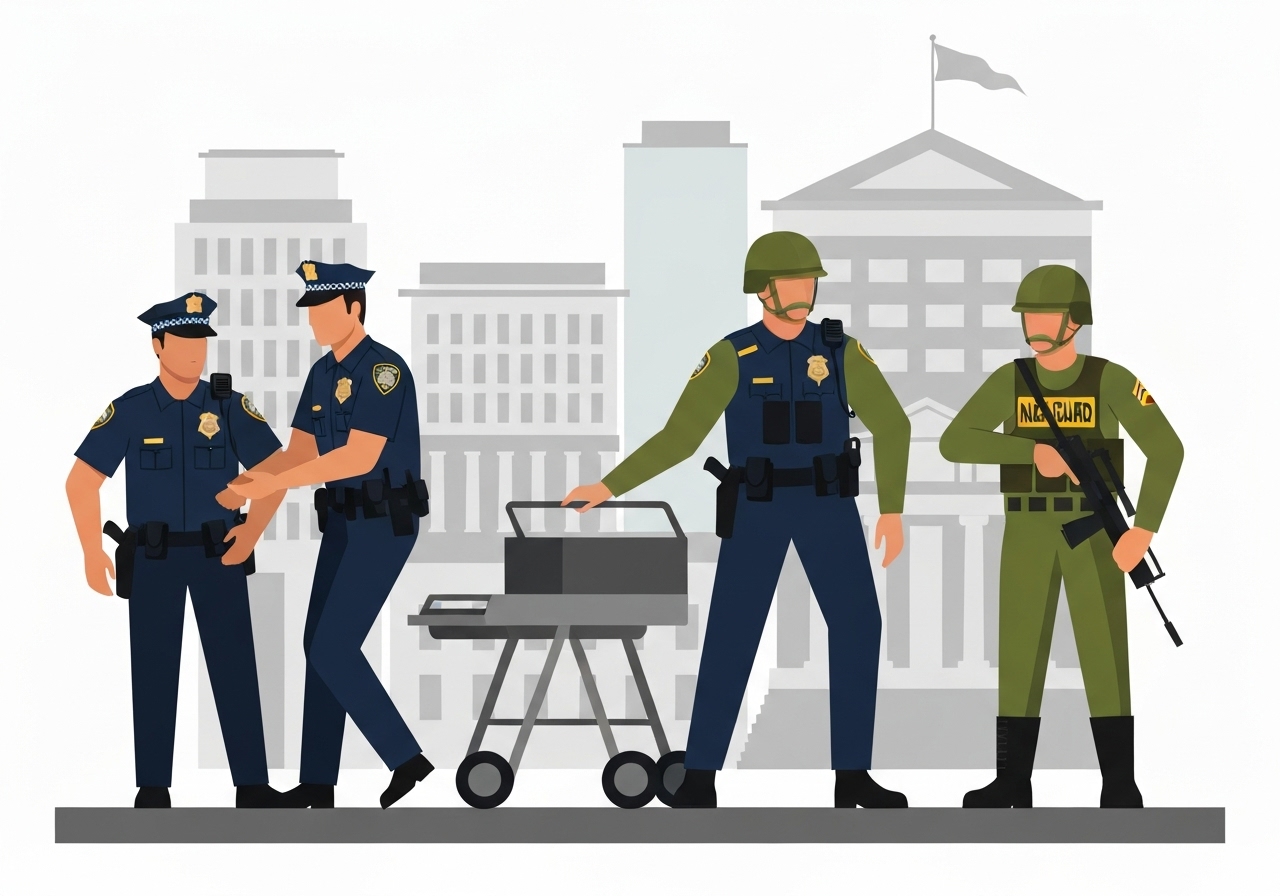
Days after a downtown Washington, D.C., shooting left National Guard Specialist Sarah Beckstrom dead and Staff Sgt. Andrew Wolfe critically wounded, the Metropolitan Police Department is coordinating with other law-enforcement agencies on whether Guard troops should begin patrolling alongside city officers. A police official told WTOP the move is under consideration after the deadly incident near the White House; The Washington Post reported a departmental message indicating patrol pairing could start soon but described the plan as not final. City spokespeople say the aim is to strengthen public safety while investigators continue examining the shooting. Any change would alter the deployment posture that has kept Guard members largely separate from local police since their arrival in August.
Key Takeaways
- D.C. police are exploring paired patrols with National Guard members following a shooting in downtown Washington, D.C., that wounded two Guard service members and killed Specialist Sarah Beckstrom, 20.
- The Washington Post reported a message to department leaders indicating troops may begin patrolling with police; officials say the plan remains subject to change.
- Staff Sgt. Andrew Wolfe, 24, was wounded in the same incident and was described by President Donald Trump as “fighting for his life” on Thursday.
- Guard personnel have been in Washington since August, generally positioned near parks and Metro stations and kept separate from Metropolitan Police Department patrols.
- D.C. police spokesman Tom Lynch confirmed coordination with the National Guard, framing the possible change as a public-safety measure rather than a permanent policy shift.
- The White House and Mayor Muriel Bowser’s office were contacted for comment; no public confirmation of a start date for paired patrols has been issued.
Background
The National Guard was deployed to Washington, D.C., in August amid heightened security demands tied to extended demonstrations and major events in the capital. Federal and local authorities initially adopted a posture that placed Guard units at transit hubs, parks and other soft-target locations while keeping day-to-day policing functions with the Metropolitan Police Department. That separation reflected both legal norms about domestic military roles and practical considerations for command, training and rules of engagement.
The shooting in downtown D.C. — a few blocks from the White House — marked a sharp escalation in threat perception for some officials after months of largely static deployments. Specialist Sarah Beckstrom, 20, succumbed to her injuries; Staff Sgt. Andrew Wolfe, 24, was also severely wounded. The incident prompted immediate reviews of Guard members’ assignment patterns and how they might best be integrated, temporarily or selectively, with civilian law enforcement to reduce risk and improve rapid response.
Main Event
According to law-enforcement statements and media reporting, the shooting occurred in a busy section of downtown Washington, D.C., several blocks from the White House. Local authorities and federal partners secured the scene and evacuated nearby areas while launching an active investigation. The two National Guard members were among those wounded in the exchange; medical responders treated both on site and transported them to area hospitals.
The Metropolitan Police Department sent internal messages to leaders Wednesday night, The Washington Post reported, indicating a possible operational shift to patrol pairing. D.C. police spokesman Tom Lynch told WTOP that the department is working closely with the National Guard and other agencies to “ensure the safety of our community,” framing the effort as coordinated rather than unilateral.
Officials emphasized that any patrol pairing remains under review. Law-enforcement sources told media outlets the plan is not finalized, and operational details — including which neighborhoods, shifts and chains of command would apply — have not been publicly released. City leaders and federal authorities have been asked for comment; WTOP reported outreach to the White House and Mayor Muriel Bowser’s office seeking clarification.
Analysis & Implications
Pairing National Guard members with municipal police would represent a marked operational shift from the posture adopted in August, when Guard forces were positioned to supplement security without routine integration into local patrol units. That separation helped limit legal and political friction, as domestic use of military personnel for civilian policing raises statutory and civil-liberty questions under the Posse Comitatus framework and local oversight norms.
Operationally, paired patrols could yield faster armed backup and a greater concentration of trained personnel in high-risk areas, which proponents argue may deter attacks or improve response times. Critics and rights advocates may worry about the optics and accountability of having uniformed military personnel conducting visible street-level patrols alongside police officers, which could heighten tensions in certain neighborhoods and complicate community relations.
From a command-and-control perspective, integrating Guard members into police patrols requires clear rules of engagement, communication protocols and incident-reporting channels. Without those measures, mixed patrols risk confusion during fast-moving events, potentially undermining both civil-police oversight and Guard unit safety. Any deployment decision will therefore involve legal advisers, local elected officials and federal authorities to delineate responsibilities and liabilities.
Comparison & Data
| Aspect | August Deployment | Proposed Pairing |
|---|---|---|
| Typical positioning | Parks, Metro stations, static posts | Active joint patrols with MPD officers |
| Integration level | Minimal; distinct chains of command | Operationally integrated at patrol level (proposed) |
| Primary objective | Deterrence and rapid response availability | Deterrence plus immediate on-scene support |
The table above outlines how the proposed change would differ from the Guard’s deployment since August. Context matters: integration effectiveness will depend on training, defined roles and public communication to preserve oversight and community trust.
Reactions & Quotes
Law enforcement agencies across Washington, D.C., including the Metropolitan Police Department, are working in close coordination with the National Guard to ensure the safety of our community.
Tom Lynch, MPD spokesman (statement to WTOP)
MPD’s public comment emphasized coordination and a safety rationale, while officials declined to provide operational start dates or detailed rules of engagement for paired patrols.
Staff Sgt. Wolfe is fighting for his life.
President Donald Trump (remarks)
The president’s brief remark underlined the personal toll of the shooting and has reinforced urgency among some officials to reassess deployment arrangements.
Unconfirmed
- No official start date for paired patrols has been announced; reports indicate the plan remains tentative and could change.
- Details about which neighborhoods, shifts or Guard units would be paired with MPD officers are unconfirmed and have not been released publicly.
- Attribution of motive or suspect identities related to the downtown shooting remains under investigation and has not been publicly confirmed.
Bottom Line
The possible shift to pair National Guard members with D.C. police would be a substantive change from the posture maintained since August and reflects heightened concern after the fatal shooting of Specialist Sarah Beckstrom and the wounding of Staff Sgt. Andrew Wolfe. Officials characterize the move as a coordinated safety step, but key operational details, legal parameters and community safeguards must be resolved before implementation.
How leaders balance immediate security needs against legal and civil-liberty considerations will shape public response and long-term precedent for the domestic use of Guard forces. Readers should expect more definitive announcements only after interagency reviews conclude and local officials clarify command structures and transparency measures.