
Lead
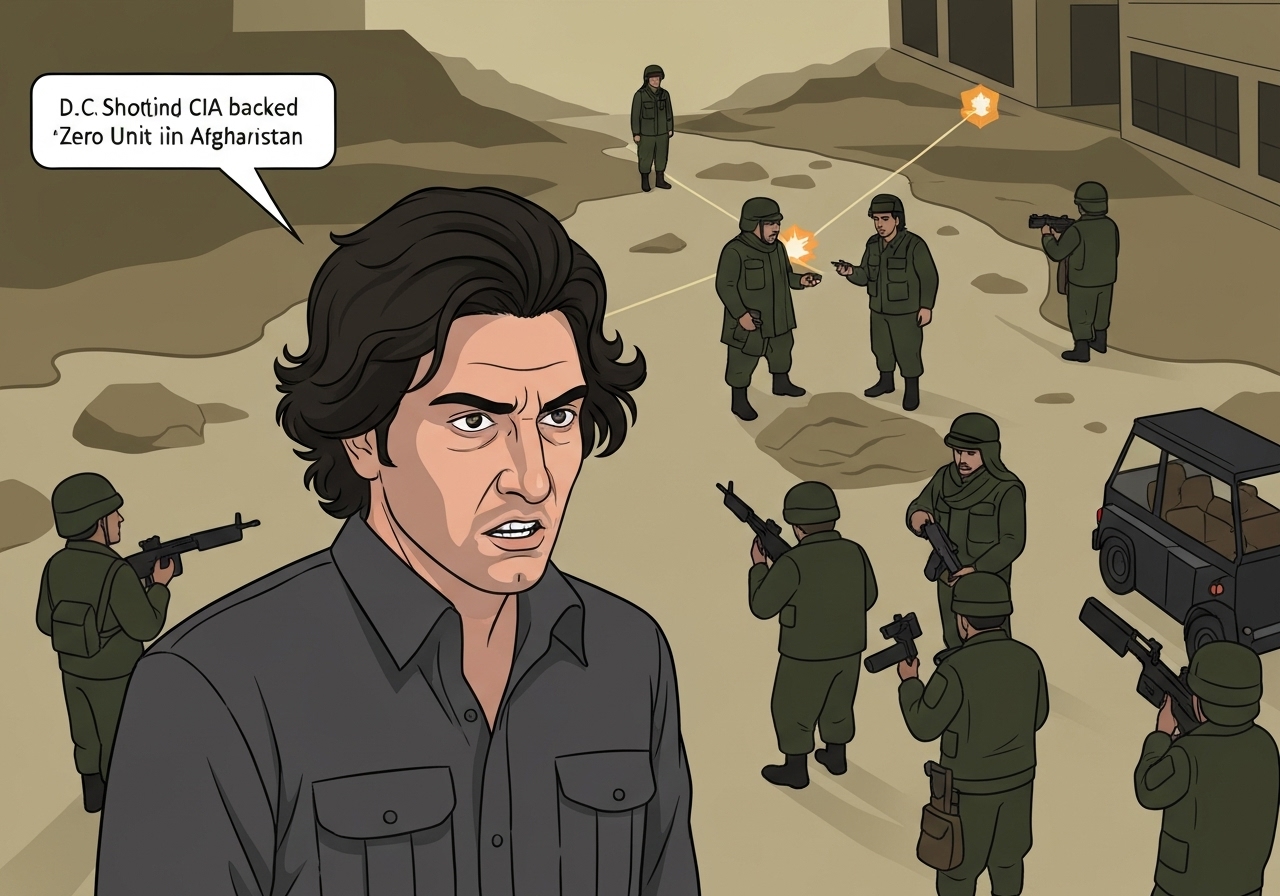
Federal investigators say the Afghan refugee accused of shooting two National Guard members in Washington, D.C., on Nov. 27, 2025, previously fought with a CIA-supported paramilitary force in Kandahar. The suspect, identified by officials as 29-year-old Rahmanullah Lakanwal, was among Afghans relocated to the United States after the U.S. withdrawal in August 2021 and received asylum in April 2025. Afghan and U.S. intelligence sources describe the unit as a so-called “Zero Unit” that operated alongside U.S. handlers and was criticized by human rights groups. Authorities are treating the case as an active criminal investigation while public officials and advocates debate screening and resettlement policies.
Key Takeaways
- Suspect identity: Federal officials have named the accused as Rahmanullah Lakanwal, age 29; he is charged in the November 27, 2025, shooting that wounded two National Guard members in Washington, D.C.
- Service in Afghanistan: Investigators and an Afghan intelligence officer say Lakanwal served in a Kandahar-based unit known as a “Zero Unit,” which the CIA trained and supported.
- Resettlement timeline: Sources say Lakanwal received asylum from the U.S. in April 2025 and resettled with his family in Washington State after evacuation efforts following August 2021.
- Human rights concerns: Human rights organizations have described Zero Units as brutal and, in some cases, labeled them “death squads,” citing alleged abuses during counterinsurgency operations.
- Government reaction: The CIA director publicly criticized the decision to bring the suspect to the U.S., arguing his prior work with U.S.-supported forces merited different handling.
- Investigative status: Law enforcement continues to gather evidence; officials have not publicly disclosed a motive and caution the inquiry remains ongoing.
Background
During the final months of the U.S. military presence in Afghanistan in 2021, American intelligence agencies worked with Afghan partner forces in several southern provinces, including Kandahar. Among those partner formations were units referred to in reporting and by some Afghan officials as “Zero Units,” paramilitary teams that carried out intensive counterinsurgency and capture operations alongside U.S. advisers. Human rights groups have documented accusations of abuses by some of these units, which has fueled controversy over how partner forces were selected, vetted and supervised.
After the Taliban took control in August 2021, the U.S. evacuated and later resettled thousands of Afghans who had worked with or assisted American forces, citing security risks to those individuals. U.S. resettlement programs included people who had served in partner forces; federal agencies have maintained that many cases received security screening before relocation, but critics say screening was hurried and imperfect given the chaotic conditions of the withdrawal. The presence in the U.S. of former members of such units has been a political flashpoint, especially when incidents involving resettled individuals attract public attention.
Main Event
On Nov. 27, 2025, authorities responded to a shooting in Washington, D.C., that left two National Guard members wounded. Federal officials subsequently identified the suspect as Rahmanullah Lakanwal and disclosed that he had previously served with a Kandahar-based partner force trained with CIA support. Investigators say they are examining the suspect’s history, including his time in Afghanistan, his arrival and asylum process in the United States, and his activities after resettlement in Washington State.
Friends from Lakanwal’s village in Khost told reporters he had expressed distress about battlefield violence and may have struggled with mental health issues after returning from operations. One childhood friend, speaking on condition of anonymity, described Lakanwal as disturbed by casualties his unit inflicted and under sustained pressure during deployments. Authorities caution these personal accounts are part of a broader probe and do not by themselves establish motive.
The CIA director issued a public statement noting the suspect’s prior work with a U.S.-linked partner force and arguing that, in his view, the individual should not have been allowed into the United States. At the same time, federal agencies emphasize that resettlement decisions involved multiple offices and that the ongoing investigation must determine what, if any, procedural failures occurred. Local law enforcement and federal investigators continue to collect evidence and interview witnesses.
Analysis & Implications
The case raises immediate questions about vetting and oversight of Afghan partners who were evacuated and resettled in the U.S. after 2021. Security screening for evacuees combined biometric checks, intelligence database reviews and interviews, but the speed and scale of the evacuations limited the depth of vetting in many instances. Policymakers now face pressure to reconcile competing priorities: protecting public safety, fulfilling obligations to allies and interpreters who aided U.S. efforts, and avoiding punitive blanket policies that could endanger people who legitimately assisted American missions.
Politically, the incident is likely to amplify partisan disputes over the Biden administration’s evacuation and resettlement choices. Critics may use the case to argue for tighter restrictions on future resettlements and for retrospective reviews of past decisions, while advocates for refugees warn against equating alleged crimes by individuals with the broader population of evacuees. Administratively, agencies may be pushed to revise interagency vetting protocols, increase post-arrival monitoring where feasible, and improve information-sharing with local law enforcement.
Legally, the investigation and any subsequent prosecution will hinge on establishing motive, intent and the factual record of the shooting itself. Mental health issues cited by acquaintances and statements about battlefield trauma will likely become topics in court and in public debate, but they do not substitute for evidentiary proof. Internationally, the episode could affect relations with Afghan interlocutors and complicate cooperation on future evacuations or intelligence partnerships, particularly if questions about partner conduct and accountability persist.
Comparison & Data
| Date | Event |
|---|---|
| August 2021 | U.S. military withdraws; Taliban retakes control of Afghanistan. |
| September 2021 onward | Evacuations and resettlement of thousands of Afghan partners and allies. |
| April 2025 | Sources say Lakanwal received asylum and later resettled in Washington State. |
| Nov. 27, 2025 | Alleged shooting in Washington, D.C.; two National Guard members wounded. |
The table above places the case in a compressed timeline linking battlefield service, evacuation and resettlement. While exact totals of evacuees vary by program and reporting source, the term “thousands” is consistently used in official and media accounts to describe the scale of Afghan relocations after August 2021. That scale helps explain both the logistical challenges of vetting and the policy stakes.
Reactions & Quotes
Federal and intelligence officials have publicly emphasized the importance of a full investigation before drawing conclusions about systemic failures. One senior agency statement faulted specific resettlement decisions while noting multiple offices were involved.
“Given his prior work with a U.S.-linked partner force, this individual should have never been allowed to come here,”
John Ratcliffe, CIA director (statement)
Human rights groups point to long-standing concerns about the conduct of certain partner units in Afghanistan, urging accountability and careful review rather than broad stigmatization of all evacuees.
“Allegations of abuses by paramilitary units must be investigated, and allegations should not be used to undermine protections for those who worked with U.S. forces,”
Human rights group representative
Local acquaintances who spoke to reporters stressed the accused’s reported mental strain after combat, noting personal signs of distress but stopping short of claiming a definitive motive.
“He said the operations were extremely difficult and that he felt under a lot of pressure,”
Childhood friend (anonymous)
Unconfirmed
- Precise motive: Investigators have not publicly confirmed a motive linking battlefield experiences or mental health to the shooting; those connections remain under inquiry.
- Extent of CIA involvement: Publicly available accounts confirm the CIA trained or supported partner forces, but detailed operational records and the depth of direct U.S. oversight of specific units remain undisclosed.
- Screening timeline: While sources say the suspect received asylum in April 2025, the granular sequence and content of interagency vetting steps prior to resettlement have not been fully released.
Bottom Line
The alleged involvement of a former CIA-linked partner-force member in a November shooting in Washington sharpens scrutiny of evacuation and resettlement practices after Afghanistan’s 2021 collapse. Policymakers must balance the moral and tactical obligation to protect Afghan partners who aided U.S. missions with the need for robust screening, monitoring and accountability mechanisms to protect public safety.
In the short term, expect calls for formal reviews of vetting protocols, increased congressional oversight and renewed debate over admission criteria for people who served with U.S.-supported forces. Longer-term outcomes will depend on the investigation’s findings, potential prosecutions, and whether agencies adopt concrete procedural changes to reduce risks while honoring commitments to at-risk partners.
Sources
- The New York Times (news report)
- Central Intelligence Agency (official agency site)
- Human Rights Watch — Afghanistan coverage (human rights NGO)