
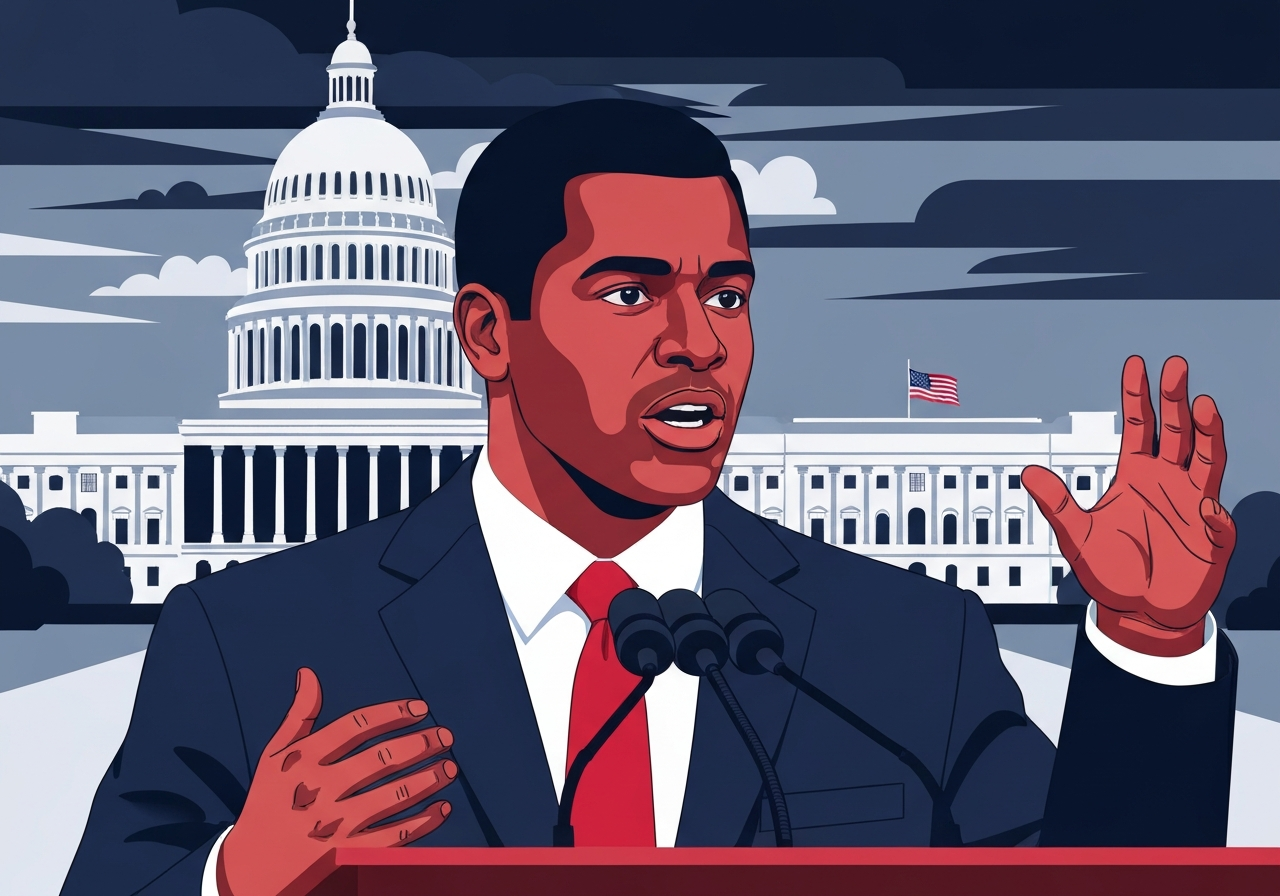
House Democratic leader Hakeem Jeffries warned on 8 February 2026 that Democrats will prevent former president Donald Trump from attempting to “nationalize” this year’s midterm elections, framing such a move as an effort to steal results. Speaking on CNN’s State of the Union, Jeffries said the Constitution assigns election administration to states and that Congress has limited, specific powers over federal voting rules. His remarks followed public comments from Trump urging Republicans to “take over the voting,” and came amid legal challenges to state voter rolls and an FBI search of the Fulton County election office last month. Jeffries said Democrats have already checked several federalization efforts and pledged to protect state-run election processes.
Key takeaways
- Hakeem Jeffries said on 8 February 2026 that Democrats will block efforts by Donald Trump to nationalize the 2026 midterms, calling such a push an attempt to “steal” the vote.
- Jeffries made the comments on CNN’s State of the Union after Trump told supporters Republicans should “take over the voting.”
- The U.S. Constitution assigns primary authority over election administration to states; Congress can set some federal election requirements.
- The Trump administration has filed lawsuits challenging state voter-roll maintenance and supported broader efforts to influence election administration.
- The FBI conducted a raid on the Fulton County, Georgia, election office last month, seizing ballots and other materials connected to the 2020 election.
- Jeffries also condemned a racist video posted on Truth Social that depicted the Obamas; the White House removed the post and attributed it to a staffer.
- Senator Adam Schiff said on ABC’s This Week that Trump intends to suppress votes and may take action if he loses the midterms.
Background
Debates over who controls U.S. elections have intensified since 2020, with state officials traditionally responsible for administering voting and Congress empowered to set federal election rules only in limited respects. After the 2020 presidential contest, former president Trump and allies repeatedly alleged widespread fraud despite repeated court rejections and official audits finding no evidence of systemic irregularities. Those claims have driven renewed Republican interest in both litigation and state-level rule changes affecting voter rolls and district maps.
In recent months, the Trump-aligned legal strategy has shifted toward suing states over voter-roll practices and supporting efforts to redraw congressional districts in ways that could favor Republican candidates. At the same time, the FBI’s investigation into certain 2020-election materials produced a controversial search of the Fulton County election office last month, a move that amplified concerns about federal involvement in local election processes. Democrats say those actions, combined with public calls to “take over the voting,” create a risk of federal overreach or intimidation of state election administrators.
Main event
On 8 February 2026, Jeffries used a high-profile Sunday appearance to publicly reject what he described as Trump’s attempt to nationalize administration of the midterms. He framed nationalization as a euphemism for efforts to seize control of outcomes, and said Democrats have already thwarted some federal moves related to the National Guard. Jeffries emphasized that elections will continue to be run by states and localities under existing laws.
The comments followed widely reported statements from Trump urging Republicans to “take over the voting,” language that critics interpret as encouraging intervention in state-run election systems. Republican efforts in several states to change voter-roll procedures and congressional maps have been cited by Democrats as part of a concerted strategy to tilt election mechanics. Jeffries specifically tied those state-level initiatives and federal legal actions to a broader plan he called an attempt to “steal” elections.
The FBI’s January search of Fulton County’s election office, which removed ballots and related records, has become a focal point in the dispute. Jeffries and other Democrats expressed alarm that such actions—combined with legal challenges to voter-roll maintenance and public pressure—could be used to undermine confidence in state-run processes. The White House, after broad rebuke, removed a racist video from Truth Social that depicted Barack and Michelle Obama; Jeffries said Trump should apologize and characterized the post as indefensible.
Analysis & implications
Jeffries’ statement seeks both to reassure voters and to cast upcoming legal and political fights in stark constitutional terms: state authority over elections versus federal encroachment. If the debate escalates, courts will likely play a central role resolving disputes over whether federal actors overstepped constitutional limits. That judicial pathway could be lengthy and would place the nation’s electoral calendar at the center of high-stakes litigation in the months ahead.
Politically, Democrats are framing the dispute to mobilize voters concerned about democratic norms, while Republicans pressing for changes argue they are defending election integrity. The competing narratives could increase turnout and polarization in the midterms: Democrats aim to portray their efforts as protective, whereas critics will argue the party is politicizing procedural debates. Either outcome would have downstream effects on legislative priorities, judicial confirmations and state-level election administration post-midterms.
Operationally, the Fulton County search and coordinated lawsuits create immediate stress for local election officials, who may face subpoenas, court orders or public pressure that complicate routine administration. That pressure risks uneven application of election rules across states, raising the specter of contested results and greater reliance on federal courts. If large-scale federal involvement occurs, it would test constitutional boundaries and likely prompt new legislation or litigation over the limits of presidential and Justice Department authority in election matters.
Comparison & data
| Authority | Typical role | Trump-era actions cited |
|---|---|---|
| States | Administer elections, maintain rolls, run polling places | Redistricting, roll maintenance lawsuits |
| Congress | Set federal election requirements (e.g., federal ballot standards) | Potential legislative responses to federalization claims |
| Executive (President/DOJ) | Enforce federal law; limited role in state administration | Support for legal actions; FBI search in Fulton County |
The table above sketches the distinct responsibilities that have come into tension in recent months. Legal scholars note that while the executive enforces federal statutes, longstanding doctrine reserves election mechanics primarily to states; that separation is now the locus of political and legal contestation. The practical effect is a patchwork of litigation, local administrative stress and potential reliance on appellate courts for resolution.
Reactions & quotes
“What Donald Trump wants to do is try and nationalize the election—translation: steal it. And we’re not going to let it happen.”
Hakeem Jeffries, House Democratic leader (CNN State of the Union)
Jeffries used blunt language to characterize the threat and to rally Democratic opposition, framing the dispute as a defense of state-run elections.
“He fully intends to try to subvert the elections. He will do everything he can to suppress the vote.”
Sen. Adam Schiff (ABC’s This Week)
Senator Schiff warned that efforts to change administration or to intimidate officials could be part of a plan to overturn unfavorable results, urging vigilance from both parties and the public.
“The post was removed and attributed to a staffer, but an apology is required given the harm.”
Hakeem Jeffries (comment on Truth Social post)
Jeffries criticized the administration’s handling of a racist video depicting the Obamas, saying the removal did not absolve responsibility and calling for an explicit apology.
Unconfirmed
- Whether Trump has a concrete, legally operational plan to seize control of state election machinery beyond public statements remains unverified.
- The full extent and intent of participants present at the Fulton County search—including the role of any particular official—have not been independently confirmed in all respects.
- Attribution of the Truth Social post to a specific staffer is based on the White House statement; complete internal accountability details have not been made public.
Bottom line
Jeffries’ public repudiation frames the midterms as a constitutional flashpoint between state election authority and potential federal intervention. Democrats are positioning themselves as defenders of decentralized administration, while Republicans pushing litigation and rule changes argue their actions protect election integrity. The tension sets the stage for high-profile court fights and intense political messaging ahead of the vote.
For voters and local officials, the near-term priorities will be clarity and continuity: ensuring poll operations, maintaining accurate rolls and preserving public confidence. If legal or federal actions escalate, expect prolonged litigation and deeper national scrutiny of state processes that could shape election law and practice beyond this calendar year.
Sources
- The Guardian — news report on Jeffries’ remarks and related developments.
- CNN (State of the Union) — broadcast interview with Hakeem Jeffries (program page).
- ABC News (This Week) — program page for interviews including Sen. Adam Schiff.
- Fulton County Government (Elections) — official county elections office information.