
Lead
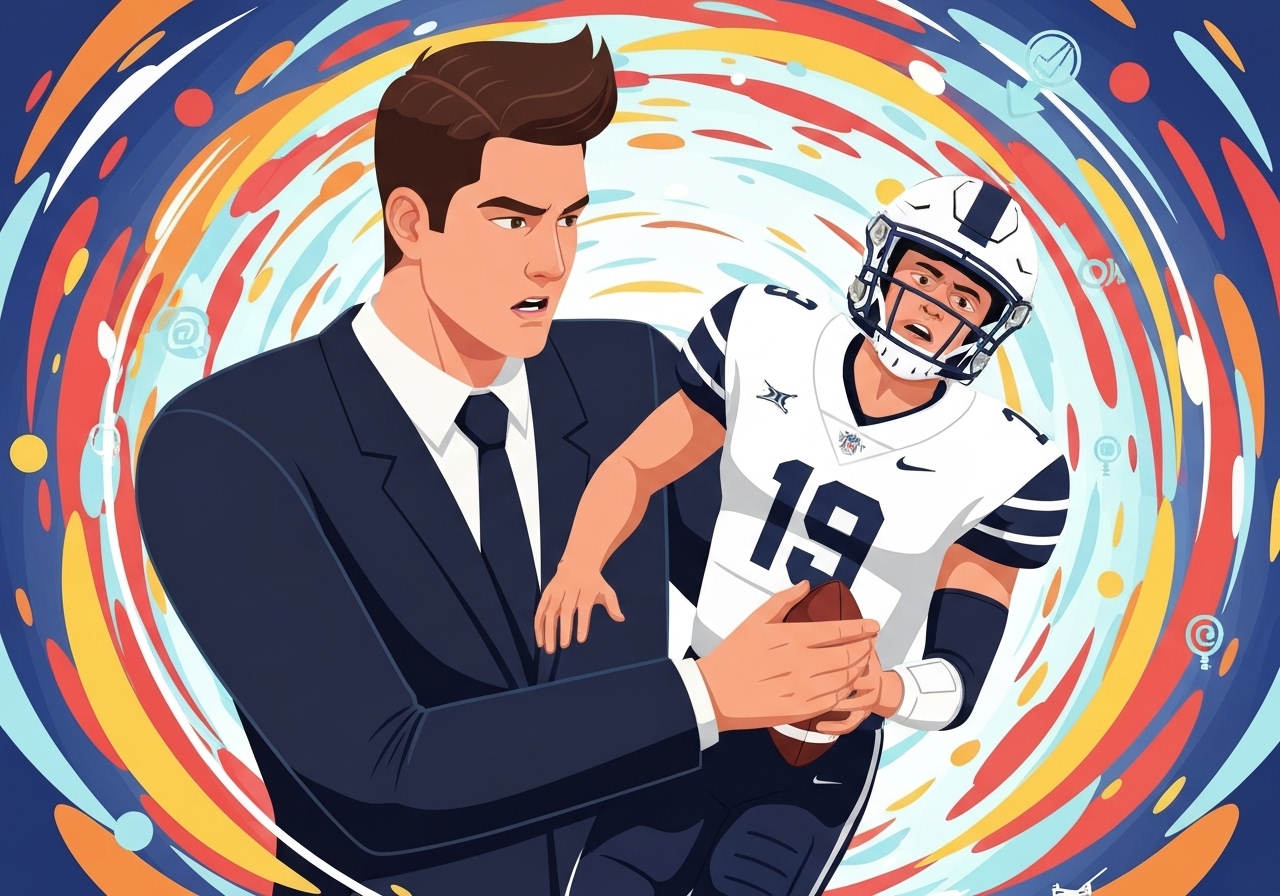
Washington quarterback Demond Williams Jr. announced on Tuesday that he will enter the NCAA transfer portal days after signing a return deal with the Huskies for the 2026 season. In the wake of that announcement, agent Doug Hendrickson said he has ended his representation of Williams. Washington has signaled it may pursue legal avenues to enforce terms of the 2026 contract, while Williams has retained sports attorney Darren Heitner. The move has drawn conference-level attention and intensified debate over contract language and transfer rights in college football.
Key Takeaways
- Demond Williams Jr. entered the transfer portal shortly after re-signing a contract reported in the mid-$4 million range to return to Washington for 2026.
- Agent Doug Hendrickson (Wasserman) publicly announced he is no longer representing Williams, citing philosophical differences.
- Washington’s contract reportedly does not obligate the school to submit Williams into the portal or help facilitate a transfer, and the university says it may seek legal remedies to enforce that language.
- Williams, a sophomore, completed 69.5% of his passes for 3,065 yards with 25 touchdowns and eight interceptions in the most recent season while adding 611 rushing yards and six rushing TDs.
- Williams has retained attorney Darren Heitner to represent him in the dispute.
- The situation has drawn attention from the Big Ten, which was involved in the Xavier Lucas transfer controversy last year.
Background
The dispute centers on the interaction between NIL-era compensation and the transfer portal. Programs and players have negotiated endorsement and return deals that sometimes include clauses addressing movement between schools; those clauses are increasingly contested. Washington signed Williams to a contract reported in the mid-$4 million range to secure his return for 2026, a figure near the top of the quarterback market in college football.
Agents and agencies such as Wasserman play prominent roles in negotiating those deals; Doug Hendrickson is an executive vice president at Wasserman and is also listed as a representative for Washington coach Jedd Fisch. At the same time, conferences and schools have become more willing to pursue contract enforcement when language appears to limit or condition a player’s ability to transfer.
Main Event
On Jan. 6–7, 2026 (reported Jan. 8, 2026), Williams announced his intent to enter the NCAA transfer portal despite having signed a lucrative agreement to return to the Huskies. Washington sources told reporters that the original deal would have placed Williams among the highest-paid college quarterbacks via program-related compensation for a returning player.
Shortly after Williams’ portal announcement, Hendrickson posted that he was ending his representation of Williams, pointing to irreconcilable philosophical differences. The agent praised Williams’ talent while making clear the professional relationship was over, according to Hendrickson’s public statement.
Washington’s athletic department has indicated it is prepared to explore all legal options to enforce the contract terms, noting specific language that does not require the school to submit the student-athlete into the portal or assist with a transfer. In response, Williams engaged Darren Heitner to represent him as the situation unfolds.
Analysis & Implications
This dispute highlights growing friction between institutional protections and player mobility. Contracts that promise significant compensation in exchange for return commitments now sit alongside a robust transfer market; the legal footing of clauses that limit assistance with transfers is untested at scale. If courts or arbitration panels accept such contract clauses, schools could have a stronger lever to retain players or demand financial remedies when players move.
Conversely, if enforcement is limited, programs may rethink how they structure compensation and obligations to avoid protracted legal battles and negative public scrutiny. For agents, the episode underscores reputational and ethical tensions: representing both institutional figures and players can create conflicts when their interests diverge.
At the competition level, Williams’ reported 2025 numbers—69.5% completion, 3,065 passing yards, 25 TDs, eight INTs, plus 611 rushing yards and six rushing TDs—make him a high-value transfer target for Power Five programs. Any prolonged legal standoff could delay or complicate suitors’ recruiting plans and impact eligibility/timing for the 2026 season.
Comparison & Data
| Item | 2025 Season / Contract |
|---|---|
| Passing completion | 69.5% |
| Passing yards | 3,065 |
| Passing touchdowns / interceptions | 25 / 8 |
| Rushing yards / rushing TDs | 611 / 6 |
| Reported contract value | Mid-$4 million range (return deal for 2026) |
The table above places Williams’ 2025 on-field production beside the reported contract value that is central to the current dispute. That juxtaposition helps explain both Washington’s interest in securing Williams and other programs’ interest in acquiring him through the portal.
Reactions & Quotes
I have made the decision to end my representation of Demond Williams Jr., citing philosophical differences while wishing him well.
Doug Hendrickson (Wasserman) — public statement
Hendrickson’s brief public message confirmed a professional split but offered little detail on the underlying disagreement. The agency affiliation and Hendrickson’s role representing other Washington personnel add a layer of perceived conflict.
Demond has retained counsel to advise him on the next steps as this situation develops.
Darren Heitner (Sports Attorney) — public announcement
Heitner’s involvement signals Williams intends to challenge or negotiate the school’s position through legal channels rather than rely solely on agent-led mediation.
Unconfirmed
- The exact text of Williams’ contract and any carve-outs or conditional language has not been publicly released in full; reporting relies on sources familiar with the agreement.
- Specific legal strategies Washington may pursue (injunction, damages, arbitration) have not been publicly disclosed beyond the university’s stated readiness to explore legal avenues.
- The degree and form of direct involvement by the Big Ten in this specific matter—beyond expressing interest or monitoring the situation—has not been independently confirmed.
Bottom Line
The Williams episode crystallizes tensions in modern college football: high-value return deals, rising player mobility, and the legal ambiguities that follow. Washington’s willingness to contest a player’s transfer, coupled with an agent’s abrupt departure and the player’s retention of legal counsel, makes this an important test case for how similar disputes will be resolved going forward.
For Williams, the immediate priorities are clarity on his eligibility and a timely resolution so on-field plans for 2026 can proceed. For programs and conferences, the case will likely influence contract drafting, agent relationships, and whether institutions pursue contractual enforcement as a routine response to unexpected transfers.