
Lead
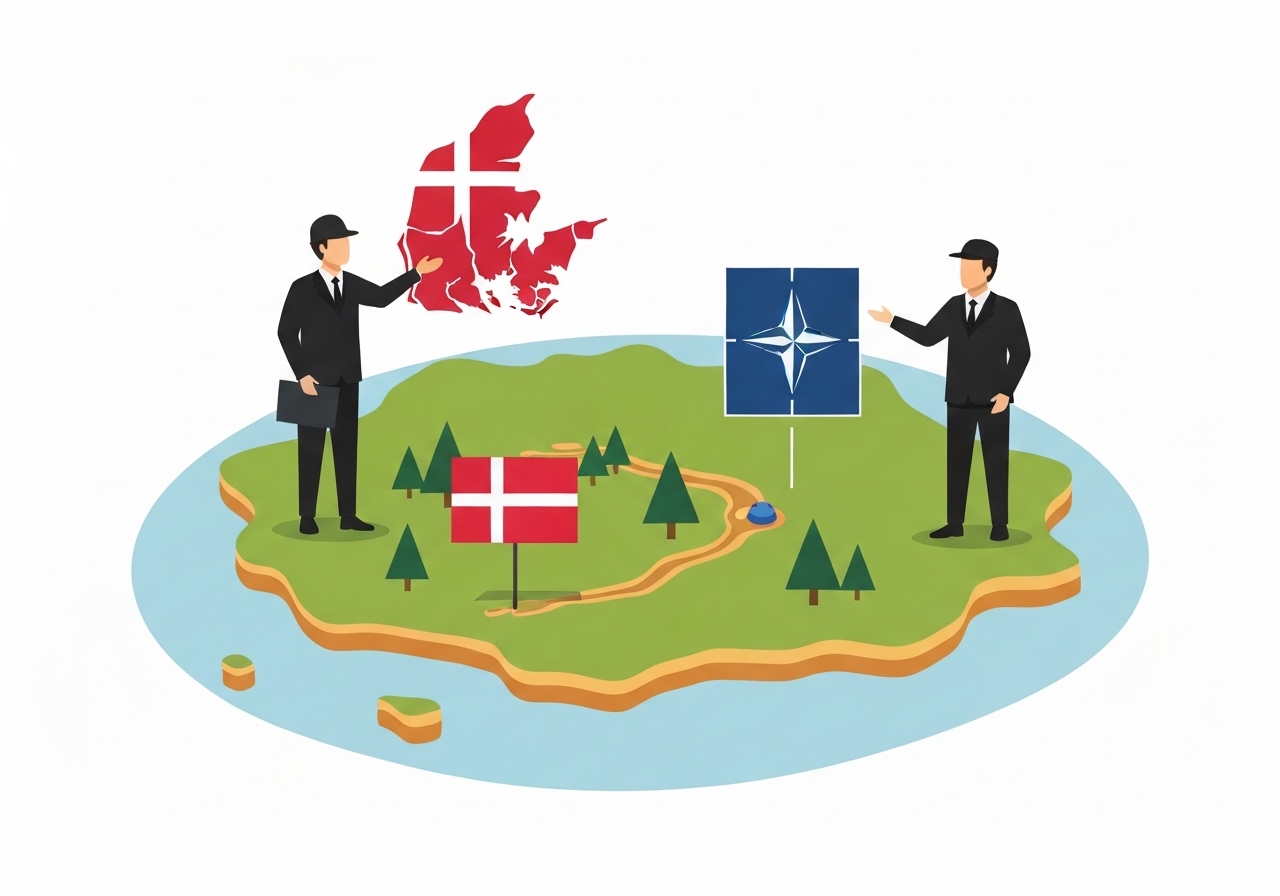
On 19 January 2026 Denmark and Greenland formally raised the idea of a NATO presence on Greenland during talks in Brussels with NATO Secretary General Mark Rutte. The proposal, announced by Danish Defence Minister Troels Lund Poulsen, comes as US President Donald Trump renews pressure to acquire Greenland and threatens tariffs on several European states. European leaders are convening an emergency summit to coordinate a response, weighing options that range from diplomatic engagement to the EU’s anti-coercion trade tool. The move signals an escalation in transatlantic friction over Arctic security and sovereignty.
Key takeaways
- Denmark and Greenland proposed a NATO mission on Greenland during 19 January 2026 talks in Brussels involving Troels Lund Poulsen, Vivian Motzfeldt and Secretary General Mark Rutte.
- President Trump has threatened 10% tariffs on eight European countries from 1 February 2026, with a possible increase to 25% by summer if his bid to acquire Greenland is not advanced.
- The EU is preparing an emergency leaders’ meeting on Thursday to consider countermeasures, including the never-used Anti-Coercion Instrument (ACI).
- European political leaders — including German Chancellor Friedrich Merz and French officials — are seeking a coordinated response; Germany and France are discussing a unified line.
- EU officials have a previously prepared €93 billion retaliatory tariff package from earlier trade rows that could be recalibrated if needed.
- NATO Secretary General Mark Rutte emphasized continued alliance cooperation on Arctic security and noted Denmark’s increased investments in capabilities.
- US Treasury Secretary Scott Bessent warned European states that retaliatory tariffs would be “very unwise,” echoing the White House position that Greenland is a strategic asset.
- The proposal for a NATO framework would be a new step — recent European reconnaissance missions were limited and a NATO mission would formalize allied responsibility in the Arctic.
Background
Greenland is an autonomous territory of the Kingdom of Denmark with a small population but outsized strategic importance because of its location in the North Atlantic and Arctic. During the Cold War the United States maintained dozens of military bases there and stationed thousands of personnel; today only a few hundred US troops remain under longstanding access arrangements. That history underpins current security arguments that the island matters far beyond its population size.
The present crisis escalated after President Trump publicly renewed interest in acquiring Greenland and threatened tariffs on countries opposing that aim. The US administration frames Greenland as a strategic national-security asset, while Denmark, Greenlandic authorities and many European capitals insist sovereignty decisions belong to the Kingdom of Denmark and the people of Greenland. The EU created the Anti-Coercion Instrument (ACI) in 2023 to respond to economic pressure but it has not yet been deployed.
Main event
On 19 January 2026 Danish Defence Minister Troels Lund Poulsen said Denmark and Greenland had “proposed” a NATO mission in Greenland after bilateral and trilateral talks in Brussels with Greenlandic Foreign Minister Vivian Motzfeldt and NATO Secretary General Mark Rutte. Poulsen described the proposal as a framework the alliance could build on to coordinate security in the Arctic.
Rutte underlined the strategic importance of the Arctic and said allies would “continue to work together” on collective security, citing Denmark’s stepped-up investments in relevant capabilities. The discussion came amid diplomatic fallout from the US president’s threats to impose tariffs on several European countries that oppose his Greenland push.
European capitals quickly mobilized. Germany and France signalled they would seek a coordinated EU response, with German Chancellor Friedrich Merz stressing the need to stand firm and avoid being “blackmailed.” French officials reportedly pushed to activate the EU’s Anti-Coercion Instrument as one possible lever.
Meanwhile, EU Commission President Ursula von der Leyen reiterated at the World Economic Forum in Davos that Greenland’s sovereignty must be respected and that the EU seeks to maintain close cooperation with the United States, NATO and Denmark on shared security interests. US Treasury Secretary Scott Bessent warned against retaliatory tariffs, repeating the administration’s national security rationale for Greenland.
Analysis & implications
The Danish–Greenland proposal to place a NATO framework on the island would internationalize Arctic security and anchor Greenland more explicitly within alliance planning. That could reassure European capitals worried about unilateral US moves, but it also risks raising tensions with Washington if perceived as a rebuff to US strategic claims. NATO involvement would require consensus among member states and clear legal and operational parameters to respect Danish sovereignty and Greenlandic autonomy.
For the EU, the situation tests the practicality and political will behind the Anti-Coercion Instrument. Activating the ACI or related retaliatory measures would signal that Brussels will not tolerate economic pressure aimed at sovereign choices, but such measures carry the risk of escalating into a broader transatlantic trade dispute that could hurt industries on both sides — aircraft, cars, agriculture and more.
Politically, European leaders face a delicate balancing act: defend alliance unity and respect for sovereignty while avoiding a tit-for-tat trade conflict that could damage supply chains and consumer prices. The proposal for a NATO framework could serve as a de-escalatory channel if designed and communicated as cooperative rather than exclusionary, but whether Washington accepts multilateralization of Arctic security is uncertain.
Comparison & data
| Item | Historic/Current |
|---|---|
| US military presence in Greenland | Dozens of bases historically; a few hundred troops today |
| Trump tariff threat | 10% from 1 Feb 2026; potential rise to 25% by summer 2026 |
| EU retaliatory package (prepared earlier) | €93 billion in measures previously drafted |
The numerical context highlights asymmetric impacts: Greenland’s population is tiny while its landmass and location are geopolitically disproportionate. Tariff percentages (10%–25%) are substantial and could disrupt specific sectors; the previously prepared €93 billion retaliation package indicates the EU’s capacity for calibrated economic responses if leaders agree to act.
Reactions & quotes
European leaders and NATO officials framed the developments in both security and diplomatic terms, warning against coercive tactics.
“We have proposed this… I believe we can now hopefully establish a framework for how this can be achieved.”
Troels Lund Poulsen, Danish Defence Minister
Poulsen presented the idea as a collaborative step with Greenland and NATO rather than a unilateral security takeover, stressing alignment with Greenlandic government discussions.
“We discussed how important the Arctic — including Greenland — is to our collective security.”
Mark Rutte, NATO Secretary General
Rutte framed the talks as part of routine allied cooperation on Arctic capabilities and investments, signaling NATO’s interest in remaining engaged on the issue.
“Tariffs run counter to these shared interests… Sovereignty is not for trade.”
Ursula von der Leyen, President of the European Commission
Von der Leyen emphasized the need to protect Greenlandic sovereignty and keep transatlantic ties intact while reserving EU tools to respond to economic coercion.
Unconfirmed
- Precise operational details and mandate for a proposed NATO mission in Greenland have not been published; timelines and force levels remain unannounced.
- It is not confirmed whether the United States has been formally asked to endorse a NATO framework in Greenland or how Washington would respond to such a proposal.
- Reports that tariffs would immediately take effect on 1 February 2026 are based on the administration’s threats; concrete US implementing actions had not been published at the time of these reports.
Bottom line
The Denmark–Greenland proposal to float a NATO mission shifts the dispute from bilateral US–Danish tensions into an allied security planning context and forces Europe to consider combined political, military and economic responses. That reframing could strengthen multilateral oversight of the Arctic but requires careful diplomacy to avoid deepening transatlantic rupture.
EU leaders meeting this week must weigh the risks of activating economic countermeasures — including the ACI or previously drafted tariffs — against the long-term costs of a trade escalation. How NATO and Washington respond to a formal allied framework for Greenland will determine whether the issue cools into coordinated security cooperation or heats into a broader political and economic confrontation.
Sources
- DW — Live coverage: Denmark, Greenland float NATO mission on the island (news)
- DW — EU weighs response to US ‘blackmail’ tariffs over Greenland (news/analysis)
- DW — Von der Leyen in Davos on Greenland sovereignty (news)
- DW — NATO to continue working with Denmark and Greenland on Arctic security (news)
- DW — What is the EU’s ‘trade bazooka’? (explainers)