
Lead
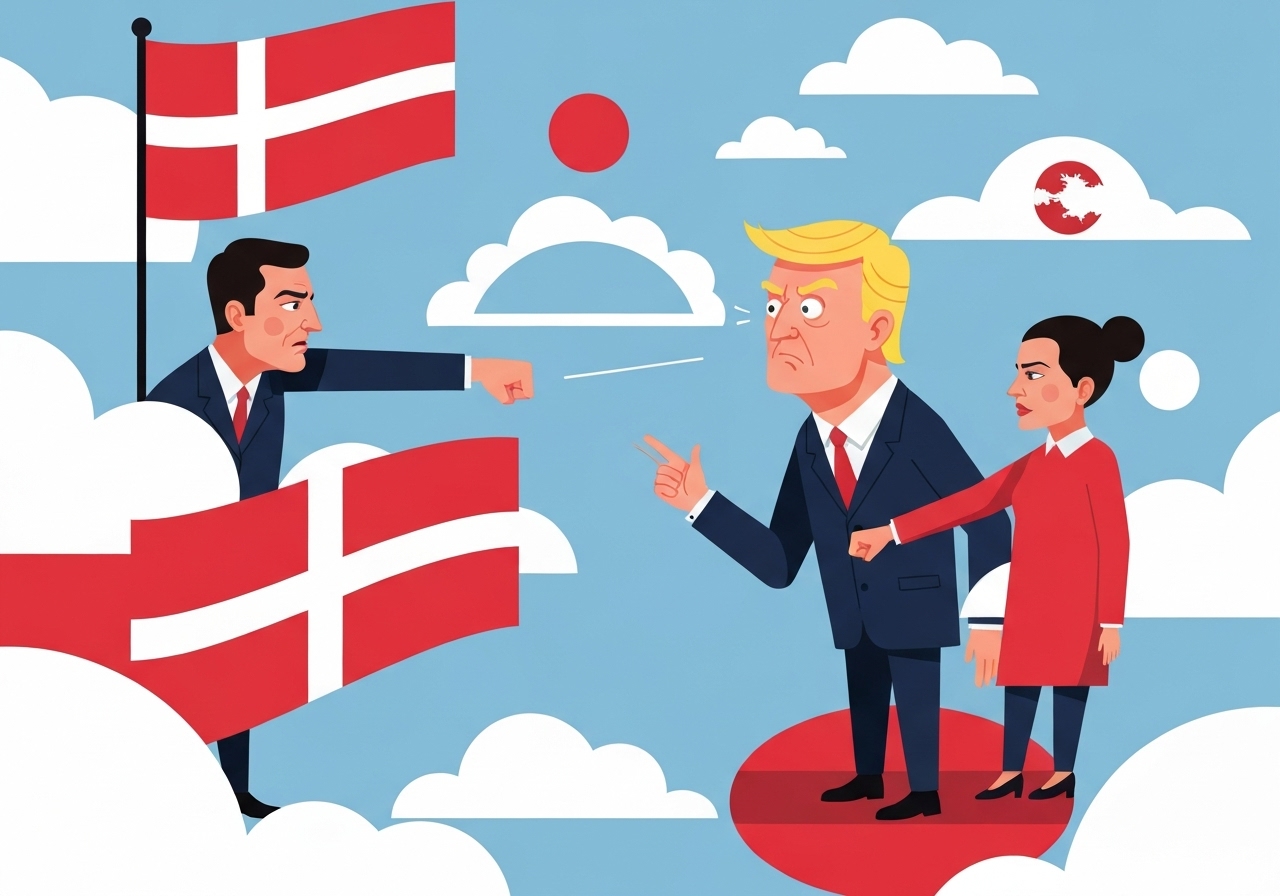
Denmark and Greenland on Monday issued a joint rebuke after US President Donald Trump named Louisiana governor Jeff Landry as a special envoy to Greenland, a largely self-governing territory of the Kingdom of Denmark. The two leaders said the appointment infringed on territorial integrity and reiterated that Greenlanders decide Greenland’s future. Denmark signalled formal protest and said it would seek explanations from Washington. The move has heightened diplomatic tensions amid growing great-power interest in the Arctic.
Key Takeaways
- President Trump appointed Jeff Landry as US special envoy to Greenland on Sunday; Landry is governor of Louisiana and a former state attorney general who took office in January 2024.
- Denmark’s prime minister Mette Frederiksen and Greenland’s premier Jens-Frederik Nielsen issued a joint statement saying “you cannot annex other countries” and demanding respect for territorial integrity.
- Denmark plans to summon the US ambassador, Ken Howery, to the foreign ministry for an explanation, according to foreign minister Lars Løkke Rasmussen.
- Landry publicly described the role as a volunteer effort to “make Greenland a part of the US,” prompting particular Danish concern about intentions behind the appointment.
- A January poll shows the majority of Greenland’s roughly 57,000 residents favour eventual full independence from Denmark but not union with the United States; Greenland has held the legal right to declare independence since 2009.
- The appointment follows prior friction, including Denmark summoning a US chargé d’affaires in August over alleged influence efforts involving US-linked actors.
Background
Greenland is a vast, mineral-rich Arctic island with strategic location between North America and Europe. Its importance has grown as the Arctic opens to new shipping lanes and resource access, drawing heightened interest from the United States, China and Russia. Greenland has exercised wide self-rule for years and was granted the legal pathway to full independence in 2009; local sentiment leans toward independence, but most polls show Greenlanders do not seek incorporation into the United States.
Former and current US leaders have at times signalled intense interest in Greenland; President Trump previously raised the idea of acquiring the territory on security grounds and did not categorically rule out force in past remarks. Against that history, Washington’s naming of a special envoy with statements about bringing Greenland into the United States revives sensitive questions about sovereignty, alliance norms and Arctic geopolitics during a period of elevated strategic competition.
Main Event
On Sunday, the White House announced that Jeff Landry would serve as a US special envoy to Greenland. Landry, who became Louisiana’s governor in January 2024, accepted the unpaid role and released comments framing Greenland as vital to US national security and claiming a purpose of advancing American interests there. His language—calling it an honour to serve and saying he would work to make Greenland part of the US—provoked immediate concern in Copenhagen and Nuuk.
Denmark’s foreign minister Lars Løkke Rasmussen told Danish television he would summon the US ambassador, Ken Howery, in the coming days to demand an explanation. Rasmussen described the appointment and some of Landry’s public remarks as deeply upsetting and unacceptable while stressing that the Kingdom of Denmark—comprising Denmark, the Faroe Islands and Greenland—would not tolerate actions that undermine its sovereignty.
Prime Minister Mette Frederiksen and Greenlandic premier Jens-Frederik Nielsen issued a joint statement warning that annexation is not permissible and that Greenland belongs to Greenlanders. Both leaders framed the dispute as resting on “fundamental principles” of territorial integrity and democratic decision-making, and stressed that the Netherlands-style alliance with the US should not come at the cost of sovereignty.
Greenlandic parliamentarian Aaja Chemnitz said a US envoy per se need not be a problem, but she objected to any mandate that implies transferring sovereignty to the United States. Local political leaders reiterated commitment to the islanders’ right to shape their own path toward independence over time, not to be subsumed into a different state by outside pressure.
Analysis & Implications
The appointment risks a diplomatic rift between two NATO partners at a sensitive time for alliance unity and Arctic strategy. Denmark’s rapid move to summon the US ambassador signals that Copenhagen takes the language and mandate attributed to the envoy as a direct affront to the Kingdom’s sovereignty. That reaction could complicate cooperation on defence and regional security matters, including coordination in Greenlandic waters and airspace.
For Greenland, the episode reinforces anxieties about outside influence and the fragility of small-state agency amid major-power competition. Even with a clear domestic majority in favour of eventual independence, Greenland faces an intricate transition that involves economic capacity, defence arrangements and international recognition. External proposals or pressure that appear to shortcut that process may strengthen domestic consensus around measured, home-grown steps to sovereignty rather than accelerated alignment with another external power.
From Washington’s perspective, the move may reflect a blend of domestic politics and strategic signaling. Naming a figure with partisan and regional ties as envoy appeals to a domestic audience while broadcasting US interest in Arctic resources and basing options. But the blunt language used by the appointee about making Greenland “part of the US” clashes with international law norms and alliance expectations, reducing diplomatic flexibility and credibility.
Looking ahead, expect Copenhagen to press for clarifications and possibly formal diplomatic demarches. The episode could precipitate clearer allied coordination on Arctic governance, or it could deepen mistrust if Washington does not explicitly disavow any territorial claims or transfer proposals. Greenland’s own political institutions will likely emphasize the need for control over any negotiations affecting sovereignty or resource rights.
Comparison & Data
| Item | Fact/Date |
|---|---|
| Greenland population | ~57,000 |
| Right to declare independence | Since 2009 |
| Jeff Landry appointment | Announced Sunday (Dec 2025) |
| Notable recent US visits | Donald Trump Jr (January); VP J.D. Vance (March) |
The table sums key datapoints cited in official statements and reporting. Greenland’s small population and formal pathway to independence frame why any external proposal to change its status would require careful legal and political procedures. Recent visits by US political figures and prior diplomatic incidents—such as Denmark’s August summons of a US chargé d’affaires over alleged influence operations—add context to why Copenhagen is reacting strongly now.
Reactions & Quotes
“You cannot annex other countries,” the prime ministers of Denmark and Greenland said in a joint message, accusing the appointment of threatening “fundamental principles.”
Prime Minister Mette Frederiksen & Premier Jens-Frederik Nielsen
“Jeff understands how essential Greenland is to our National Security,” President Trump wrote, framing the envoy role as advancing US safety and allied interests.
President Donald Trump (social media)
“This appointment is deeply upsetting and we will demand an explanation,” Foreign Minister Lars Løkke Rasmussen said, announcing plans to summon the US ambassador.
Lars Løkke Rasmussen, Danish Foreign Minister
Unconfirmed
- Whether the White House intends this envoy appointment as the first step in a formal US plan to acquire Greenland is not confirmed by any official policy document.
- Allegations that specific US-linked actors have ongoing covert plans to influence Greenlandic politics have been reported previously but remain under investigation and not independently verified here.
- Any claim that the US is preparing military action related to Greenland has not been substantiated and would contradict established alliance norms; no evidence of such preparations has been presented publicly.
Bottom Line
The appointment of a US special envoy to Greenland and the subsequent defensive diplomatic response from Denmark and Greenland underscore how Arctic policy and sovereignty can rapidly become flashpoints between allies. Copenhagen’s firm stance reflects both legal realities—Greenland’s status within the Kingdom—and political sensitivities among Greenlanders who seek an independent path, not absorption by another power.
Practical next steps to watch include Denmark’s meetings with US diplomats, any clarifying statements from the White House about the envoy’s remit, and Greenlandic political reactions as local leaders reassure residents about the territory’s future. The episode is likely to shape not only bilateral ties but broader allied discussions on Arctic governance and norms about territorial integrity.