
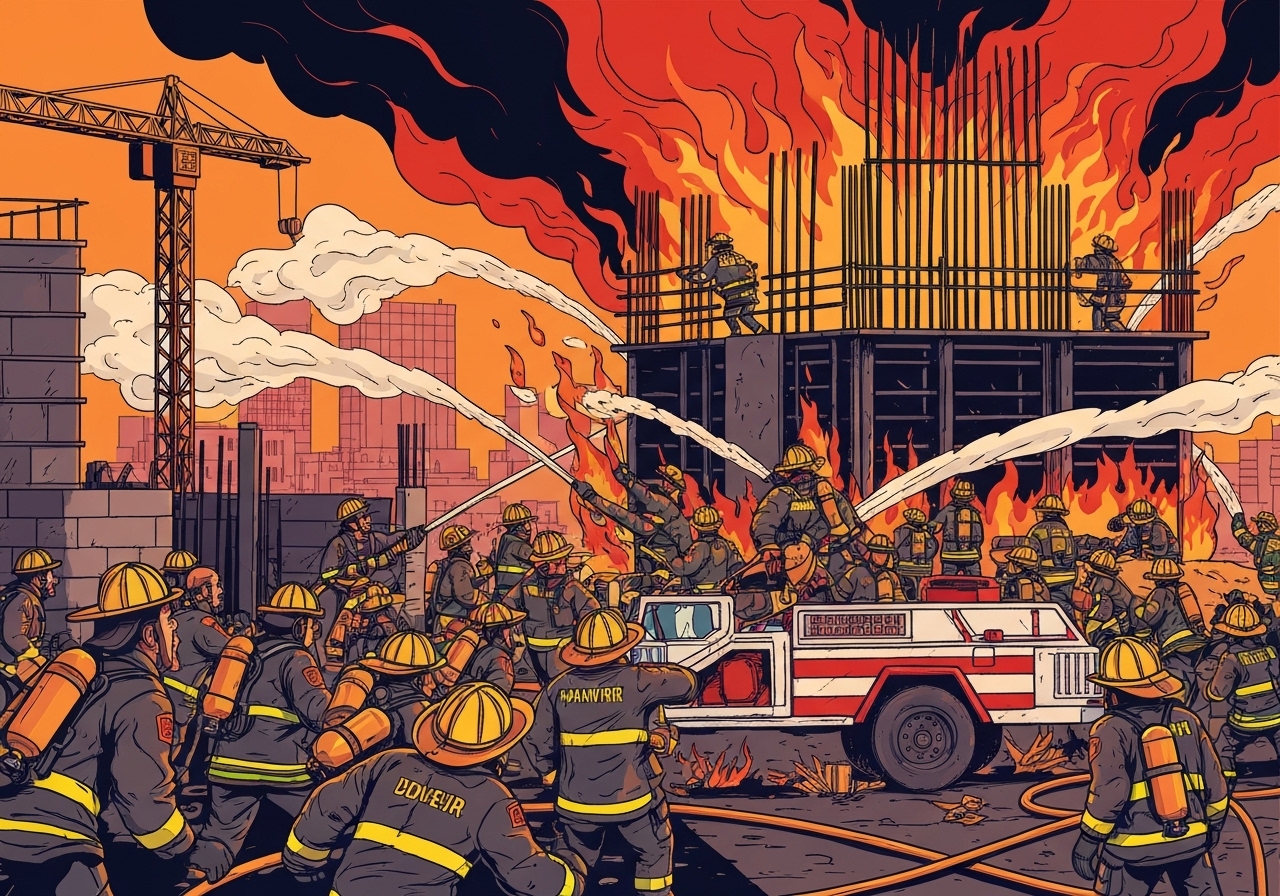
— More than 100 firefighters responded Friday evening to a five-alarm fire at an apartment building under construction in Denver, a project roughly the size of a city block. Crews worked for hours to prevent flames from spreading to adjacent structures and had the blaze about 70% contained by late evening. One firefighter was injured and transported to a hospital; no other injuries were immediately reported. Evacuation orders were issued for nearby residents while crews remained on scene to suppress deep-seated pockets of fire.
Key Takeaways
- Response scale: a five-alarm fire mobilized over 100 firefighters to a construction site in Denver on the evening of January 2, 2026.
- Containment: officials estimated roughly 70% containment by late evening, with remaining deep-seated pockets requiring overnight operations.
- Injuries: one firefighter was injured while battling the blaze and taken to hospital; no civilian injuries were reported.
- Site profile: the apartment building was in early- to mid-stage construction and primarily wood-framed with plastic wrapping materials present.
- Public safety: evacuation orders were issued for nearby residents to prevent exposure to smoke and falling debris.
- Operational outlook: firefighters planned to remain at the scene overnight to extinguish hot spots and prevent rekindling.
Background
Construction-site fires pose particular challenges because partially built structures often expose large amounts of combustible framing, temporary plastics and fuel sources while lacking finished fire-stopping systems. In Denver and many U.S. cities, a boom in multifamily construction has increased the number of timber-framed projects, which can burn intensely if a fire takes hold. Fire departments typically scale responses to building size and fire behavior; a five-alarm designation signals a major incident requiring mutual-aid resources and extended operations.
Stakeholders in a blaze at an active job site include firefighters, contractors, local building inspectors and displaced residents. Developers and insurers will assess property and financial losses after suppression, while municipal investigators and occupational safety agencies often review whether protocols, permit conditions and on-site safety measures met standards. Lessons from previous construction fires have pushed some jurisdictions to reconsider materials, storage practices and temporary on-site fire protection during the build phase.
Main Event
The fire was reported Friday evening, January 2, 2026, at an apartment building under construction in Denver occupying about the size of a city block. Firefighters labeled the incident a five-alarm response and deployed more than 100 personnel to contain rapidly spreading flames fueled by exposed wood framing and construction wrap. Crews focused on preventing lateral spread to adjacent buildings and isolating deep-seated hotspots inside the partially constructed shell.
By late evening the Denver Fire Department reported the blaze was largely under control though not fully extinguished, estimating containment at about 70%. Firefighters continued suppression efforts through the night as pockets of smoldering material remained. One firefighter sustained injuries while fighting the fire and was transported to hospital; officials said there were no other immediate injuries among workers or nearby residents.
Local authorities issued evacuation orders for nearby homes and businesses as a precaution against smoke and structural collapse hazards. Fire personnel set up perimeter control and worked with incident command to secure utilities and manage traffic. No official cause has been released; the department said investigators will examine the scene once suppression of hot spots allows safe access.
Analysis & Implications
The incident underscores inherent vulnerabilities in wood-framed construction during the build phase, when large combustible loads and exposed assemblies can accelerate fire growth. Temporary materials such as protective wraps, sheathing and stored combustibles increase fire load and complicate suppression, which drives extended operational times and higher resource costs. For the developer and insurer, the event will likely translate into significant direct property damage and potential schedule delays for the project.
From a public-safety standpoint, the response highlights the importance of rapid mutual-aid coordination and pre-planned strategies for construction-site fires. Extended operations place personnel at risk and strain municipal resources, particularly if mutual-aid agreements must be activated across jurisdictions. The single reported firefighter injury illustrates that even routine suppression carries hazards when structure stability and hidden pockets of fire are factors.
Policy implications could include renewed examination of on-site fire prevention practices, storage rules for combustible materials and temporary fire-protection measures during construction. Municipalities weighing such steps will balance cost and schedule impacts for developers against reduced fire risk and potential savings in emergency response and property loss. Investigations by fire officials and occupational-safety agencies may also lead to recommendations or citations if deficiencies in protocol or oversight are found.
Comparison & Data
| Metric | Value |
|---|---|
| Alarm level | Five-alarm |
| Personnel on scene | More than 100 firefighters |
| Containment (late evening) | Approximately 70% |
| Reported injuries | 1 firefighter (transported to hospital) |
| Structure | Apartment building under construction, ~city-block footprint |
The table summarizes the operational scale and immediate outcomes reported by officials. These figures indicate a major, multi-company response with ongoing work required to extinguish hidden pockets of fire; such incidents typically require extended salvage and overhaul phases before investigators can safely enter and determine origin and cause.
Reactions & Quotes
Crews worked to keep the flames from spreading to neighboring buildings while suppressing deep-seated fires inside the structure.
Denver Fire Department (official statement)
Nearby residents were evacuated as a precaution and later allowed to remain at a safe distance while operations continued.
Local emergency management official
One worker described the scene outside the site as chaotic but said responders prioritized civilian safety and containment.
Evacuated resident (on-scene)
Unconfirmed
- No official cause has been released; any suggestions about ignition source remain unconfirmed pending investigator findings.
- The total monetary and insurance loss estimates for the project have not been released and remain unknown.
- The identity of the injured firefighter and current medical status beyond initial transport have not been publicly disclosed.
Bottom Line
The five-alarm fire at a Denver apartment construction site on January 2, 2026, required a large-scale response and left the structure partly smoldering overnight, with one firefighter injured and no immediate civilian casualties. The incident highlights persistent risks tied to timber-framed construction and temporary on-site materials, and it will likely prompt detailed review by fire investigators and occupational-safety officials.
Residents, developers and municipal authorities will watch for the investigation results to determine cause, assess accountability and consider whether changes in on-site practices or local regulation are warranted. In the near term, firefighters will remain focused on complete extinguishment and scene safety while the community gauges the operational and financial fallout.
Sources
- ABC News (national news report)
- Denver Fire Department (official municipal agency)