
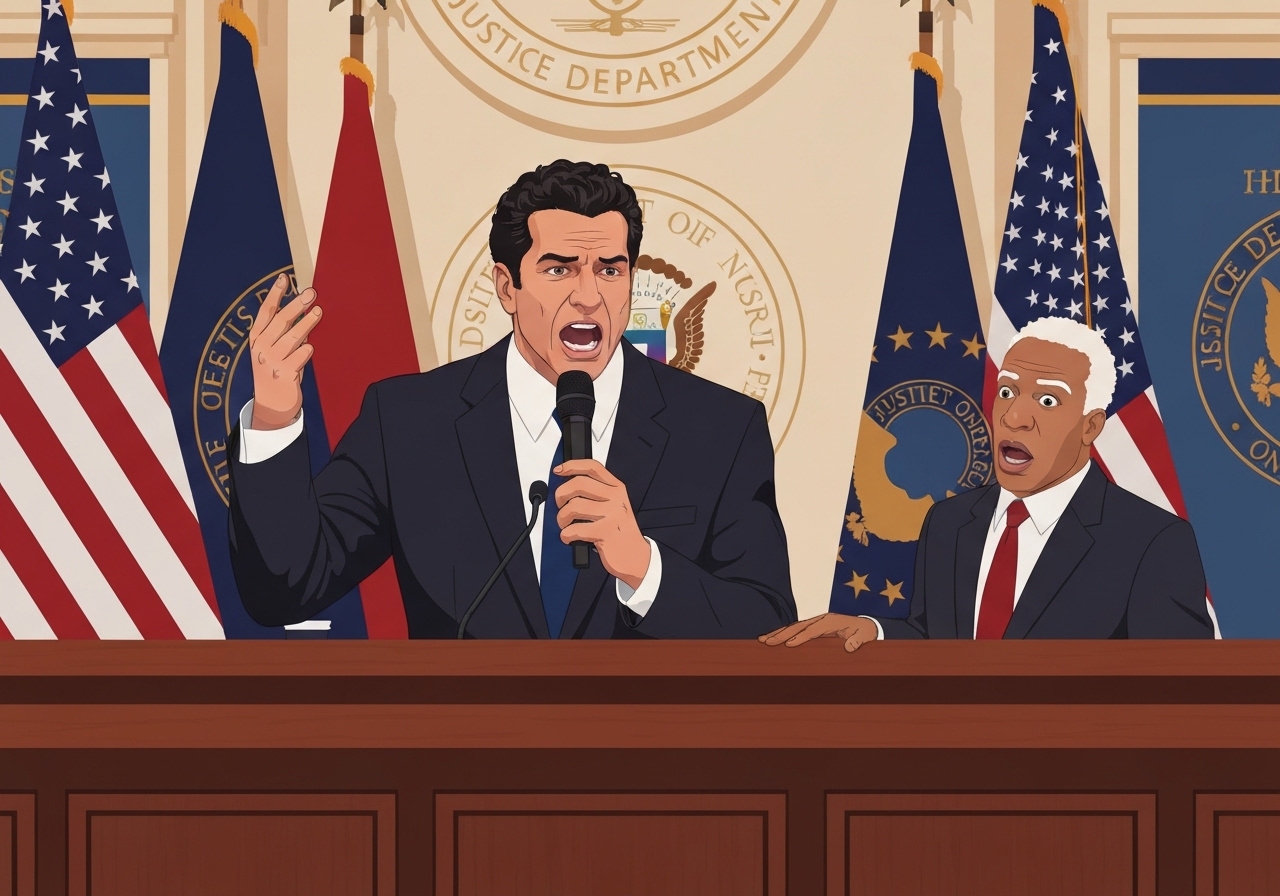
Lead: On Monday, Assistant Attorney General Harmeet Dhillon said the Justice Department will pursue criminal charges tied to an anti-ICE demonstration held inside a St. Paul, Minnesota, church earlier this month. Dhillon singled out former CNN anchor Don Lemon for reporting from inside the sanctuary and argued that journalism does not automatically shield someone from participation in a criminal conspiracy. The protest followed the Jan. 7 fatal shooting of Renee Nicole Good by an ICE officer, an incident that has sparked sustained demonstrations in Minneapolis–Saint Paul. Officials and political leaders have sharply disagreed about both the protest tactics and potential federal responses.
Key Takeaways
- The Justice Department’s civil rights chief, Harmeet Dhillon, said on Monday the DOJ “will pursue charges” related to the St. Paul church protest; she named possible legal theories that investigators are reviewing.
- Dhillon publicly criticized Don Lemon for reporting inside the church, saying journalists are not a “shield” from being part of a criminal conspiracy; the DOJ did not confirm whether charges against Lemon specifically are planned.
- Dhillon referenced both the Freedom of Access to Clinic Entrances (FACE) Act and the Enforcement Act of 1871 (often called the Ku Klux Klan Act) as possible legal tools under review.
- The protest took place amid unrest after the Jan. 7 killing of Renee Good; demonstrators chanted for ICE to leave and demanded accountability for her death.
- President Trump called the action a “church raid” on Truth Social and urged investigations into elected Minnesota Democrats; Minneapolis city leaders have resisted federal intervention.
- Defense Department officials told NBC News that about 1,500 troops were ordered to prepare for possible deployment to Minnesota if the Insurrection Act is invoked.
- Don Lemon has said he was covering the event as a journalist, reported threats after the coverage, and urged focus on investigating Good’s death.
Background
The demonstration in St. Paul occurred in the larger context of protests that followed the Jan. 7 fatal shooting of Renee Nicole Good by an ICE officer. The shooting has become a rallying point for activists who demand accountability and changes to ICE operations in Minnesota. Local officials, protesters and federal authorities have been publicly at odds over the proper balance between protest rights and law enforcement protection.
Federal statutes cited by Dhillon have specific scopes: the FACE Act, enacted in 1994, targets obstruction of access to reproductive-health services and interference at places of worship in some circumstances; the Enforcement Act of 1871 was passed during Reconstruction to address conspiracies that deny civil rights. Invoking these laws against demonstrators would be politically and legally significant, raising questions about how statutes designed for other contexts apply to contemporary protest tactics.
Main Event
Video posted online shows a group of demonstrators entering a church in St. Paul chanting slogans including “ICE out” and calling for justice for Renee Good. Don Lemon recorded from inside the building and posted clips to his YouTube channel in which he told viewers he was there to report, not to lead activism. In one inside clip, a pastor asked Lemon to leave unless he intended to worship; Lemon responded on camera that he was reporting on the protestors.
Dhillon described the episode in an interview with conservative commentator Benny Johnson, asserting that some participants had coordinated to impede worship and that the DOJ was “putting the facts together.” She warned that federal prosecutors could bring charges, and she said the full force of the federal government could be used against repeat or coordinated intrusions into houses of worship.
In response, Lemon said he was one of several reporters at the scene and that he had been targeted by online threats and slurs after his coverage was highlighted by right-leaning outlets. He also urged authorities to concentrate on investigating Renee Good’s death rather than focusing on coverage of protests. Cities Church and the Justice Department did not provide immediate comment to reporters.
Analysis & Implications
Legal analysts will examine whether the conduct at the church meets the elements of the FACE Act or a civil-rights conspiracy under the Enforcement Act of 1871. FACE was designed primarily to prevent obstruction of access to reproductive-health facilities and to protect worshipers; applying it to a protest that entered a sanctuary raises questions about intent, property rights, and whether the demonstrators physically barred worshippers from access.
Invoking the 1871 Enforcement Act to pursue a conspiracy charge would require evidence that protesters conspired to deprive individuals of constitutionally protected rights. That standard is higher than mere disruption; prosecutors would need to show coordinated intent to violate protected rights, and courts are likely to scrutinize both the factual record and the political context.
There are also First Amendment and press-freedom considerations. Prosecuting journalists for coverage risks chilling reporting if authorities draw broad lines between reporting on events and participation. A prosecution strategy that targets embedded reporters or camera operators could prompt legal challenges and public debate over where the line falls between journalism and active participation.
Politically, aggressive federal action could deepen polarization in Minnesota and between federal and local officials. Calls by President Trump to investigate state officials and threats to invoke the Insurrection Act add layers of federal-state tension. If troops are deployed or felony charges are pursued, the move would escalate a situation already charged by a high-profile police-involved death and sustained protests.
Comparison & Data
| Statute | Year | Primary purpose |
|---|---|---|
| FACE Act | 1994 | Prevent obstruction at reproductive-health facilities and protect access to worship in some cases |
| Enforcement Act (Ku Klux Klan Act) | 1871 | Address conspiracies that deny civil rights; used to prosecute deprivation of rights under color of law |
The two statutes differ in origins and common applications: FACE is modern and specific to facility access, while the 1871 law is broader and historically used against conspiracies targeting civil rights. Any prosecution will hinge on how prosecutors map recent facts—who entered, what they did, whether they blocked access or targeted individuals—onto these statutes.
Reactions & Quotes
“Don Lemon himself has come out and said he knew exactly what was going to happen inside that facility… journalism is not a shield from being part of a criminal conspiracy.”
Harmeet Dhillon (Assistant Attorney General for Civil Rights)
Dhillon used strong language in an interview to emphasize her view that the department will consider substantial charges if the facts support them.
“It’s notable that I’ve been cast as the face of a protest I was covering as a journalist… What’s even more telling is the barrage of violent threats… directed at me online.”
Don Lemon (former CNN anchor, reporter)
Lemon pushed back, saying he was one reporter among others and highlighting the hostile online response that followed the attention paid to his presence at the church.
“They are troublemakers who should be thrown in jail, or thrown out of the Country.”
Donald J. Trump (former President, Truth Social post)
Trump framed the episode as a “church raid” and called for aggressive legal and political responses, intensifying partisan reaction.
Unconfirmed
- Whether the Justice Department will bring criminal charges specifically against Don Lemon has not been confirmed by DOJ; Dhillon did not say charges would be filed against him personally.
- The alleged employment link between a church official and the local ICE field office reported by protesters has not been independently verified.
- It is unconfirmed whether the FACE Act or the Enforcement Act will ultimately be applied to this incident; investigators said they are “putting the facts together.”
- Any use of the Insurrection Act or the actual deployment of troops to Minnesota remains contingent and had not occurred at the time of Dhillon’s remarks.
Bottom Line
The dispute over a St. Paul church protest has moved from local controversy into the federal legal and political arenas, with the DOJ signaling possible criminal investigations and national political figures weighing in. How prosecutors interpret the facts will determine whether statutes like the FACE Act or the 1871 Enforcement Act are applicable; those decisions carry legal complexity and constitutional implications.
Observers should watch for official filings or charging decisions, which would clarify the legal theories the DOJ intends to use and test how courts balance protest rights, religious freedom, property access, and press protections. Meanwhile, the episode is likely to deepen political divisions and keep scrutiny on the underlying investigation into Renee Good’s death.
Sources
- NBC News (national news report)