
Lead
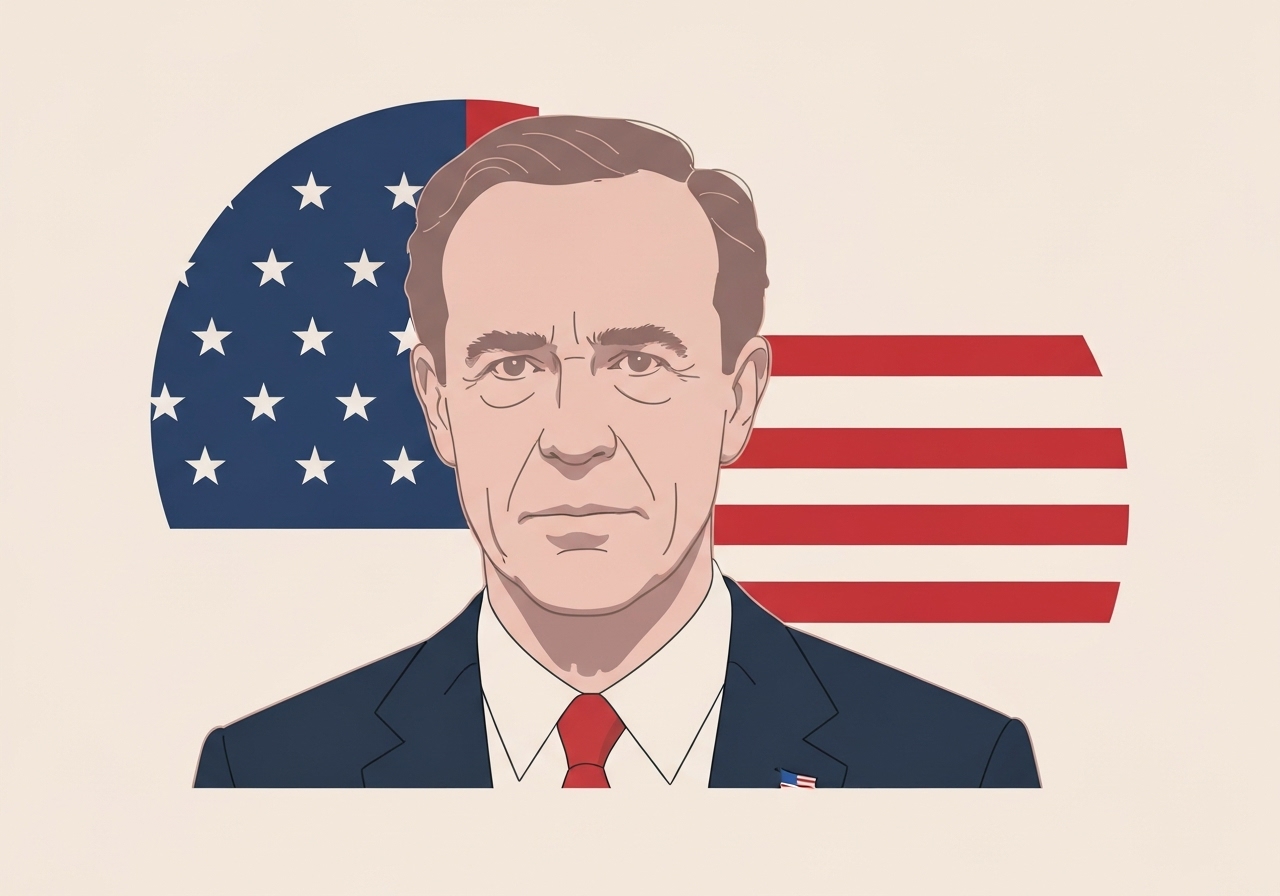
Former Vice President Dick Cheney, 84, died Monday night, his family said, after complications of pneumonia and long-standing cardiac and vascular disease. He was surrounded by his wife Lynne and daughters Liz and Mary when he passed. Cheney spent nearly four decades in Washington across roles as White House chief of staff, congressman, defense secretary, Halliburton CEO and two-term vice president. His death closes a career that reshaped U.S. national-security policy and sparked enduring controversy.
Key Takeaways
- Dick Cheney died Monday night at age 84 from complications of pneumonia and cardiac and vascular disease, family officials said.
- Family members present included his wife Lynne and daughters Elizabeth (Liz) and Mary; the family issued a public statement praising his character.
- Cheney served as White House chief of staff under Gerald Ford, U.S. representative for Wyoming, Secretary of Defense under George H.W. Bush and vice president under George W. Bush.
- He led executive decisions after the Sept. 11, 2001 attacks and was a principal architect of the Bush administration’s Iraq strategy and the post‑9/11 security posture.
- Cheney spent years in the private sector as Halliburton CEO; his tenure and the company’s contracts in Iraq drew scrutiny.
- Health battles were longstanding: five heart attacks, an LVAD implant in July 2010 and a heart transplant in March 2012 were publicly reported.
- The Iraq War cost nearly 4,500 U.S. service members and an estimated 100,000+ Iraqi deaths and more than $800 billion in U.S. expenditures, figures frequently cited in assessments of the era.
Background
Richard Bruce Cheney was born Jan. 30, 1941, in Lincoln, Nebraska, and moved as a teenager to Casper, Wyoming. He completed his bachelor’s (1965) and master’s (1966) degrees in political science at the University of Wyoming after an abbreviated stint at Yale, and began a rapid ascent through Republican political circles in the late 1960s and 1970s.
Cheney’s federal career included a range of posts: he became the youngest White House chief of staff at 34 during Gerald Ford’s presidency, later represented Wyoming in the U.S. House of Representatives, and was appointed Secretary of Defense under President George H.W. Bush during the 1990–91 Gulf War. Between public offices he served as chief executive of Halliburton, a global energy services firm.
In 2000 he joined George W. Bush’s ticket as vice presidential nominee and served two terms beginning in 2001. His vice presidency coincided with the Sept. 11 attacks and the subsequent U.S. campaigns in Afghanistan and Iraq—events that defined his policy legacy and political reputation.
Main Event
Cheney’s family announced his death Monday night, saying he succumbed to complications from pneumonia combined with chronic cardiac and vascular disease. The family’s statement emphasized his private virtues and public service, noting his devotion to family, country and pastimes such as fly fishing.
During his vice presidency (2001–2009) Cheney was centrally involved in crisis decision-making on Sept. 11, 2001; he and senior staff operated from the Presidential Emergency Operations Center while the administration determined immediate responses and initial strategy. Cheney later framed the post‑9/11 era as a new type of conflict against nonstate terrorists that required expanded tools for prevention and intelligence.
He was a prominent advocate for the 2003 invasion of Iraq, arguing the operation and broader counterterrorism measures were necessary to protect the United States. That policy stance and his support for aggressive interrogation techniques drew sharp criticism domestically and internationally as the wars and detention policies became contested issues.
Cheney’s time in office also involved notable controversies: questions about Halliburton contracts, the leaking and investigation around Valerie Plame’s identity, and a highly publicized hunting incident in 2006 when he accidentally shot Harry Whittington during a quail hunt. He remained an active voice in national-security debates after leaving office.
Analysis & Implications
Cheney’s death invites renewed assessment of an era in which executive power, preventive war doctrine and expanded intelligence authorities became central U.S. policies. His role in shaping those policies means historians and policymakers will continue to examine how institutional authority was interpreted and expanded during crises.
The Iraq War remains a pivotal benchmark for evaluating Cheney’s influence. Supporters argue removing Saddam Hussein ended a brutal dictatorship; critics point to intelligence failures, the long insurgency, and the human and fiscal costs—nearly 4,500 U.S. military deaths, an estimated 100,000-plus Iraqi fatalities and more than $800 billion in U.S. outlays—as reasons to question strategic judgment.
On counterterrorism and detention policy, Cheney defended enhanced interrogation and other aggressive measures as necessary to prevent further attacks; opponents decry those policies on legal and moral grounds and cite subsequent reviews and reports that criticized their efficacy and legality. The debate shapes present‑day policy on intelligence oversight and human-rights norms.
Politically, Cheney’s imprint on the Republican establishment and national-security discourse is uneven: his daughter Liz Cheney rose to national prominence within the GOP but later clashed with party elements over democratic norms. The family’s public profile ensures his death will be discussed in both partisan and institutional contexts.
Comparison & Data
| Year/Period | Event | Cheney’s Role |
|---|---|---|
| 1975 | White House Chief of Staff | Youngest chief of staff (age 34) |
| 1990–1991 | Gulf War | Secretary of Defense during coalition operations |
| 2001–2009 | Post‑9/11 response & Iraq War | Vice President, central policy architect |
| 2010–2012 | Severe heart disease treatment | LVAD implant (July 2010); heart transplant (March 2012) |
The table above highlights milestone moments and Cheney’s institutional responsibilities. Quantitatively, assessments of his legacy often center on casualty and cost figures from the Iraq conflict and on the scope of executive actions taken in the name of national security.
Reactions & Quotes
Family statement — released at the time of his death — focused on character and private life, framing Cheney as devoted to family and country and thanking supporters for their care.
“Dick Cheney was a great and good man who taught his children and grandchildren to love our country, and to live lives of courage, honor, love, kindness, and fly fishing,” the family said.
Cheney family (statement)
Longtime conservative observers emphasized the breadth of Cheney’s influence on the executive branch.
“His power is unparalleled in the history of the republic, frankly, for that position,” said John Hulsman, describing Cheney’s reach as vice president during the Bush administration.
John Hulsman, Heritage Foundation (comment, 2005)
Cheney himself often defended his approach to security policy and executive responsibility.
“I don’t run anything, I’m not in charge of a department or a particular policy area… for me to be out all of the time commenting on the issues of the day… infringes upon everybody else in the administration,” he observed in a 2008 interview explaining his view of the vice presidency.
Dick Cheney (interview, 2008)
Unconfirmed
- Any single definitive legal finding that Cheney personally ordered specific unlawful acts in interrogations has not been established; allegations have been contested and investigated in multiple venues.
- The extent to which Cheney’s ties directly produced specific Halliburton contract awards in Iraq remains a subject of public scrutiny; inquiries raised questions but definitive judicial rulings tying him to illegal contract awards are not part of the public record.
Bottom Line
Dick Cheney’s death marks the end of a career that transformed the vice presidency into an institution with unprecedented policy influence. He played a decisive role in shaping the U.S. response to terrorism and in advocating for preemptive approaches to perceived threats—positions that generate both praise for decisiveness and critique for consequence.
Moving forward, scholars and policymakers will continue to weigh the security rationale he advanced against the human, legal and fiscal costs that followed. The debates Cheney helped catalyze—about executive power, accountability and the rules of modern conflict—will remain central to how the United States prepares for and responds to future crises.
Sources
- ABC News — U.S. national news outlet reporting family statement and timeline (media).
- Encyclopaedia Britannica — Reference summary of Cheney’s career and corporate roles (reference).