
Lead
On 18 March 2026 children at the Joséphine Baker primary school in eastern Dijon discovered a remarkably well-preserved human skeleton seated upright at the bottom of a circular pit. Archaeologists from France’s Inrap say the body is one of several recently exposed in central Dijon that were intentionally buried in a seated position facing west. The remains are consistent with earlier finds nearby and belong to the Gallic period, dated roughly to 300–200 BC. The discovery deepens a puzzle about why some Gauls were interred sitting and whether those burials reflect ritual practice, social status or violence.
Key takeaways
- Discovery date and place: skeleton found 18 March 2026 beside Joséphine Baker primary school in Dijon during construction work.
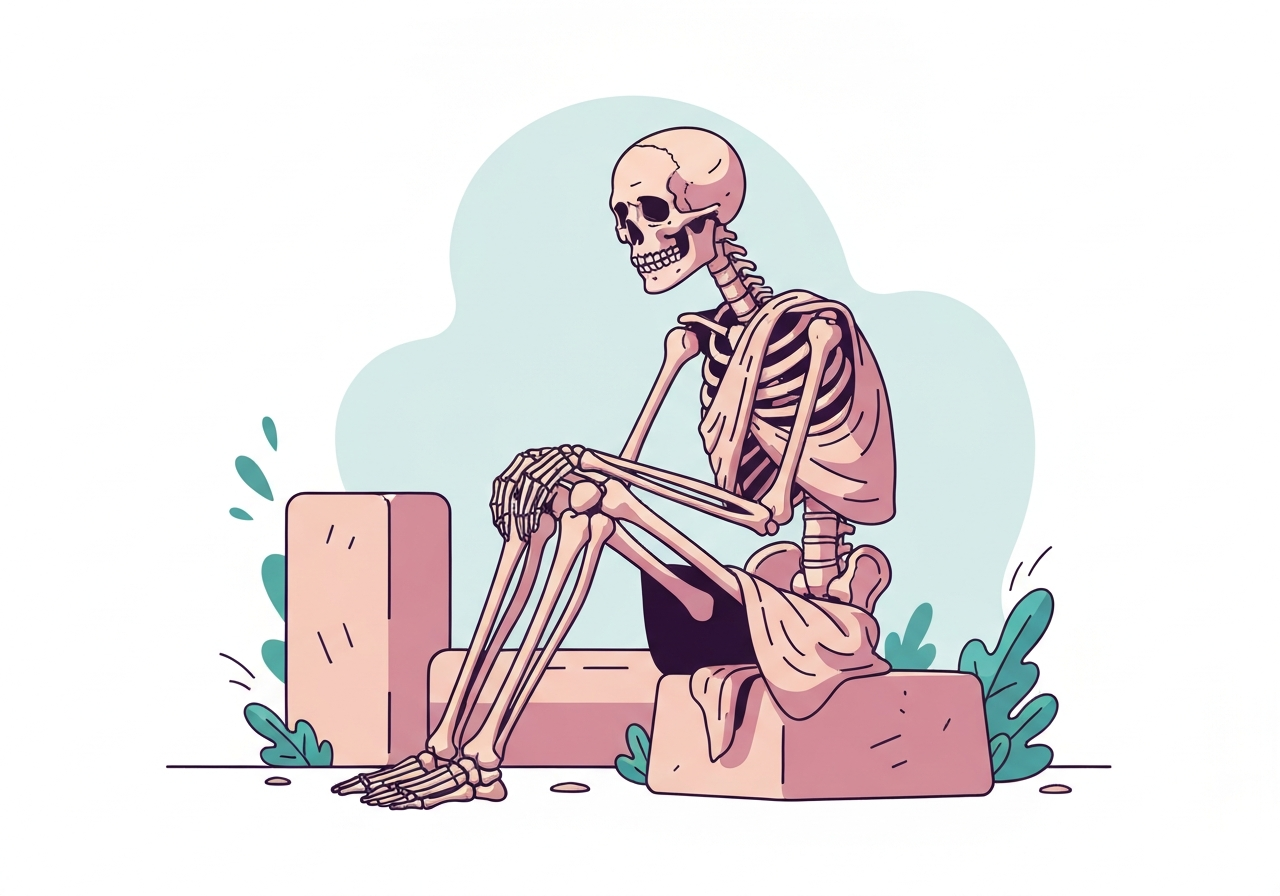
- Burial posture: the skeleton was seated in a one-metre-wide pit, back against the eastern wall and facing west, with hands resting in its lap.
- Contextual finds: five recently exposed seated tombs in the same central Dijon area; 13 other related skeletons were found about 20 metres away in 2025.
- Chronology: the Dijon burials are dated to about 300–200 BC; one armband recovered helps tie the graves to the Gallic period.
- Physical profile: most interred were adult men between 1.62 m and 1.82 m tall, with evidence of osteoarthritis and well-preserved teeth.
- Violence present: five of the seated skeletons show signs of trauma, including one individual with a fatal skull wound.
- Regional significance: roughly 20 seated Gaul tombs have now been recorded in a small area of Dijon, over a quarter of the c.75 seated Gaul burials known worldwide.
Background
Dijon has emerged over three decades of digs as an unusually rich locus for Gallic burials and material culture. Archaeological work in the city centre has incrementally revealed seated interments beginning with finds in 1992, followed by more recent exposures that cluster within a few dozen metres of one another. The Gauls, a Celtic-speaking group prominent in parts of modern France, Belgium and Switzerland, are mainly known through external accounts such as Julius Caesar’s Commentaries and through material remains unearthed by archaeologists.
Seated burials are rare in the broader archaeological record: specialists have identified about 75 such Gallic tombs internationally, with Dijon contributing a disproportionate share—around 20 in total when including finds from 1992 onward. The preservation of teeth and certain skeletal markers in the Dijon individuals has allowed bioarchaeologists to infer aspects of diet, workload and health, but the lack of grave goods—apart from one armband—limits direct conclusions about identity or status. The missing surface layer above the graves also removes potential contextual evidence such as markers, coverings or organic offerings.
Main event
The March 18 discovery occurred when pupils noticed a skeleton partially exposed next to the playground area during construction work adjacent to the school. Excavators from Inrap quickly secured the locus; the team reports the skeleton sat upright at the bottom of a roughly one-metre-wide circular pit. The posture mirrors other recent and past Dijon finds: back against the eastern pit wall, gaze oriented westward, hands resting in the lap.
Field notes indicate the bones are exceptionally well preserved, with dental enamel largely intact and clear osteoarthritic changes in leg bones consistent with habitual physical strain. No personal ornaments or weapons were recovered with this individual aside from a single armband associated with the broader settlement, limiting direct attribution of rank or role. Radiocarbon and typological evidence place the burials in the later first millennium BC—approximately 300–200 BC—within the Gallic cultural horizon.
Inrap researchers report that of the cluster recently examined, five skeletons exhibit signs of interpersonal violence; one shows a trauma consistent with a fatal cranial injury. Specialists are therefore balancing two overlapping lines of inquiry: whether seated interment was a funerary rite with symbolic meaning, or whether at least some of these individuals were victims of conflict or sanctioned execution. Excavation continues and laboratory analysis of bone microtrauma, isotopes and associated sediments is under way to refine chronology and mobility data.
Analysis & implications
The concentration of seated burials in a compact urban sector suggests Dijon was an important Gallic locus with distinctive mortuary practices. If the seated posture was locally standardized, it could reflect a community-specific ritual, an institutionalized funerary role, or a response to particular social pressures. The absence of grave goods—contrary to many contemporary burials where personal items accompany the dead—complicates interpretations about wealth or rank.
Evidence of trauma in several individuals raises hard questions about cause of death. Fatal head wounds could indicate interpersonal violence or conflict-related killings, but context matters: perimortem injuries must be distinguished from post-depositional damage. If violence is confirmed at higher prevalence than regional averages, researchers may need to reassess narratives of everyday Gallic life in this settlement, including social tensions, warfare, or punitive practices.
Bioarchaeological indicators—robust leg musculature markers and osteoarthritis—point to intense physical activity among the interred, consistent with a physically demanding lifestyle. Dental preservation suggests a low-sugar diet typical of pre-industrial agriculture, which helps reconstruct subsistence. Stable isotope and ancient DNA analyses now underway could clarify diet, mobility and kinship patterns, with the potential to show whether the seated burials represent a kin group, an occupational cohort or a ritual class.
Comparison & data
| Metric | Dijon cluster | Known global total (Gaul seating burials) |
|---|---|---|
| Seated tombs found in Dijon | ~20 (including 1992 and recent finds) | — |
| Seated Gallic tombs worldwide | — | ~75 |
| Recent nearby finds (March 2026) | 5 seated graves | — |
| Earlier 2025 finds | 13 skeletons ~20 m away | — |
| Date range | c.300–200 BC | c.5th–1st centuries BC (broader Gallic period) |
| Adult male stature range | 1.62–1.82 m | — |
The table highlights how concentrated the Dijon evidence is relative to the global corpus of seated Gallic burials. That concentration strengthens arguments for local practice but does not by itself determine meaning. Comparative sampling—radiocarbon dates, isotopes and pathologies—from other sites in France, Switzerland and the UK will be crucial to place Dijon within regional variability.
Reactions & quotes
Archaeologists involved emphasize the research value of the Dijon assemblage while noting the interpretive limits posed by missing contextual layers and sparse artifacts. Local officials have closed the immediate area for further excavation and conservation.
“Given the number and quality of these discoveries, we can say there was a significant Gallic settlement in Dijon.”
Régis Labeaune, Inrap (researcher)
Labeaune framed the finds as evidence of urban-scale occupation during the Gallic period and stressed the need for careful excavation. Specialists in bioarchaeology also noted how skeletal markers help reconstruct daily life even when grave goods are absent.
“Their bones display traces of osteoarthritis, suggesting intense physical activity, and their teeth are unusually well preserved.”
Annamaria Latron, Inrap (archaeo-anthropologist)
Latron highlighted the routine wear patterns that point to strenuous labor and referenced dental preservation as a dietary signal. Both scientists called for multidisciplinary laboratory work—radiocarbon dating, isotopic profiling and DNA—to refine interpretations.
Unconfirmed
- Whether any of the seated individuals were buried alive remains unproven; no direct evidence of immobility at time of burial has been confirmed.
- It is not yet established if seating denotes punishment, elite status, a specific ritual, or a funerary norm shared by a subgroup.
- The absence of the original surface layer above the tombs removes potential data on markers, offerings or structures that might clarify ritual context.
- Links between the various clusters (1992, 2025, 2026) in terms of kinship or chronological continuity await results from DNA and radiocarbon analyses.
Bottom line
The seated skeleton discovered beside a Dijon primary school adds to an unusually dense cluster of Gallic burials that challenge simple explanations about Iron Age funerary practice. The combination of preserved skeletal markers, a lack of grave goods, and evidence of trauma produces a complex picture that can signify ritual, social differentiation, or episodes of violence.
What follows will depend on laboratory results now in progress: precise radiocarbon dates, isotopic profiles for diet and mobility, and genetic data that could reveal kinship patterns. Those datasets will determine whether Dijon represents a local mortuary tradition, a specialized social group, or a site marked by conflict. For now, the find is a reminder of how much material evidence can reshape understanding of peoples who left few written records.
Sources
- The Guardian (international news report summarizing AFP/Inrap findings)
- Inrap (French National Institute for Preventive Archaeological Research — official archaeological institution)
- AFP (Agence France-Presse — news agency / photo credit)
- Encyclopaedia Britannica (reference article on the Gauls — academic/general reference)