
Lead
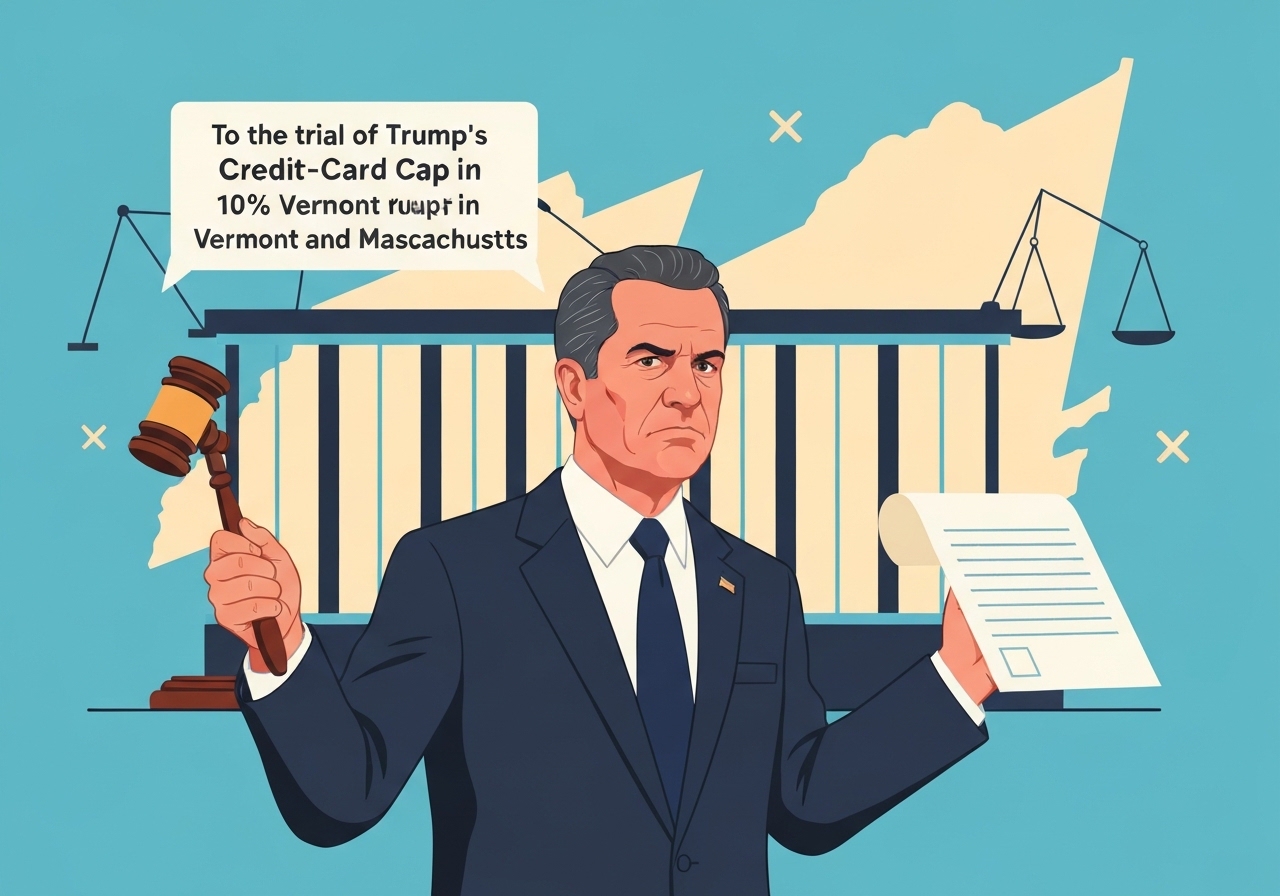
JPMorgan Chase CEO Jamie Dimon on Wednesday proposed that the U.S. government test President Donald Trump’s suggested 10% cap on credit‑card interest rates by applying it only in Vermont and Massachusetts. Speaking at the World Economic Forum in Davos, Dimon warned that a national price cap would sharply reduce credit availability for many Americans and ripple across local businesses and public services. He urged a limited, two‑state experiment to demonstrate the policy’s practical consequences and said JPMorgan would provide its analysis to the administration. The suggestion drew a mix of laughter and concern at the panel, highlighting the debate over price controls and consumer lending policy.
Key Takeaways
- Dimon recommended a two‑state trial of President Trump’s proposed 10% credit‑card interest cap, naming Vermont and Massachusetts as test sites.
- He warned the move could cause a drastic reduction in the credit‑card business affecting roughly 80% of Americans who use cards.
- Several large credit‑card issuers told CNBC they had not changed rates in response to the president’s order but declined to be named.
- Senators Bernie Sanders and Elizabeth Warren back a bill to cap card rates at 10% for five years; both represent the states Dimon suggested as tests.
- Dimon predicted secondary impacts on restaurants, retailers, travel firms, schools and municipalities if delinquencies rise.
- Many banking analysts say federal legislation would likely be required to impose a nationwide APR cap.
Background
In January, President Donald Trump issued an order urging banks to voluntarily limit credit‑card interest rates to 10% for one year; he set the requested lower rates to take effect the following Tuesday. The administration framed the move as consumer relief amid high borrowing costs, but it stopped short of proposing immediate legislative measures. Major card issuers have publicly resisted, saying they would assess the operational and financial implications before changing pricing.
The proposal arrives amid long‑running debates about usury laws, consumer protections and the role of price controls in financial markets. Progressive lawmakers, notably Senators Sanders and Warren, have introduced legislation to limit card APRs to 10% for five years, citing consumer debt burdens. Industry groups counter that sharp rate caps could force lenders to reduce credit lines, raise fees elsewhere, or exit segments of the consumer market altogether.
Main Event
At a Davos panel, Dimon characterized a broad, binding 10% cap as potentially catastrophic for the credit‑card industry and consumers who rely on revolving credit. He said, in explicit terms, that a national price cap could precipitate a substantial contraction of card lending that serves roughly 80% of U.S. consumers. That estimate was presented as the potential scope of affected cardholders rather than a precise forecast.
Dimon suggested a concrete way to resolve disagreement: require banks to apply the 10% rate cap only in Vermont and Massachusetts, then observe the outcomes. He framed the idea as a policy experiment that would show which sectors suffer most if lending economics change dramatically. His remark drew audible laughter from the audience but was delivered as a serious policy test proposal.
He warned that the most visible casualties would not be card issuers alone; restaurants, retailers, travel companies, schools and municipalities could feel the effects if consumers cut non‑essential spending or fall behind on household and utility payments. Dimon also said JPMorgan would deliver its own modeling to the Trump administration outlining projected impacts under a national cap.
Analysis & Implications
A two‑state trial would create an unusual precedent: federal direction applied at state scale to probe a national policy. If implemented, banks might reprice products, restrict credit availability, or shift costs to other fee lines to preserve margins. For low‑income households that rely on credit for emergencies, reduced access could raise near‑term hardship even if average borrowing costs fall for those who keep accounts.
Legally, many analysts say a durable, nationwide cap would require congressional action rather than a unilateral executive directive, particularly because state and federal consumer‑finance rules interact with existing bank charters and preemption doctrines. That makes a state‑level experiment both a political gambit and a limited policy learning opportunity: outcomes could shape congressional debate and public opinion ahead of any legislative push.
Economically, the scale of any shortfall depends on issuer responses. Banks could respond by cutting card limits, tightening underwriting, or raising annual and late fees—measures that may blunt the intended consumer benefit. Conversely, proponents argue a cap could curb excessive interest charges and prompt innovation in lower‑cost credit products, but whether those alternatives scale quickly enough remains uncertain.
Comparison & Data
| Policy element | Current status/implication |
|---|---|
| Proposed cap | 10% APR proposed by President Trump (voluntary order); Sanders/Warren bill seeks 10% for five years |
| Scope suggested by Dimon | Apply cap in Vermont and Massachusetts as a test |
| Issuer response | Several large card issuers reported no immediate rate changes to CNBC and declined to be named |
This compact comparison highlights the gap between a proposed policy and industry reaction: an executive request for voluntary rate cuts, lawmakers’ legislative proposals, and issuers’ tentative refusal to alter pricing immediately. The most consequential unknowns are lender behavior in response to sustained caps and how quickly markets or public programs would adapt.
Reactions & Quotes
“It would be an economic disaster,” Dimon said, warning of a drastic reduction in the credit‑card business that serves most Americans.
Jamie Dimon, JPMorgan Chase (remarks at WEF panel)
Dimon suggested a two‑state test, saying “the left…will learn a real lesson,” and argued that downstream sectors would feel pain as consumers adjust payments and spending.
Jamie Dimon, JPMorgan Chase (paraphrased panel remarks)
Multiple large card issuers told CNBC they had not implemented rate changes following the president’s order, reflecting industry caution and legal uncertainty.
Industry sources reported to CNBC (media reporting)
Unconfirmed
- The precise size and timing of any issuer actions (account cancellations, limit cuts, fee changes) in response to a 10% cap remain unconfirmed.
- Whether a two‑state trial would fully predict national outcomes is uncertain; state demographics and market structures may produce different effects elsewhere.
Bottom Line
Dimon’s proposal reframes a contentious policy dispute as an empirical test rather than a purely political demand. By suggesting Vermont and Massachusetts as laboratories, he put forward a way to generate observable evidence of how severe rate limits could affect credit access and local economies.
The episode underscores a larger dilemma for policymakers: balancing immediate relief from high interest costs against the risk that blunt caps will reduce credit availability or shift costs to other consumers. Expect further modeling from banks, continued pushback from industry groups, and intensified political debate as lawmakers and regulators weigh whether to pursue legislation, targeted pilots, or alternative consumer protections.