
Lead
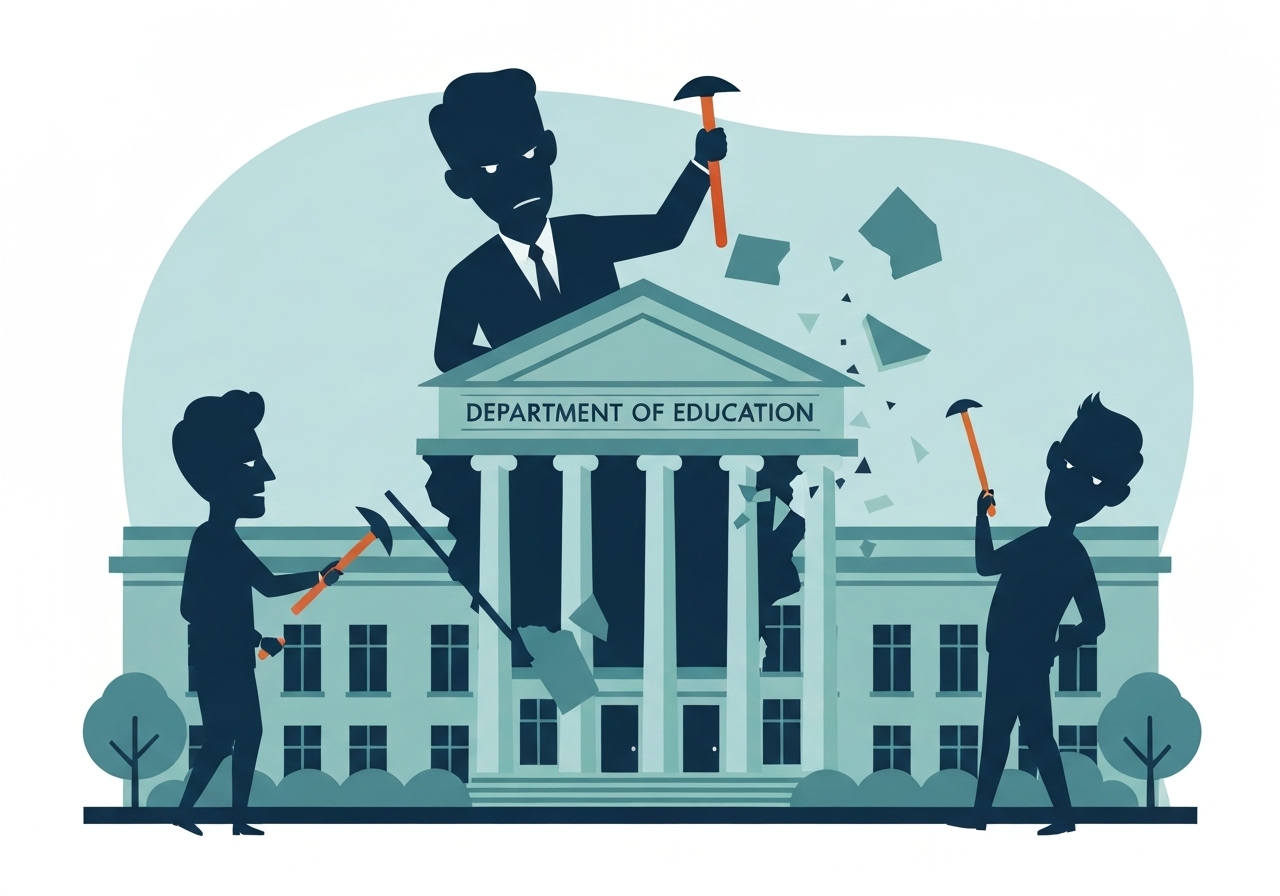
On November 18, 2025, Education Secretary Linda McMahon announced a series of interagency agreements intended to move significant operational work away from the U.S. Department of Education to other federal agencies. The plan covers elementary and secondary education, postsecondary programs, Indian education and several targeted initiatives, while the department says it will retain statutory responsibility. Administration officials framed the shifts as efficiency measures, but lawmakers and advocates warned the moves could be illegal and harmful to students. Legal challenges are expected as Congress and outside groups assess whether the transfers exceed executive authority.
Key Takeaways
- The administration unveiled six new agreements on November 18, 2025, reallocating day-to-day operations of several Education Department offices to other federal agencies.
- Much of the Office of Elementary and Secondary Education and the Office of Postsecondary Education work would move to the U.S. Department of Labor, according to briefings.
- The Office of Indian Education functions would largely transfer to the U.S. Department of the Interior, and international education programs would move to the U.S. Department of State.
- The CCAMPIS program for campus childcare for low-income student-parents is slated to move to HHS; in July Labor already assumed adult education and family literacy duties.
- The department says statutory responsibilities remain with Education even if operations are performed elsewhere, but opponents contend Congress must approve relocation of congressionally created offices.
- Signature duties such as special education, civil rights enforcement in schools and federal student loans were not part of these agreements.
- Deputy chief of staff Lindsey Burke, a coauthor of Project 2025 policy proposals, led the departmental briefing that described the changes.
- Senator Patty Murray and other Democrats called the plan unlawful and warned of weakened services for vulnerable students; legal contests are anticipated.
Background
The U.S. Department of Education was established by Congress in 1979, which placed specific offices inside the agency to carry out statutory programs like elementary and secondary education, postsecondary education and Indian education. Those offices and their responsibilities are defined in federal law, and Congress has traditionally exercised authority over their structure and placement. Over recent years conservative policy blueprints, including Project 2025, have advocated shrinking or eliminating federal education functions, arguing that states and localities should assume more control.
Interagency partnerships are not new in Washington: federal work is sometimes shared through memoranda of understanding when agencies have complementary capabilities. In July 2025 the Education Department announced an agreement in which Labor took on adult education and family literacy program operations while the department said it would retain oversight. Administration officials now describe a broader set of such arrangements as efficient ‘partnerships’ intended to reduce duplication and streamline service delivery.
Main Event
In a closed briefing for lawmakers and Hill staff on November 18, 2025, department officials described six agreements that reassign operational tasks for congressionally created offices to other agencies while keeping a small staff footprint inside Education. Sources briefed on the meeting said the Office of Elementary and Secondary Education and the Office of Postsecondary Education would see much of their day-to-day work handled by the Department of Labor. The department maintains it will continue to hold statutory responsibility for those programs even if outside agencies execute certain functions.
Under the announced arrangements, the Department of the Interior would take on most operational duties of the Office of Indian Education, and the Department of State would assume international education and foreign language programming. The Child Care Access Means Parents in School program, CCAMPIS, which provides childcare on college campuses to low-income student-parents, was slated to move to the Department of Health and Human Services. Officials emphasized that program leadership and legal responsibility remain with Education in name even as partner agencies run programs in practice.
Education Secretary Linda McMahon framed the moves publicly as peeling back bureaucratic layers and partnering with agencies ‘better suited to manage programs,’ language she echoed in a USA Today op-ed published days earlier. But Democrats and advocacy groups argued the administration is sidestepping Congress by transferring the operational work of offices that Congress explicitly placed inside the Education Department when it created the agency in 1979. Both sides signaled they expect the dispute to be resolved in courts or on the Hill.
Analysis & Implications
The administration’s approach raises a central legal question: can the executive branch shift program execution away from the department Congress created while retaining formal statutory responsibility on paper? Courts will likely examine whether these agreements effectuate a practical transfer of authority that conflicts with congressional intent. If judges find that operational control has de facto moved, plaintiffs could win relief forcing a return of functions or invalidating particular agreements.
Beyond the legal layer, there are programmatic risks. Moving operational responsibility to agencies without long-standing expertise in specific K-12, postsecondary or tribal education work could degrade service continuity. Title I funding administration, for example, requires familiarity with school finance, local education agency structures and compliance mechanisms; labor officials may lack the institutional systems and relationships to run those processes smoothly at scale, creating transition friction for schools and districts.
Politically, the move could reshape federal education’s role if sustained. A successful reallocation of functions would advance a smaller federal footprint favored by some conservatives, while opponents see it as a way to hollow out protections and oversight for marginalized students. Congress could respond by legislating clearer role delineations or by using appropriations and oversight to block or constrain transfers, but that would require bipartisan consensus or sufficient majorities that may not exist.
Comparison & Data
| Office | Receiving Agency | Statutory Origin |
|---|---|---|
| Office of Elementary and Secondary Education | U.S. Department of Labor | Located at Education by Congress, 1979 |
| Office of Postsecondary Education | U.S. Department of Labor | Located at Education by Congress, 1979 |
| Office of Indian Education | U.S. Department of the Interior | Located at Education by Congress, 1979 |
| International Education/Foreign Languages | U.S. Department of State | Program-level authorities span agencies |
| CCAMPIS (campus childcare) | HHS | Program created by statute; administered by Education |
The table maps the principal operational moves announced on November 18, 2025 and notes that the offices moved were established inside the Education Department by Congress in 1979. While the department says statutory duties remain, the practical reassignment of functions to agencies with different missions and systems creates governance and implementation gaps that will need to be bridged through interagency agreements, funding alignments and potentially new congressional action.
Reactions & Quotes
Officials from the administration defended the changes as common-sense partnerships to increase efficiency and empower state and local leaders. Critics, including senior Democrats on education committees, framed the plan as an attempt to dismantle the department and strip services from vulnerable students. Both sides signaled readiness for legal and legislative fights.
We’ll peel back the layers of federal bureaucracy by partnering with agencies that are better suited to manage programs and empowering states and local leaders to oversee the rest.
Linda McMahon, U.S. Secretary of Education (public op-ed)
Administration messaging emphasizes efficiency and partnership; the quoted line reflects that framing and was used publicly to justify the interagency transfers. The department maintains it will retain oversight even as other agencies perform day-to-day tasks.
This is an outright illegal effort to continue dismantling the Department of Education, and it is students and families who will suffer the consequences.
Senator Patty Murray (D-Wash.), Senate Education Committee member
Murray’s statement encapsulates Democratic concerns that the moves exceed executive authority and risk weakening programs that support reading instruction and family-school connections. Her office indicated lawmakers may pursue oversight hearings or legislative responses.
The federal Department of Education should be eliminated. When power is exercised, it should empower students and families, not government.
Lindsey Burke, Deputy Chief of Staff for Policy and Programs, U.S. Department of Education; coauthor, Project 2025
Burke’s prior writings in Project 2025 informed skeptics’ interpretations of the briefing; critics say the close alignment between the administration plan and Project 2025 goals demonstrates preexisting intent to shrink the department’s operational role.
Unconfirmed
- Whether retaining a small Education Department staff on paper will satisfy courts that statutory authority remains with the department is uncertain and unresolved.
- The precise operational timeline for each transferred function was not disclosed in briefings and remains unclear.
- Claims that partner agencies have full capacity to run complex education programs nationwide are asserted by officials but not independently verified.
- It is unconfirmed whether Congress will pass new legislation to block, modify, or endorse the transfers.
Bottom Line
The November 18, 2025 agreements represent a significant administrative effort to relocate operational responsibilities away from the Education Department to agencies including Labor, Interior, State and HHS while the department says it will retain legal responsibility. That split between statutory ownership and operational execution is likely to generate legal scrutiny, implementation challenges and political blowback.
For schools, students and tribal communities the near-term impact will depend on how quickly partner agencies can establish systems and preserve expertise; for policymakers the episode crystallizes a broader debate over federal versus state roles in education. Watch for court filings, oversight hearings and potential legislative responses in the months ahead.