
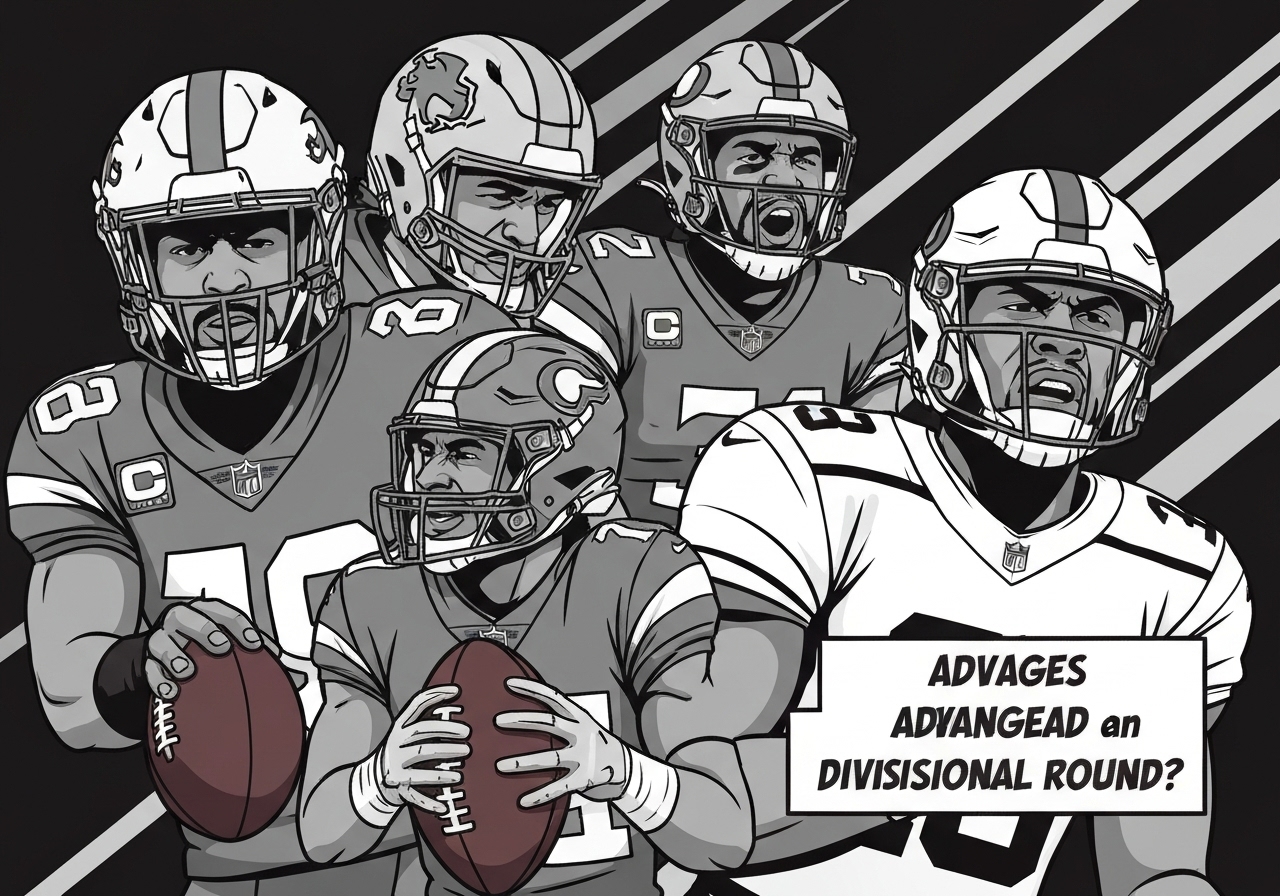
Lead: The NFL postseason has opened with unprecedented late‑game drama through Wild Card Weekend, setting up a divisional slate full of consequential questions for teams still alive and those heading home. In the first four games there were 12 fourth‑quarter lead changes and three separate contests ended with winning scores inside the final two minutes — both historic markers for January play. As the Divisional Round approaches, franchises from Denver to San Francisco face single‑match inflection points that will determine whether deep runs are realistic or merely aspirational. This story lays out the most urgent near‑term question for each advancing and eliminated club after the Wild Card action.
Key takeaways
- The opening weekend produced a postseason record 12 fourth‑quarter lead changes in the first four games, underlining an unusually volatile playoff landscape.
- Three playoff games ended with game‑winning scores in the final two minutes — the first time that has happened in a single postseason.
- Denver (14‑3) leans on a defense that recorded a franchise‑high 68 sacks but must hope Bo Nix can sustain productive, consistent offense.
- New England’s 16‑3 win highlighted Drake Maye’s athletic upside (66 rushing yards) and protection issues (five sacks, two fumbles) that could be exposed against better fronts.
- Buffalo advanced 27‑24, but James Cook gained only 46 yards on 15 carries, raising concerns about balancing Josh Allen’s workload versus one‑dimensional passing attacks.
- Seattle’s top seed hinges on Sam Darnold avoiding the big mistakes that have plagued him in prior postseason moments; his season splits show a clear change in play style.
- Los Angeles and San Francisco both showed resilience; the Rams still suffer recurring special‑teams breakdowns, while the 49ers continue to win despite a mounting injury list.
Background
The 2025 regular season delivered exceptional parity across the NFL, and Wild Card Weekend amplified that trend into the postseason. Games swung late and often: the league’s early playoff slate produced multiple dramatic comebacks and a record number of fourth‑quarter lead changes, creating an environment where no advantage felt secure. That unpredictability reshapes how coaches and front offices approach game plans — conservative approaches can be punished, but so can taking too many risks in tight games.
Several franchises enter the Divisional Round with clear identities: Denver’s defense anchors its 14‑3 record; Buffalo rides Josh Allen’s dual threat; Seattle defends at a high level and benefits from Lumen Field; San Francisco keeps winning despite key absences. Others must resolve pronounced weaknesses if they hope to make extended runs — offensive line durability in Los Angeles, consistent rushing in Buffalo, and quarterback steadiness in Seattle and Denver are the most visible examples. The upcoming matchups will test whether each club’s narrative is durable or fragile under playoff pressure.
Main event — advancing teams
Denver (No. 1 seed, 14‑3): The Broncos’ defense carried them through most of the season, finishing with an NFL‑leading pass rush (68 sacks) and top marks in red‑zone defense. The immediate question for playoff advancement is whether the offense — led by second‑year QB Bo Nix — can deliver full‑game production if the defense is neutralized. Nix led the league with 612 passing attempts but posted a 87.8 passer rating, a sign of volatility; Denver also lost starting back J.K. Dobbins to a Week‑10 season‑ending injury, leaving rookie RJ Harvey to shoulder more of the load (540 yards, seven TDs).
New England (No. 2 seed, 15‑3): Drake Maye’s first postseason start in a 16‑3 win over the Chargers showed both his mobility (team‑high 66 rushing yards; 37‑yard scramble) and vulnerability (five sacks, two fumbles). The Patriots schemed to ride their defense and limit Maye’s exposure, an approach that worked against a Chargers roster ravaged up front. The looming issue is whether Maye and New England’s offense can withstand tougher pass rushes without relying on defensive game control.
Buffalo (No. 6 seed, 13‑5): The Bills eked past Jacksonville 27‑24 on plays down the stretch, but James Cook managed only 46 rushing yards on 15 carries against the league’s stingiest run defense. Cook’s dual skills as a runner and receiver are central to Buffalo’s offensive balance; without him producing, Josh Allen increasingly becomes the lone engine — and that is a risky single‑track plan against top defenses like Denver’s.
Seattle (No. 1 seed, 14‑3 in NFC): Sam Darnold’s season split reflects two different styles — high‑volume passing early (251.3 yards per game in first nine contests, 17 TDs vs. six INTs) and lower‑variance game management later (223.3 yards over the last eight, eight TDs and eight INTs). Against the 49ers in a divisional rematch, Darnold’s ability to avoid the types of costly turnovers that derailed him in past postseason appearances will largely determine Seattle’s path forward.
Chicago (No. 2 seed, 12‑6): The Bears’ 31‑27 comeback over Green Bay was their seventh win when trailing with two minutes left this season, an extraordinary rate of clutch performance. Caleb Williams again showed late‑game poise with several fourth‑quarter plays, but Chicago must answer whether its defense and offense can generate fewer early deficits rather than relying on repeated dramatic rallies.
Advancing teams — situational vulnerabilities
Los Angeles Rams (No. 5 seed, 13‑5): Special‑teams miscues have repeatedly placed the Rams in jeopardy; a blocked punt late in the Carolina game led to a go‑ahead touchdown that could have been decisive. Los Angeles fired special‑teams coach Chase Blackburn after Week 16, yet errors persist, and in the playoffs even one miscued kick or poor lane discipline can flip outcomes against disciplined opponents.
San Francisco (No. 6 seed, 13‑5): The 49ers advanced 23‑19 while missing significant contributors — Nick Bosa and Fred Warner were already out, George Kittle tore his Achilles midgame, and others have missed time during the season. Still, journeyman receivers and backups stepped up (Demarcus Robinson had 111 yards and a TD in the win), showing organizational depth. The central question is not whether the 49ers can be beaten but whether their depth can continue to compensate for ongoing injuries.
Analysis & implications
The early Wild Card volatility suggests the seedings are less predictive than usual: home‑field and top records matter, but single‑game execution and health are overriding factors. Denver’s situation illustrates how defense can mask offensive deficiencies — an elite defense can carry a team through the early rounds, but sustaining a championship run typically requires at least average offensive output. If Bo Nix is one‑dimensional or inconsistent, a single off‑day by the defense could be fatal in the Divisional Round.
Quarterback protection stands out as a cross‑cutting theme. New England exposed the Chargers’ injuries up front — New England recorded six sacks and 11 quarterback hits in that Wild Card meeting — and Justin Herbert’s season (54 sacks allowed) shows how quickly postseason hopes can die when an elite passer is repeatedly hurried. Teams with fragile offensive lines must prioritize protection through scheme and personnel moves in short order.
Injuries change the calculus for favorites and underdogs alike. San Francisco’s continued wins despite losing stars indicates coaching, system continuity, and roster construction can mitigate attrition. Conversely, teams like Buffalo that rely heavily on a single playmaker (here, James Cook’s balance with Josh Allen) face diminished upside if that player is neutralized by elite opponents. Overall, the league’s parity and the single‑elimination format magnify the value of adaptability and depth.
Comparison & data
| Team | Seed | Key stat |
|---|---|---|
| Broncos | 1 (AFC) | 68 sacks (franchise high) |
| Bills | 6 (AFC) | Ranked 1st in rushing offense (team) |
| Patriots | 2 (AFC) | Maye: 66 rush yards in WC; 5 sacks taken |
| Chargers | 7 (AFC) | Herbert: 54 sacks allowed this season |
Context: The table highlights the contrasting foundations teams rely on — Denver’s pass rush, Buffalo’s run profile, New England’s conservative postseason plan, and Los Angeles’s protection problems. Those metrics help explain why late‑game variability has been so influential and why matchups (line vs. line, pass rush vs. protection, skill depth vs. injuries) will decide many divisional outcomes.
Reactions & quotes
“This postseason has been unlike any in recent memory — every game feels like it’s still up for grabs late.”
NFL.com analysis
Context: Analysts on national coverage have repeatedly pointed to the record number of fourth‑quarter lead changes and last‑minute winners as evidence leaguewide parity and close margins have defined the early playoffs.
“We know our identity; we need more consistent offensive days to match our defense’s standard.”
Broncos coaching staff (postgame paraphrase)
Context: Denver’s staff emphasized after the Wild Card that the defense has repeatedly kept the team afloat, and that the offense must avoid relying on narrow late‑game heroics.
“These are the games that test what kind of team you are; small details cost you in January.”
Playoff pundit commentary
Context: Commentators noted that special‑teams errors and protection lapses have had outsized playoff consequences so far.
Unconfirmed
- The Steelers‑Texans outcome (the game originally scheduled Monday) could dramatically reshape AFC pairings and change which of the earlier observations apply; results were pending at the time of this analysis.
- Longer‑term impacts of midseason injuries (for example, how Travis Hunter will ultimately be used in Jacksonville) remain subject to offseason medical reports and coaching plans.
Bottom line
The Wild Card Weekend produced historic late‑game drama and left multiple teams with immediate, solvable problems and others with deep, structural questions. Denver’s defensive dominance masks offensive inconsistency; Buffalo needs James Cook to operate closer to his regular‑season form to keep Josh Allen from being forced into heroics every week; and teams like the Rams must clean up special‑teams mistakes to avoid giving opponents short fields in playoff football.
As the Divisional Round approaches, expect coaches to emphasize protection, ball security and roster availability more than schematic novelty. The playoff environment rewards teams that can limit self‑inflicted errors and that possess the depth to absorb injuries — traits that may carry more weight this postseason than raw regular‑season records.