
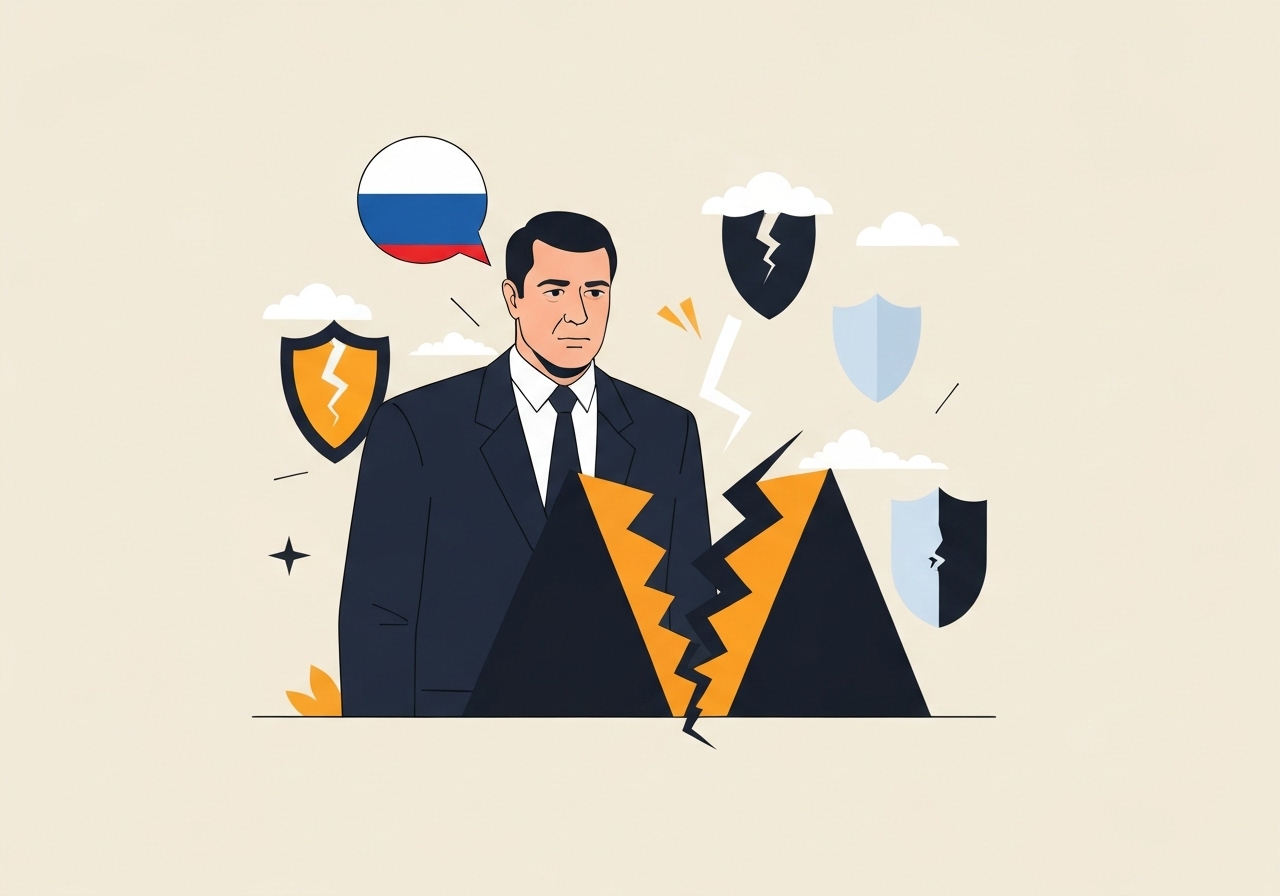
On the second day of Russia’s 2022 invasion of Ukraine, a longtime aide to President Vladimir V. Putin, Dmitri N. Kozak, refused an order to demand Ukraine’s immediate capitulation, according to people close to him. Kozak, who worked with Mr. Putin for roughly three decades and is 67 years old, later told associates he did not understand the president’s war aims and was prepared to accept arrest or worse rather than carry out the directive. He resigned from his role as a deputy chief of staff in September 2025, shortly after Western media reported on his private criticisms. His break with the Kremlin has become a rare, well-documented instance of high-level dissent inside Putin’s inner circle.
Key Takeaways
- Dmitri N. Kozak, 67, served as a close Putin aide for about 30 years and resigned as deputy chief of staff in September 2025.
- On day two of the 2022 invasion, Kozak declined an order to demand Ukraine’s surrender; three associates described that exchange to reporters.
- Those near Kozak say he made his objections known privately to senior officials, creating a narrow channel of elite dissent within the Kremlin.
- The resignation followed reporting that brought Kozak’s criticisms into public view, intensifying scrutiny of internal Kremlin debates.
- Sources describe Kozak as articulating the unease felt by some business, cultural and government figures in Moscow over the prolonged war.
- Kozak’s stance did not produce an immediate policy shift; Russia has largely maintained its hard-line demands despite internal discontent.
Background
Dmitri Kozak emerged over three decades as a reliable operator in the Kremlin, managing regional and political portfolios and earning President Putin’s trust. His career entwined with the president’s consolidation of power, giving him a vantage point inside decision-making circles and a reputation as a stabilizing technocrat. The 2022 full-scale invasion of Ukraine disrupted the usual channels of counsel in the Kremlin, as security priorities and wartime decision-making tightened around a small set of senior figures. Within that environment, overt public disagreement has been rare, making any recorded instance of dissent among long-serving insiders notable for analysts and domestic audiences alike.
Russia’s political elite includes a spectrum of views, but open challenge to the president carries acute personal and professional risks. Many officials and cultural leaders have privately expressed disquiet about the economic and social costs of the war, while public opposition has been constrained by repression and legal penalties. Internationally, offers and proposals for de-escalation have circulated in recent years; Moscow’s leadership has often rejected terms it deems unfavorable. Those dynamics help explain why a single senior aide’s refusal to comply with an order would be interpreted as a meaningful rupture inside the Kremlin.
Main Event
According to multiple people acquainted with Kozak, the key exchange occurred on the second day of the invasion, when Mr. Putin instructed Kozak to press for Ukraine’s surrender. Kozak resisted, saying he did not understand what concrete objective the order would achieve and declined to carry it out. The conversation reportedly became heated; Kozak later told associates he was prepared for the personal consequences of refusal, including arrest. Those present were set to witness an uncommon display of insubordination because the call had been placed while others were on a speakerline, the sources said.
In interviews after his resignation, several of Kozak’s confidants described how his stance crystallized a private strain of opposition among some elite Moscow circles. They say Kozak voiced concerns not through public protest but in closed consultations with other officials, cultural leaders and business figures who were unsettled by the war’s trajectory. His critiques, as described by these associates, focused on strategic incoherence and the human and economic toll of prolonged conflict. After media accounts of his objections appeared, Kozak stepped down from his official role in September 2025, ending a long tenure at the center of the Kremlin apparatus.
Observers note that Kozak’s refusal did not prompt an immediate policy reversal or a broader public split among senior officials. Instead, his actions have been interpreted as evidence of limited but real elite dissatisfaction that has not yet translated into coordinated political pressure. Kremlin communication since his departure has remained tightly controlled, and there has been no formal acknowledgment from the presidential administration about the exchange described by his associates. The episode therefore stands as an important but contained instance of elite disagreement.
Analysis & Implications
Kozak’s recorded dissent highlights how tightly concentrated wartime authority has been in the Kremlin and how little public space exists for dissenting senior voices. When a figure with three decades of proximity to the president openly resists an operational order, it signals that concern about strategy exists even among trusted insiders. Yet the lack of visible follow-through or factional organization suggests that fear, loyalty calculations and institutional mechanisms continue to dampen collective action within the Russian elite.
Politically, Kozak’s move may increase pressure on other pragmatic voices—officials, business leaders and cultural elites—to weigh the costs of continuing the conflict against the dangers of acting openly. Economically, persistent elite unease can erode confidence among domestic and foreign actors trying to assess Russia’s policy trajectory, potentially affecting investment decisions and long-term planning. Internationally, Western and regional actors will watch whether this rupture leads to a shift in negotiation dynamics or remains an isolated incident without direct policy consequences.
For Moscow’s governance, the episode underscores a structural weakness: concentrated decision-making raises the likelihood that disagreements are handled privately rather than through institutional checks. That reduces transparency and may limit the Kremlin’s ability to course-correct based on diverse counsel. If other insiders emulate Kozak, the Kremlin could face intensified internal debate; if not, the incident will be remembered as a singular act of conscience rather than a pivot point.
Comparison & Data
| Item | Fact |
|---|---|
| Length of service with Putin | About 30 years |
| Age | 67 |
| Key refusal | Second day of 2022 invasion of Ukraine |
| Resignation | September 2025 |
The compact table above summarizes the verifiable milestones that frame Kozak’s reported dissent. Placing these data points side-by-side highlights how a long-term insider’s sudden public departure stands out against a career of institutional continuity. Analysts use such comparisons to assess whether personnel changes reflect policy shifts or are isolated personnel turnovers within an otherwise stable leadership circle.
Reactions & Quotes
Officials and observers provided measured responses that reflect the sensitivity of criticizing Kremlin policy. Below are representative statements with context.
“He quietly told peers he could not carry out a demand he considered unintelligible; it was not a theatrical break but a refusal rooted in professional judgment.”
Kremlin associate speaking to reporters
The source framed Kozak’s action as a technical and moral refusal, not a public rebellion, emphasizing the private nature of his objections.
“Kozak’s stance underscores the limits of consensus inside the ruling circle and the frustration felt by pragmatic elites over the war’s management.”
Russian affairs analyst
Policy analysts interpret the episode as evidence of elite unease that could have downstream effects if it becomes more widespread.
“Many in business and cultural circles see his move as articulating concerns they’ve long kept private; whether that will change behavior is unknown.”
Moscow business figure (on condition of anonymity)
Those in the private sector described the resignation as validating private anxieties but stopped short of predicting an organized challenge to the Kremlin.
Unconfirmed
- Whether Kozak faced formal charges or direct retaliation after the reported refusal has not been independently verified.
- The exact contents and legal implications of the orders Kozak refused remain described only by associates and lack official documentation in the public record.
- It is unclear whether Kozak intends to pursue further political activity or to remain outside formal opposition structures.
- The role of external diplomatic offers or proposals in shaping elite discontent—including any specific terms offered by foreign leaders—has not been independently corroborated.
Bottom Line
Dmitri Kozak’s refusal to carry out a wartime order and his subsequent resignation mark a notable instance of elite dissent in a system where public disagreement is scarce. While the episode demonstrates that concerns about the conduct of the Ukraine war exist inside the Kremlin, it has not produced an immediate, organized change in policy or leadership dynamics.
For observers of Russian politics, the significance lies less in an instant policy reversal than in what Kozak’s break reveals about fault lines among insiders. If similar acts emerge from other senior figures, they could cumulatively increase pressure for a strategic reassessment; if not, this episode will remain a high-profile but contained example of internal dissent.
Sources
- The New York Times — U.S. newspaper reporting interviews with Kremlin insiders and associates of Dmitri N. Kozak