
Lead
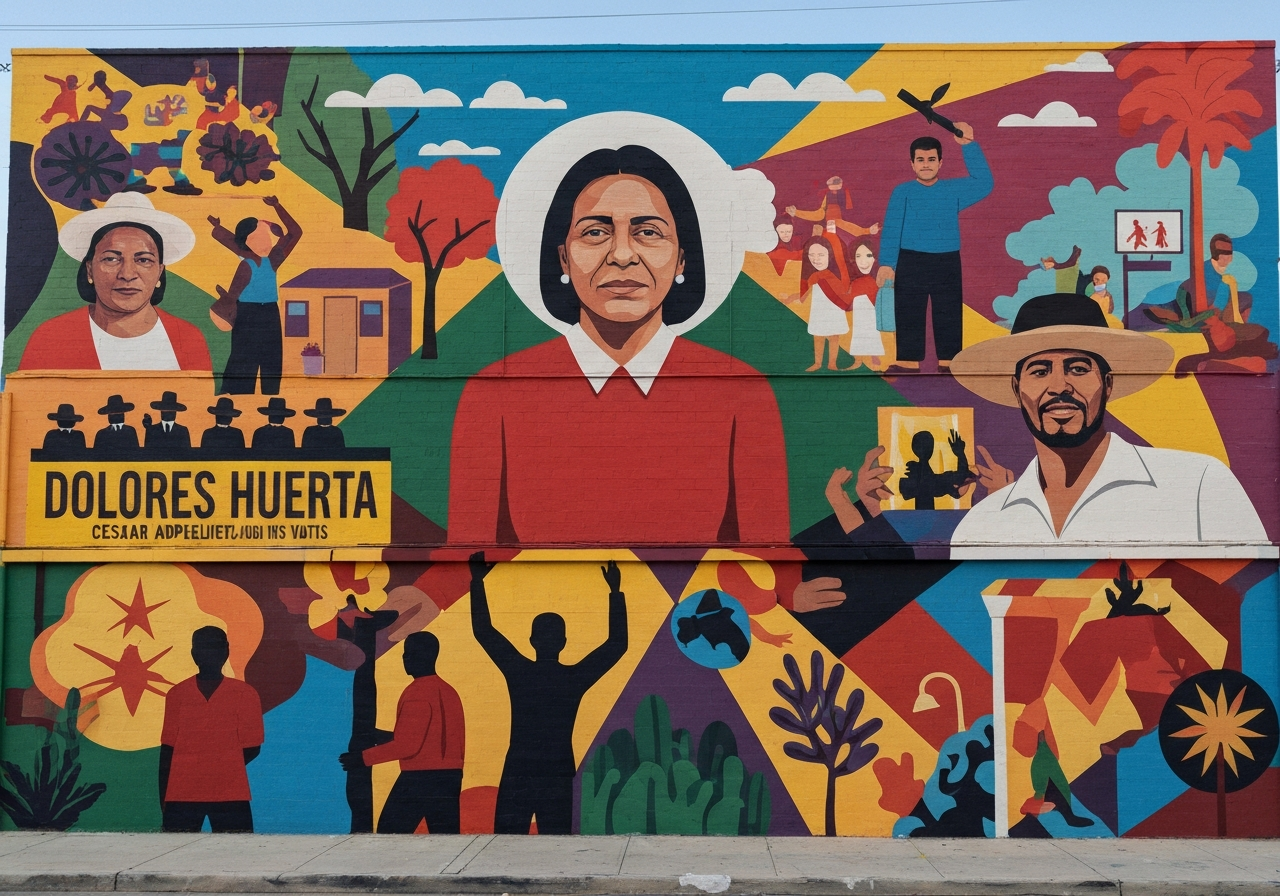
On March 20, 2026, a prominent Watts mural that depicted farmworker leader Cesar Chavez was repainted to honor Dolores Huerta, following new sexual-assault allegations against Chavez. The change, carried out by muralist known as “Misteralek,” took place at the Watts Century Latino Organization site opposite an image of Dr. Martin Luther King Jr. Community leaders described the swap as a response to recent revelations and an effort to keep the mural aligned with local values. The repainting closes one chapter in the wall’s short history and opens another centered on Huerta’s civil‑rights legacy.
Key Takeaways
- The mural swap occurred on March 20, 2026, at the Watts Century Latino Organization in Watts, Los Angeles.
- The original mural was created in 2021 and featured Cesar Chavez opposite Dr. Martin Luther King Jr.
- Muralist “Misteralek” made the decision to paint over Chavez after learning of new allegations; he completed finishing touches on Friday evening.
- Dolores Huerta, a longtime labor and civil‑rights activist, now occupies the mural space previously held by Chavez.
- Watts Century Latino Organization executive director Autumn Ybarra said the movement for migrant workers’ rights is broader than any single individual.
- Huerta has publicly stated she was among people who alleged sexual assault by Chavez; that claim and other allegations are listed below as unconfirmed pending independent verification.
Background
Cesar Chavez and Dolores Huerta are widely recognized for co‑founding and sustaining the farmworker movement in California during the 1960s and 1970s. Chavez became a prominent public face of the United Farm Workers, while Huerta played a central organizing, negotiating and speaking role; both have long been subjects of commemoration across California. In recent months, Chavez has been the subject of renewed allegations of sexual misconduct that have prompted scrutiny of public memorials bearing his likeness.
Mural culture in Watts and greater Los Angeles often reflects shifting community values and political debates. Public art has been altered or removed in other U.S. cities when new information about honored figures emerged, creating precedents for local decisions that balance historical memory with contemporary ethics. Community organizations, artists and local leaders frequently negotiate these changes to minimize conflict while acknowledging victims’ voices.
Main Event
Muralist Misteralek worked on the wall on Friday, painting over the image of Chavez and replacing it with a portrait of Dolores Huerta. The piece sits across from a depiction of Dr. Martin Luther King Jr. at the Watts Century Latino Organization site; the original Chavez image was installed in 2021. Misteralek told reporters he felt a responsibility to modify his own artwork after learning of additional allegations and related reporting.
Autumn Ybarra, executive director of the Watts Century Latino Organization, said the decision reflected the organization’s view that the movement’s story includes many contributors and that pivoting to Huerta was a practical choice. Ybarra described the replacement as consistent with the group’s values and as a way to continue honoring local and statewide labor advocacy without centering a figure now subject to controversy.
Community response at the repainting was muted but positive according to those on site: some residents said the new image better represented ongoing activism for migrant and Latino rights, while others expressed sadness that the Chavez portrait was removed. The artist and organization emphasized that the mural change was a community-driven act rather than an institutional mandate.
Analysis & Implications
The mural swap underscores a broader tension in public memory: how to reconcile celebrated social movements with allegations against individual leaders. Replacing Chavez with Huerta signals an attempt to preserve the movement’s narrative while responding to survivors’ claims and community concerns. This approach aims to keep public spaces reflective of current ethical standards without erasing the political history of the farmworker struggle.
For local politics and cultural institutions, such decisions can set a precedent. Public art managers, funders and community groups will likely face more frequent requests to reassess commemorative works as reporting uncovers new information. Municipal officials may be pressured to create clearer policies for responding to contested legacies, balancing due‑process considerations with victims’ calls for accountability.
Economically and socially, the change may affect tourism, local events and education programs that use such murals as teaching tools. A shift to Huerta could amplify programming around labor rights and organizing tactics, given her long record of activism. Conversely, disputes over removals or replacements risk polarizing stakeholders if engagement processes are perceived as rushed or exclusive.
Comparison & Data
| Feature | 2021 Mural (Before) | 2026 Mural (After) |
|---|---|---|
| Primary Subject | Cesar Chavez | Dolores Huerta |
| Location | Watts Century Latino Organization wall | Same site, opposite Dr. Martin Luther King Jr. |
| Installed/Replaced | 2021 | Repainted March 20, 2026 |
| Artist | Misteralek (original & update) | Misteralek (update) |
The table shows that the site and artist remained constant while the principal figure changed. Replacements like this are often faster and less costly than commissioning a wholly new mural; the artist reported completing finishing touches in a single session. Such changes are symbolic but can trigger broader programming shifts in local organizations.
Reactions & Quotes
“After learning about all the new allegations and all the new stuff that came out, I felt somewhat responsible of changing the mural because it’s my art piece — I created it.”
Muralist Misteralek
“It is an incredible disappointment to learn what’s come out about Cesar Chavez, but the movement and the struggle is bigger than a single person.”
Autumn Ybarra, Executive Director, Watts Century Latino Organization
“It really illustrates the type of person that she was — someone at rallies doing activism and speaking loud for people defending our rights.”
Muralist Misteralek, on Dolores Huerta
Unconfirmed
- Claims that Dolores Huerta was among people alleging sexual assault by Cesar Chavez are based on Huerta’s public statement and related reporting; independent legal resolution or full corroboration has not been presented here.
- Details of any internal investigations into Chavez’s alleged misconduct were not available at the time of reporting and remain unverified.
Bottom Line
The repainting of the Watts mural from Cesar Chavez to Dolores Huerta is both symbolic and pragmatic: it responds to survivors’ allegations while preserving a public space for labor and Latino rights commemoration. The change demonstrates how communities can adapt commemorative landscapes when new information alters the reputational calculus surrounding celebrated figures.
Expect more local debates and policy questions about how to handle contested memorials. Community groups, artists and municipal agencies will likely need clearer procedures for engagement, transparency and documentation when making such changes so that decisions are seen as legitimate and protective of affected survivors.
Sources
- KABC/ABC7 — local television news report (primary source for on‑site reporting and quotes)
- Dolores Huerta — personal/advocacy site (background on Huerta’s public work)