
Lead
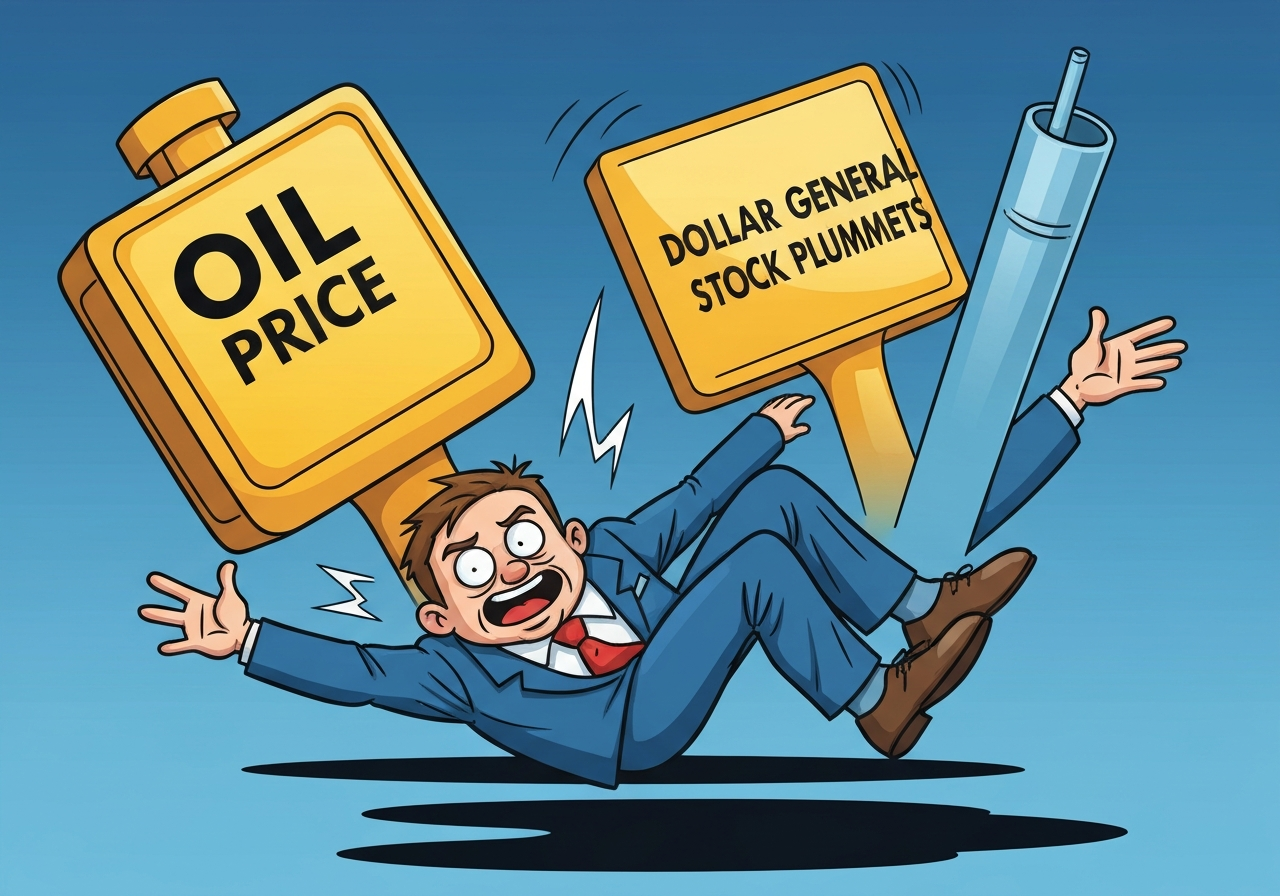
Major U.S. stock indexes traded sharply lower on Thursday as a fresh surge in oil prices, tied to heightened U.S.-Iran tensions, pressured market sentiment. The Dow Jones Industrial Average sold off more than 1.2%, roughly a 600-point move, while chip makers, banks and travel-related stocks suffered notable losses. Dollar General shares tumbled amid the broad selloff, adding to retail weakness. Investors reacted to rising energy costs and risk-off positioning, pushing traders to reprice exposure across cyclical and interest-rate sensitive sectors.
Key Takeaways
- The Dow Jones Industrial Average fell more than 1.2%, a drop approaching 600 points on Thursday, marking one of the sharper single-session declines in recent weeks.
- Oil prices surged again amid renewed tensions between the U.S. and Iran, driving concerns about higher input costs for transportation and industrial sectors.
- Semiconductor stocks were among the hardest hit, amplifying losses in the Nasdaq-linked names and weighing on technology-related benchmarks.
- Bank and travel stocks experienced meaningful declines as investors priced in broader economic risk and potential travel-cost pressure from higher jet fuel.
- Dollar General shares plunged intraday, contributing to retail sector weakness; company-specific drivers were mixed with the broader market decline.
- Credit-market and airline-watch headlines intensified after an airline downgrade linked to surging jet fuel costs was reported on 3/09/2026.
- Market breadth was negative across major exchanges, with sell orders concentrated in cyclical and interest-rate sensitive industries.
Background
The latest selloff comes against a backdrop of renewed geopolitical friction in the Middle East, where escalations involving the U.S. and Iran have periodically lifted energy prices and unnerved markets. Higher crude and jet-fuel benchmarks raise immediate cost pressures for airlines and broader transportation networks, squeezing margins for companies with large fuel exposures. In recent days, analysts and rating firms have flagged the sector’s vulnerability; one downgrade for a major carrier on 3/09/2026 explicitly cited surging fuel costs as a material threat.
Global supply-chain dynamics and demand uncertainty have left equity valuations sensitive to energy shocks, making sectors like semiconductors and consumer discretionary more volatile when oil spikes. Financial firms also react quickly to geopolitical risk because of potential impacts on rates, trade flows and corporate credit conditions. Investors who had rotated into cyclical names earlier in the quarter moved back toward defensive positioning as headlines intensified.
Main Event
Trading opened with risk assets under pressure and accelerated after oil reached higher levels on reports of renewed hostilities and potential disruptions to Middle Eastern shipments. The Dow, which includes several energy and industrial names, recorded a decline exceeding 1.2%, translating to roughly a 600-point fall on the session. Technology and chip stocks amplified headline losses as investors pared exposure to names with cyclical demand assumptions tied to capital spending.
Bank stocks were hit as risk-off flows and concerns about slowing economic activity reduced appetite for financials sensitive to loan growth and trading revenues. Travel-related equities, already facing margin stress from elevated jet fuel, reacted strongly to the oil move; the downgrade reported on 3/09/2026 underscored the near-term pressure on airline profitability. Retailers such as Dollar General saw shares tumble amid the broader market decline, magnified by safer-haven rotations and concerns over discretionary spending if inflationary pressures persist.
Trading desks reported heavier-than-normal volume in sell orders, with stop-losses and algorithmic strategies compounding downward pressure. Options-implied volatility spiked across major indices as traders sought protection, and intraday correlation between commodity moves and equity sector returns rose noticeably. Market participants cited both the direct cost impact of higher energy prices and the second-order effects on sentiment and liquidity.
Analysis & Implications
Rising oil has a direct pass-through to companies with large fuel bills — notably airlines, trucking firms and some industrial producers — raising the risk of margin compression and second-round inflation effects. If elevated energy costs persist, consumer discretionary spending could be squeezed, which would weigh on retail, restaurants and travel segments. Central banks watch inflation trends closely; a sustained oil-driven uptick complicates monetary policy calculations even amid growth concerns.
For banks, the dynamic is mixed: higher energy prices can benefit commodity-linked credits and some regional lenders, but a sharp economic slowdown from energy-driven inflation would raise credit risk and reduce loan demand. Equity valuations that embed optimistic growth assumptions — notably in semiconductors and capital goods — are vulnerable to rapid downward revisions if demand expectations are trimmed. Market volatility also raises hedging and funding costs, which can amplify the market impact of negative news.
In the near term, the market may trade on headlines around geopolitical developments and oil inventories; a temporary flare-up that eases could prompt a rapid rebound in risk assets, while sustained supply concerns would likely produce a more protracted shift toward defensive sectors. Portfolio managers may increase cash holdings, rotate into quality dividend payers, or hedge with options if volatility remains elevated. Policy responses, such as strategic petroleum releases or diplomatic de-escalation, would be key catalysts for market direction.
Comparison & Data
| Measure | Thursday move |
|---|---|
| Dow Jones Industrial Average | Down >1.2% (≈600 points) |
| Oil prices | Surged amid U.S.-Iran tensions (session gain) |
| Notable sector pressure | Chips, banks, travel, retail (Dollar General) |
The table above summarizes the session’s principal moves: a broad market decline centered on an oil-fueled risk-off reaction. While index-level percentages and point moves capture headline magnitude, sector-level dispersion shows where downside concentrated and where defensive flows may strengthen.
Reactions & Quotes
Rising jet-fuel and crude costs present a direct and significant margin risk for carriers, enough to prompt credit-watch actions.
Credit-watch report (sector downgrade noted 3/09/2026)
Traders said the jump in oil re-priced risk across cyclical equities and triggered stop orders that increased intraday selling pressure.
Market desk commentary, trading floors
Retail and discount chains are sensitive to discretionary spending shifts; sudden cost shocks tend to compress sales mix and margins in the short run.
Industry analyst commentary
Unconfirmed
- Some early headlines cited a 300-point intraday drop for the Dow; later sessionwide measures indicated a decline closer to 600 points — reporting timing may explain the discrepancy.
- Attribution of the entire market move to a single geopolitical incident remains unconfirmed; trading dynamics likely reflected a mix of headline risk, liquidity, and algorithmic flows.
Bottom Line
Thursday’s session underscored how quickly energy-price shocks tied to geopolitical events can ripple through equity markets, hitting cyclicals, banks and travel names while boosting demand for defensive positioning. The Dow’s more than 1.2% decline (around a 600-point drop) and the sharp moves in chips, banks and retailers like Dollar General reflect both direct cost concerns and broader sentiment shifts.
Going forward, market direction will hinge on whether oil-price pressures persist and on developments in the U.S.-Iran situation. Investors should monitor fuel-cost trajectories, corporate margin updates, and central-bank signals; in the near term, volatility is likely to remain elevated until headline risks ease or clear policy responses emerge.