
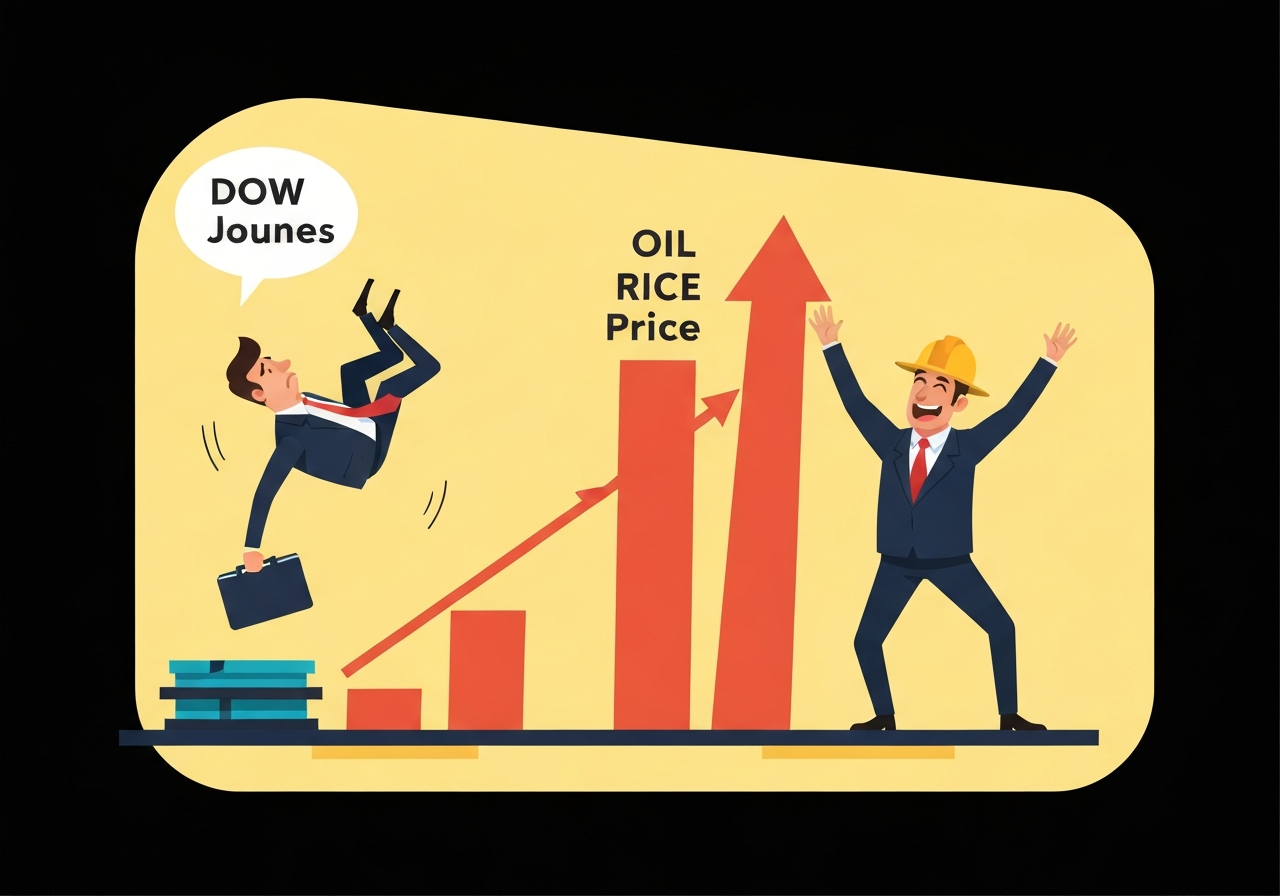
Early Monday, U.S. financial markets reacted to shifting signals about possible U.S.–Iran talks: futures tied to the Dow Jones, S&P 500 and Nasdaq moved sharply after President Donald Trump said he would postpone a Strait of Hormuz deadline, calling recent discussions “productive.” Iranian officials, however, publicly denied that negotiations were underway. Oil benchmarks and Treasury yields swung in response, prompting traders to pare back initial extreme moves. The episode left equities and bond markets on edge as investors weighed geopolitical risk and energy-market volatility.
Key Takeaways
- President Trump said he would delay a previously announced Strait of Hormuz deadline, describing talks with Iran as “productive,” a comment that altered market expectations early Monday.
- Iran issued a denial that any formal negotiations were taking place, a response that helped reverse some of the market’s initial moves.
- U.S. crude oil prices fell after the early session volatility, reflecting reduced immediate risk-premium in oil markets.
- Treasury yields declined as investors sought safety and digested the changing geopolitical narrative.
- Futures tied to the Dow Jones, S&P 500 and Nasdaq swung notably, illustrating how geopolitical headlines can trigger rapid repositioning across asset classes.
Background
The Strait of Hormuz is a critical chokepoint through which a significant share of the world’s seaborne oil transits; any threat to shipping there historically lifts oil-price risk premia and raises global growth concerns. Tensions between the United States and Iran have flared repeatedly over the past several years, producing episodic spikes in oil and safe‑haven assets when incidents occur near the waterway.
U.S. administrations have at times set public deadlines or conditions linked to pressure campaigns, which can create abrupt shifts in market expectations when those timelines change. Energy traders and fixed-income investors closely monitor official statements and denials from either side, because even ambiguous signals can drive outsized moves in prices and yields.
Main Event
In the opening hours of Monday trading, comment from President Trump that he would postpone a Strait of Hormuz deadline and that talks with Iran had been “productive” prompted rapid repositioning across futures and commodities markets. Traders initially pushed equity futures higher on hopes of de‑escalation, while oil prices reflected a diminishing immediate supply-risk premium.
Shortly after, Iranian officials publicly denied that negotiations with the United States were taking place. That denial introduced fresh uncertainty and led market participants to rein in the largest directional bets taken during the early swings. The back‑and‑forth highlights how asymmetric information and terse public statements can create whipsaw movements.
By midmorning, U.S. crude had moved lower from its intraday highs, and Treasury yields were down as investors rotated into perceived safe assets. Overall, the session underscored how geopolitical headlines remain a primary driver of intraday volatility across oil, stocks and bonds.
Analysis & Implications
Even a short-lived rumor or statement about talks can materially affect oil prices because the Strait of Hormuz is a concentration point for global crude flows. If market participants believe diplomatic channels are reducing the odds of a military clash, the immediate risk premium in oil tends to fall; conversely, denials or ambiguity can lift that premium again.
For equity markets, the episode is a reminder that geopolitical risk is not binary: headlines that suggest de‑escalation can be interpreted positively for growth, while credible denials or contradictory signals feed uncertainty and compress risk appetite. That dynamic often results in higher intraday volatility and can complicate portfolio positioning for risk managers.
Lower Treasury yields in the wake of the news reflect a classic flight‑to‑quality response when headlines inject uncertainty. If geopolitical risk remains elevated or further statements add confusion, yields could stay suppressed as investors seek refuge, potentially intersecting with Federal Reserve policy considerations.
Comparison & Data
| Instrument | Typical Reaction to De‑escalation | Typical Reaction to Escalation |
|---|---|---|
| U.S. crude | Prices fall (lower risk premium) | Prices rise (higher risk premium) |
| Equity futures | Move higher (reduced tail risk) | Move lower (increased uncertainty) |
| Treasury yields | Tend to rise (reduced safe‑haven demand) | Tend to fall (flight to quality) |
The table above summarizes how the main market instruments typically respond to shifts in perceived geopolitical risk around the Strait of Hormuz. In practice, the magnitude and persistence of moves depend on credibility of statements, follow‑through actions, and broader macroeconomic context.
Reactions & Quotes
“I will be postponing the Strait of Hormuz deadline — talks have been productive,”
President Donald Trump (public statement)
Trump’s framing suggested progress, which initially lowered the perceived immediate risk to crude shipments and global trade. Markets reacted quickly to that tone before other official statements complicated the picture.
“There are no negotiations underway,”
Iranian foreign ministry (official denial)
Iran’s denial countered the U.S. characterization and prompted traders to reduce directional exposure taken during the early swing, illustrating how conflicting official messages can prompt rapid reassessment.
Unconfirmed
- Whether formal, bilateral negotiation sessions between U.S. and Iranian delegations actually took place beyond high‑level or indirect contacts remains unverified.
- The precise reasons for the U.S. decision to delay the deadline—whether tactical, diplomatic, or related to other operational considerations—have not been independently confirmed.
Bottom Line
The market reaction to Monday’s headlines underscores how fragile investor sentiment can be around geopolitical flashpoints. Conflicting official statements—from a U.S. announcement of “productive” talks to Iran’s denial—produced rapid repositioning across oil, equities and bonds, demonstrating that headlines alone can drive sizable intraday moves.
Investors should expect continued volatility while clarity over diplomacy or concrete agreements remains absent. For market participants, the episode is a reminder to monitor primary official sources and to consider hedging strategies for exposure to oil and geopolitical risk.
Sources
- Investor’s Business Daily (news)