
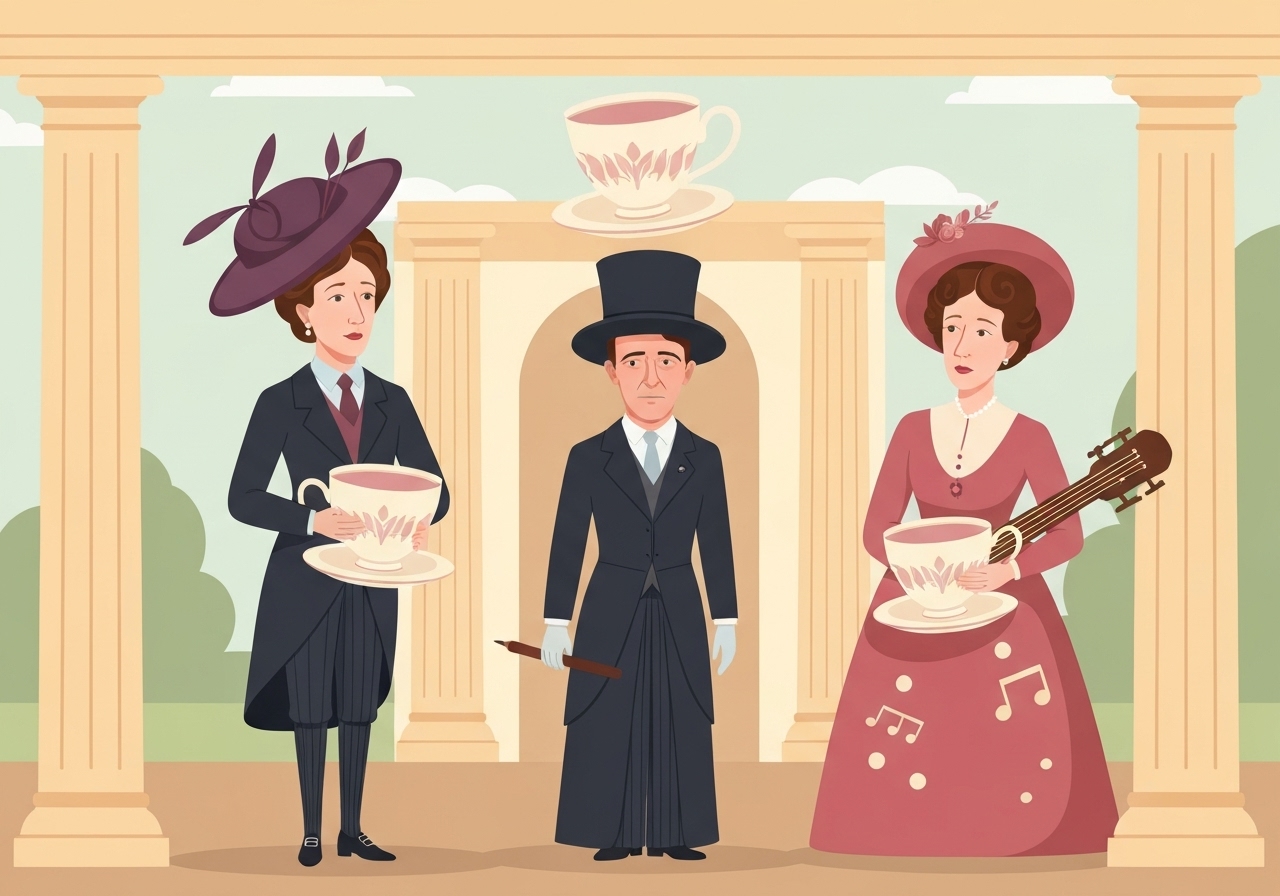
Lead: Set in 1930, Downton Abbey: The Grand Finale (directed by Simon Curtis, written by Julian Fellowes) gathers the returning ensemble and new faces to resolve the series’ long-running arcs — a film that delivers sentimental closure for devoted viewers while feeling densely packed with subplots. The film opens with a West End performance of Noel Coward’s Bitter Sweet and culminates in a nostalgic finale and dedication to the late Maggie Smith.
Key Takeaways
- Period drama set in 1930 that ties up long-running character threads.
- New and returning cast members include Paul Giamatti, Arty Froushan and Alessandro Nivola alongside the established ensemble.
- Main throughline: a public divorce scandal for Mary and a financial crisis for Downton.
- Comic energy derives in part from a portrayal of Noel Coward (Arty Froushan).
- Subplots cover Carson’s retirement, county politics, and a same-sex relationship between Guy and Thomas.
- Runtime: 2 hours 23 minutes; rated PG; U.S. release date: .
- Final sequence offers a montage of series memories and a dedication to Maggie Smith.
Verified Facts
The film is directed by Simon Curtis and written by Julian Fellowes. The principal cast includes Michelle Dockery (Mary), Hugh Bonneville (Robert), Elizabeth McGovern (Cora), Jim Carter (Carson) and others from the television series, with featured additions such as Paul Giamatti (Harold) and Arty Froushan (Noel Coward). Producers credited include Gareth Neame and Julian Fellowes; production companies include Focus Features and Carnival Film & Television.
Plotwise, the story begins with a West End staging of Bitter Sweet and quickly introduces two central shocks: the revelation of Mary’s divorce, which sparks social ostracism, and a financial collapse tied to Cora’s brother Harold, who has lost much of the family money after bad investments guided by Gus Sambrook (Alessandro Nivola). Mary later has a brief encounter with Gus, which complicates her standing.
Alongside the headline drama, the film follows several domestic and civic storylines: Carson’s reluctant move toward retirement and handover to Andy (Michael Fox); Isobel (Penelope Wilton) reshaping the County Fair’s leadership and provoking local snob Sir Hector Moreland (Simon Russell Beale); and Guy Dexter (Dominic West) continuing a relationship with Thomas (Robert James-Collier).
Arty Froushan’s portrayal of Noel Coward supplies sharp, comedic interludes. In the film, Coward’s appearance not only raises spirits at a party organized to rehabilitate Mary’s reputation but also seeds an idea that alludes to Private Lives. The picture closes with a reflective montage and a dedication honoring Maggie Smith’s contribution to the franchise.
Context & Impact
After 14 years of storytelling across television and prior feature outings, this film aims to provide definitive closure for fans. Its scope — multiple converging plots and a large ensemble — reflects a deliberate attempt to address many character arcs in a single installment.
Critically, the film balances affectionate callbacks with a faster, sometimes overfull pace; viewers familiar with the series will likely appreciate the emotional payoffs even if the density dilutes some individual beats. Commercially, the presence of widely known guest actors (Paul Giamatti, Alessandro Nivola) and the nostalgic draw of the franchise position the film for strong turnout among established audiences.
Artistically, the movie underscores the series’ long-running themes — class ties, loyalty between servants and gentry, and the tension between tradition and change — while using period detail and costume design to maintain the Downton signature.
Official Statements
“An elegant farewell.”
The Hollywood Reporter
Unconfirmed
- No credible reports suggest additional sequels are planned beyond this film’s intent to serve as a finale.
- No verified statements have been published about unnamed deleted scenes or alternate endings.
Bottom Line
Downton Abbey: The Grand Finale is a warmly made send-off that prioritizes emotional closure for fans over narrative economy. While its many subplots make the film feel overstuffed at moments, strong performances, period craft, and a reverent final montage deliver a fitting goodbye to a long-running franchise.