
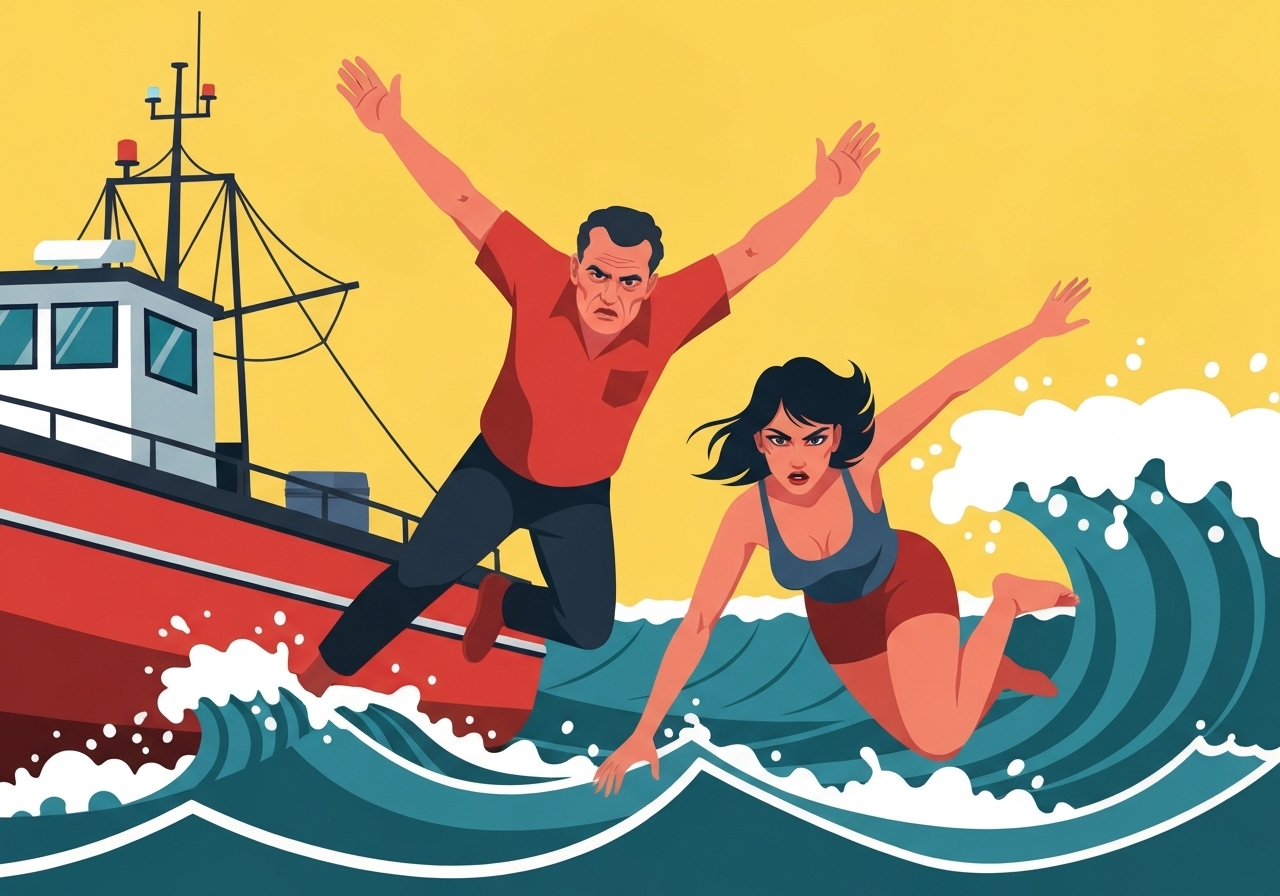
U.S. military officials said Dec. 30, 2025, that people aboard three suspected drug-smuggling boats in international waters of the eastern Pacific abandoned two vessels by jumping into the sea after a separate strike on a third boat. Southern Command reported an initial attack killed three people and said follow-up engagements later sank the remaining two boats. The U.S. Coast Guard was notified and mobilized search-and-rescue assets, including a C-130 capable of dropping a survival raft and supplies. Military leaders identified the vessels as part of a convoy following known narco-trafficking routes.
Key Takeaways
- On Dec. 30, 2025, U.S. Southern Command said three suspected narco-trafficking vessels were struck in international waters in the eastern Pacific; three people died in the first strike.
- After the initial strike, individuals aboard the other two boats jumped overboard and were reported to distance themselves before those boats were later sank by follow-on engagements.
- The Coast Guard was notified and coordinated search-and-rescue operations; a C-130 was dispatched to provide additional coverage and survival gear.
- U.S. officials later reported separate strikes the following day that killed five more people, bringing the campaign toll to at least 115 since it began months earlier.
- As many as eight people reportedly abandoned the two remaining vessels, according to three U.S. officials who spoke to news outlets.
- A 46-second video released by military sources did not appear to show survivors in the water, though independent confirmation of that footage remains limited.
- Lawmakers have challenged the strikes’ authorization and legality, and some critics have cited past follow-up strikes that killed survivors as grounds for congressional oversight.
Background
The U.S. has carried out a monthslong campaign targeting vessels it says are ferrying illegal drugs through maritime routes linked to transnational trafficking networks. Officials describe these as coordinated convoys exploiting remote stretches of the eastern Pacific, where interdiction is operationally challenging and where traffickers use fast boats and makeshift loading sites. The campaign intensified amid rising political pressure from the administration, which has publicly accused Venezuelan officials of facilitating shipments that transit these routes; Venezuelan authorities deny such links.
Congressional concern has grown because the strikes have proceeded without explicit new authorization from lawmakers. Critics point to several high-profile episodes earlier in the campaign — including a Sept. 2 follow-up strike that killed two survivors and other incidents in October — as evidence that the rules governing follow-up engagements need clarification. Supporters argue the actions disrupt large-scale trafficking and protect U.S. national security by targeting criminal networks at sea.
Main Event
According to U.S. Southern Command, three suspected narco-trafficking vessels were identified traveling together in international waters on Dec. 30, 2025. The command said intelligence indicated the boats were following established smuggling routes and were engaged in drug trafficking. An initial strike hit one vessel, killing three people; those aboard the other two boats reportedly abandoned ship by jumping into the water.
Southern Command said follow-on engagements sank the two abandoned vessels after those on board had jumped overboard and moved away from the hulls. Military officials told reporters that the U.S. Coast Guard was alerted to coordinate search-and-rescue operations for anyone in distress. A military video of the strikes, roughly 46 seconds long, was circulated by officials; observers noted it did not appear to show survivors in the water, though independent confirmation was not available.
The next day U.S. forces carried out additional strikes on two more vessels, killing five people, Southern Command later reported. That action raised the estimated death toll in the campaign to at least 115 people since operations began months earlier. The military framed the operations as targeting organised trafficking groups that pose transnational threats; critics questioned aspects of targeting and post-strike handling of survivors.
Analysis & Implications
The use of strikes in international waters signals a shift toward more aggressive maritime operations against drug-trafficking networks. Operationally, commanders justify strikes by citing intelligence on routes, cargo and coordination among vessels. Strategically, the campaign aims to disrupt supply chains before drugs reach coastal transshipment points, but it also raises questions about proportionality and the standards used to determine lethal force at sea.
Politically, the strikes have become a flashpoint in Washington. Many Democrats and some legal scholars argue that sustained kinetic actions without fresh congressional authorization create constitutional and oversight gaps. Conversely, many Republicans and administration officials maintain that existing authorizations and the need to combat organized crime at sea give commanders the latitude to act.
Internationally, the operations risk escalating tensions with countries accused of enabling trafficking. The administration’s repeated public allegations linking Venezuelan officials to narcotics shipments have prompted diplomatic pushback from Caracas, which denies those claims. If strikes continue and expand, they could complicate already frayed relations and provoke calls for multinational mechanisms to manage maritime interdiction and legal accountability.
Comparison & Data
| Incident Date | Region | Deaths Reported | Survivors Reported |
|---|---|---|---|
| Dec. 30, 2025 | Eastern Pacific (international waters) | 3 | Several jumped overboard; exact number unconfirmed |
| Dec. 31, 2025 | Eastern Pacific | 5 | Not reported |
| Campaign total (monthslong) | Multiple maritime zones | At least 115 | Some survivors detained or later killed in follow-ups |
The table summarizes public figures disclosed by U.S. military and government sources. While the campaign’s cumulative death toll is reported as at least 115, public reporting does not consistently provide full accounting of wounded, detained or missing individuals, nor does it always distinguish between confirmed fatalities and presumed deaths.
Reactions & Quotes
Southern Command described the vessels as transiting known narco-trafficking routes and said a total of five suspected narco-terrorists were killed across recent actions.
U.S. Southern Command (official statement)
The U.S. Coast Guard confirmed it was notified about mariners in distress in the Pacific and that a C-130 was en route to assist search-and-rescue efforts.
U.S. Coast Guard (official statement)
Critics in Congress have warned that strikes carried out without explicit new authorization risk legal and diplomatic blowback and have called for oversight and release of relevant video footage.
Members of Congress (public statements)
Unconfirmed
- Precise identities and nationalities of the people killed in the Dec. 30 and Dec. 31 strikes remain unconfirmed in public reporting.
- The 46-second military video did not clearly show survivors in the water, but independent verification of what the footage depicts is limited.
- Attribution of the vessels to any state actor or direct operational control by Venezuelan officials has been asserted by U.S. officials but is disputed and not fully corroborated in public records.
Bottom Line
The Dec. 30–31 strikes mark a continuation and apparent escalation of a U.S. campaign aimed at maritime drug-trafficking networks in the eastern Pacific. The operations have produced multiple fatalities and added urgency to debates in Washington about legal authority, oversight and the rules governing lethal force at sea.
Policymakers face a trade-off between disrupting transnational criminal networks before consignments reach shore and ensuring that actions comply with domestic and international law and minimize civilian harm. Expect heightened oversight demands from lawmakers, renewed calls for release of operational footage, and additional diplomatic friction with states accused of facilitating maritime trafficking.
Sources
- CBS News — (U.S. national news outlet)
- U.S. Southern Command — (Official military statements)
- U.S. Coast Guard — (Official agency statements)