
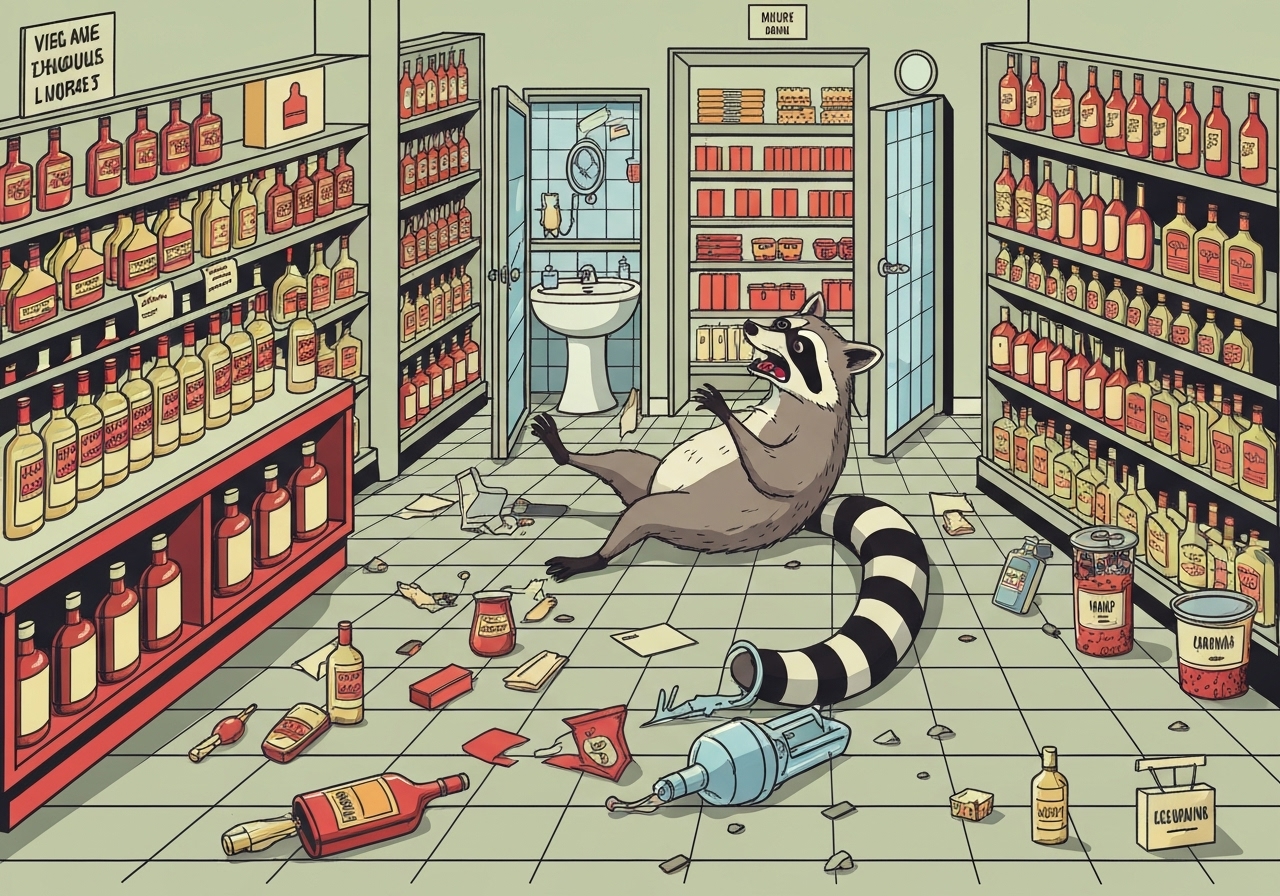
Lead: Early on Saturday in the Ashland, Virginia area, a raccoon forced its way into a closed liquor store, targeted bottles on the bottom shelf and caused interior damage before passing out on a bathroom floor. Store staff discovered smashed bottles, a collapsed ceiling tile and alcohol pooled on the floor, and an animal control officer later retrieved the animal and took it to a shelter. After resting for several hours the raccoon showed no obvious injuries and was released back to the wild, county officials said. The episode drew attention for its unusual combination of property damage and wildlife behavior.
Key Takeaways
- The break-in occurred early Saturday at a liquor store near Ashland, Virginia; scotch and whisky on a bottom shelf were the primary items damaged.
- Multiple bottles were smashed, a ceiling tile fell, and alcohol pooled on the store floor, creating cleanup and safety concerns for staff.
- An employee found the intoxicated raccoon passed out on the bathroom floor; local animal control responded and transported it to a shelter.
- Samantha Martin of local animal control handled the response; the Hanover County Animal Protection and Shelter said the animal sobered after a few hours and was released with no signs of injury.
- The county agency publicly praised the officer’s response and noted the animal’s release back to the wild after recovery.
Background
Raccoons are common in suburban and semi-rural parts of Virginia and are primarily nocturnal omnivores known for rummaging through trash and human structures in search of food. Their adaptability brings them into frequent contact with residents and commercial properties, and they can exploit easy entry points in buildings. Reports of wildlife gaining access to food or beverages are sporadic but do occur; such incidents highlight the tensions between urban development and native wildlife. Local animal control and shelter services are typically responsible for capture, rehabilitation when needed, and decisions about release.
Liquor stores and similar retail sites may offer tempting targets because of scent, accessible storage on lower shelves, or structural vulnerabilities such as vents, damaged roof tiles, or unsecured doors. Business owners and managers often rely on routine maintenance and locked entry to prevent wildlife and human intrusions. When animals are involved, responses balance public safety, property protection and the welfare of the animal, with county animal protection agencies setting the practical protocols for handling and release.
Main Event
According to authorities, the raccoon entered the closed Ashland-area liquor store early Saturday and gravitated toward the bottom shelf where scotch and whisky were stored. Bottles were reportedly knocked down and broken, and spilled alcohol pooled across the store floor. During the disturbance a ceiling tile collapsed, creating additional debris and a likely route by which the animal moved between store areas.
After the episode the animal apparently retreated to a back bathroom and fell asleep on the floor; an employee discovered it there the following morning. Local animal control officer Samantha Martin responded, described the raccoon as uninjured aside from being intoxicated and transported it to the county shelter. Martin later said the event provoked laughter during the rescue rather than alarm.
Hanover County Animal Protection and Shelter confirmed the raccoon regained sobriety after sleeping for a few hours, showed no outward signs of injury and was released back into the wild. The shelter publicly commended the responding officer and emphasized that the animal’s release followed routine assessment procedures intended to ensure the safety of both the animal and the public.
Analysis & Implications
This incident underscores how wildlife can exploit human-made environments, sometimes producing unusual public-safety and property-damage scenarios. While most raccoon encounters involve scavenging rather than breaking and entering, structural weaknesses or attractants like food and improperly sealed waste can increase the likelihood of an intrusion. For retailers, the episode reinforces the value of secure storage and regular inspection of ceilings, vents and access points to limit wildlife entry.
From a wildlife-welfare perspective, the response by animal control and the county shelter reflects standard practice: remove the animal from an immediate hazard, assess for injury or disease, allow recovery if intoxicated, and release if conditions permit. That approach aims to minimize stress and prevent unnecessary captivity while protecting public health. The short recovery and release in this case suggest no chronic harm was detected, though alcohol exposure remains a potential risk for wildlife physiology and behavior.
Insurance and loss-management implications for small businesses are modest but real—broken inventory and interior damage create direct financial costs and potential temporary closures. Incidents involving wildlife can also prompt changes in local messaging about securing storefronts and waste management. At a policy level, repeated encounters in a locality may lead to targeted outreach by animal control to reduce attractants and block access points on vulnerable properties.
Comparison & Data
| Item | This Incident | Typical Raccoon Behavior |
|---|---|---|
| Time | Early Saturday morning | Nocturnal activity, usually night-to-dawn |
| Targets | Bottom-shelf scotch and whisky | Trash, pet food, fruit, small animal prey |
| Outcome | Passed out, no injury, released after hours | Forages and retreats, may den in structures seasonally |
The table places this event alongside common raccoon behaviors to show where it aligns and where it departs from the norm. While nocturnal foraging explains the timing, targeting spirits and becoming intoxicated is rare in scientific reporting. The shelter’s assessment and release are consistent with standard animal-control protocols when no injuries or zoonotic risks are observed.
Reactions & Quotes
Store employees were surprised by the scene and relieved the animal was not harmed. Local responders framed the episode as an unusual but manageable animal-welfare call that required both care and basic damage mitigation before reopening.
“He fell through a ceiling tile and proceeded to drink much of what he could reach,”
Samantha Martin, local animal control officer (quoted to AP)
Martin handled the animal and described the rescue in lighthearted terms while stressing routine care. The county agency emphasized the successful outcome and the shelter’s role in evaluating the animal before release.
“After a few hours of sleep and no visible injuries, the animal was released back to the wild,”
Hanover County Animal Protection and Shelter (official statement via AP)
Unconfirmed
- Exactly how the raccoon gained entry to the store (specific entry point and whether a door was left unsecured) has not been publicly confirmed.
- The precise volume of alcohol consumed and the duration of intoxication beyond the reported “few hours” were not quantified by officials.
- Any formal damage estimate from the store owner or insurer has not been released as of reporting.
Bottom Line
This episode is a vivid example of the unexpected ways wildlife can intersect with human commerce, producing both humorous headlines and practical concerns about property damage and animal welfare. The rapid response by animal control and the shelter’s assessment helped avoid euthanasia or prolonged captivity, and the animal’s release suggests no lasting harm was detected.
For businesses, the key takeaway is preventative: secure lower shelving, inspect ceilings and vents, and manage attractants to reduce the chance of similar incidents. For the public, the case is a reminder that coexistence with adaptable wildlife requires both good property practices and reliance on trained animal-control professionals when animals are harmed or pose safety risks.