
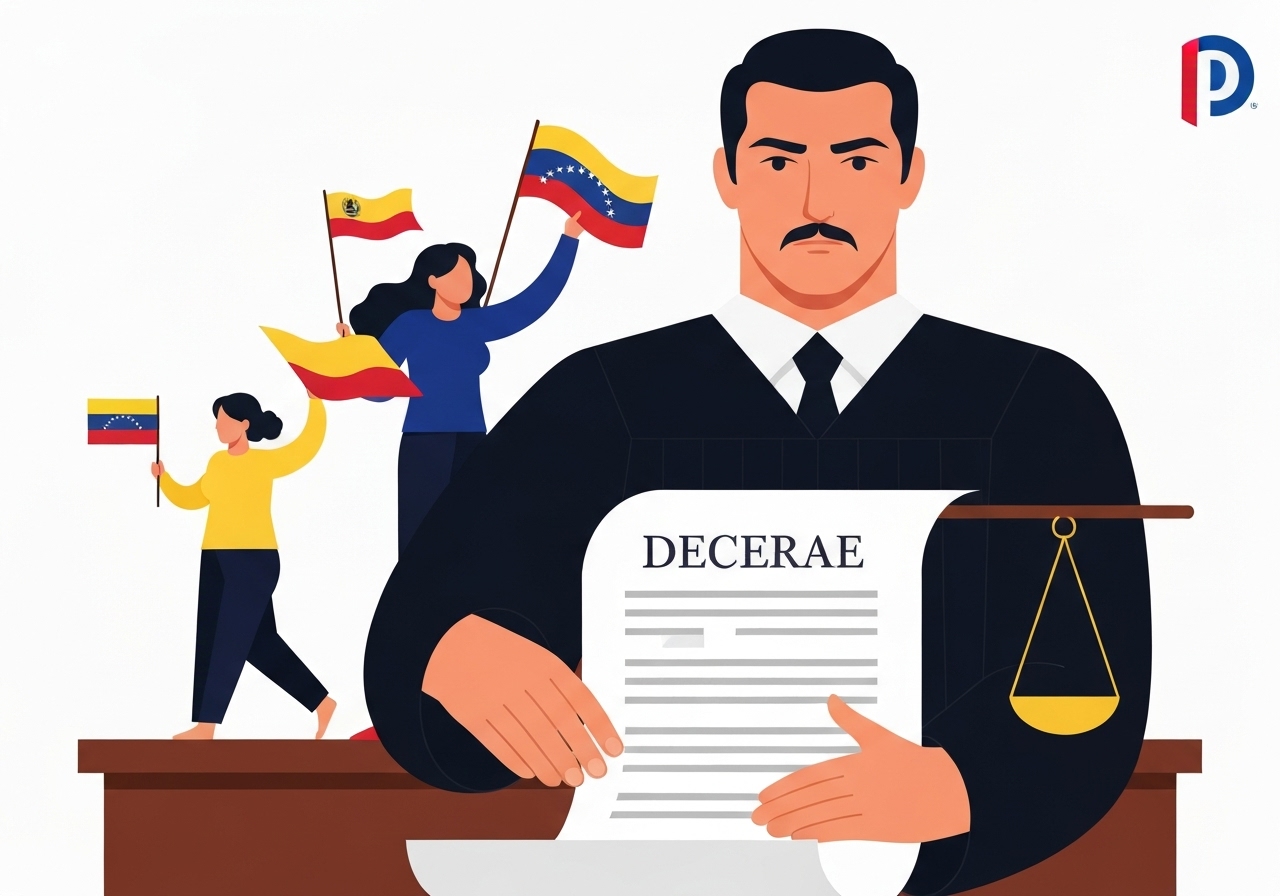
Lead: A federal judge ruled on Monday that men the U.S. government deported to El Salvador in mid-March must be afforded meaningful due-process protections after being removed under the 1798 Alien Enemies Act. The decision, issued by Chief Judge James Boasberg of the U.S. District Court for the District of Columbia, found the group were denied hearings to contest their removals and ordered the government to either facilitate their return or provide hearings that meet constitutional standards by Jan. 5. The March removals — part of an administration effort targeting alleged members of the Venezuelan prison gang Tren de Aragua — included at least 137 people the White House said were removed under the statute. The judge’s order follows earlier emergency relief and a broader legal challenge filed by the ACLU and Democracy Forward.
Key Takeaways
- Chief Judge James Boasberg ruled the class of Venezuelan detainees were denied due-process rights and must be given an opportunity to challenge their removals, either in the U.S. or through hearings conducted from abroad.
- The removals followed President Trump’s invocation of the Alien Enemies Act around March 15, 2025; the White House said 137 people were removed under that statute.
- Despite a temporary restraining order issued the evening the judge acted, flights carrying the detainees reached El Salvador and the men were held at the CECOT facility in Tecoluca.
- Boasberg gave the government until Jan. 5 to “facilitate” returns or provide hearings that satisfy due process; the administration has indicated it is likely to appeal.
- In July the same judge found “probable cause” to consider criminal contempt for defendants who sent the planes; an appeals court has paused action on that contempt finding pending new-year review.
- The men were later transferred to Venezuela as part of a prisoner exchange, but the court noted that a finding of unlawful removal would be hollow without an effective remedy.
Background
The Alien Enemies Act, a 1798 statute rarely used in modern times, authorizes the government to act against nationals of a country at war with the United States. In mid-March 2025, the Trump administration invoked that statute to target people it identified as members of Tren de Aragua, a Venezuelan prison gang the administration said was operating inside the U.S. The White House announced several planeloads of alleged gang members were sent to El Salvador immediately after the invocation, including 137 people removed under the statute.
Civil-rights groups quickly challenged the moves on constitutional and statutory grounds. The American Civil Liberties Union and Democracy Forward filed suit arguing the Act was invoked improperly and that the men were denied the chance to contest their deportation. Plaintiffs sought an immediate halt to removals and a judicial determination that the government must provide hearings or return the detainees to U.S. custody.
Main Event
On Monday, Chief Judge Boasberg concluded the class of Venezuelans removed on March 15 had been deprived of due process and ordered the government to ensure they receive meaningful hearings or to facilitate their return to the United States. The opinion emphasized that U.S. custody continued while the men were held at CECOT, a high-security center in Tecoluca known for harsh conditions, which preserved the court’s jurisdiction over their fate. Boasberg framed the relief as necessary to prevent expedited removal from becoming a mechanism to strip away judicial remedies.
Boasberg reiterated that the court’s role is to enforce constitutional protections even when foreign policy considerations are involved, noting the government had not shown that the judge lacked authority to act. He set a January 5 deadline for the administration to comply by returning the detainees or providing hearings that meet the requirements of due process. The judge also certified the group deported on March 15 as a class, allowing the named plaintiffs to represent all similarly situated individuals removed that day.
The Justice Department has signaled it is likely to appeal the ruling, arguing previously that the district court was intruding into matters of foreign policy. Separately, the judge had earlier described facts supporting “probable cause” to proceed on a criminal contempt inquiry tied to the government’s sending planes to El Salvador after his restraining order; an appeals court placed a hold on that contempt matter pending further proceedings in the new year.
Analysis & Implications
The ruling underscores the tension between executive immigration enforcement and constitutional protections when the government uses old wartime statutes in modern contexts. If courts require hearings for those deported under the Alien Enemies Act, the administration may face logistical and diplomatic complications: bringing people back from foreign custody or creating remote procedures that foreign governments permit. Compliance could force the government to create a formal process to adjudicate gang-affiliation claims, rather than relying on expedited administrative removals.
Politically, the decision will likely deepen disputes over the administration’s immigration strategy. Supporters of the removals argued invoking the Alien Enemies Act was a necessary tool to repel criminal networks; critics say it bypassed ordinary immigration and criminal procedures. An appeals-court reversal would vindicate the executive’s discretion; an affirmation would strengthen judicial checks on rapid cross-border removals and could restrict future use of the 1798 statute.
There are diplomatic and human-rights dimensions as well. The men were detained in El Salvador’s CECOT, a facility highlighted in international reporting for its harsh conditions. Requiring the U.S. to repatriate or adjudicate while individuals are abroad could create pressure on partner countries and raise questions about custody, treatment, and the safety of returned detainees — especially when those individuals later moved to Venezuela through a prisoner exchange.
Comparison & Data
| Event | Date / Number |
|---|---|
| Invocation of Alien Enemies Act | Around March 15, 2025 |
| People removed under the statute (White House) | 137 |
| Judge’s compliance deadline | January 5, 2026 |
| Earlier probable-cause contempt finding | July 2025 (appeals stay Dec. 2025) |
This simple table frames the central dates and counts at issue in the litigation. The 137 figure is the administration’s count for removals under the Alien Enemies Act; total numbers on the several planeloads that arrived in El Salvador were described as “several” by the administration. The January 5 deadline reflects the timing in Boasberg’s order for the government to provide relief or hearings that satisfy due process.
Reactions & Quotes
Government spokespeople have signaled they will consider appellate options and argued the district court risked intruding on foreign-policy prerogatives. Civil-rights groups framed the ruling as a vindication of constitutional safeguards. The following excerpts highlight the core positions and the court’s reasoning.
“On the merits, the Court concludes that this class was denied their due-process rights and will thus require the Government to facilitate their ability to obtain such hearing.”
Chief Judge James Boasberg, U.S. District Court for the District of Columbia
Boasberg’s passage stresses the remedy: the court will compel action to ensure hearings are possible, not merely issue a declaratory finding. The judge emphasized that procedural protections must be real and effective.
“[T]he men deserved to have a meaningful opportunity to prove they weren’t gang members before being deported.”
Chief Judge James Boasberg
This formulation underlines the court’s focus on the practical ability to contest allegations of gang affiliation, not on the merits of any individual case. Plaintiffs’ counsel characterized the ruling as forcing the government to choose meaningful process over expedited secrecy.
Unconfirmed
- Whether the government will comply with Boasberg’s Jan. 5 deadline or instead obtain an immediate stay from an appeals court remains unresolved and may change once formal appeals are filed.
- Claims by the administration that all those removed were active Tren de Aragua members are contested in court and have not been subject to a full adjudication that is part of the public record.
- The exact number of people on the several planeloads, beyond the 137 the White House cited as removed under the statute, has not been independently verified in public filings available as of publication.
Bottom Line
Chief Judge Boasberg’s ruling reasserts that constitutional process cannot be bypassed through rapid cross-border removals, even when the executive invokes an archaic wartime statute. The decision forces the administration to choose between creating meaningful procedural avenues for the deported men or repatriating them so the courts can provide effective relief.
The case is likely to be resolved on appeal, and its outcome will shape executive use of the Alien Enemies Act and similar expedited-removal practices. Observers should watch the appeals docket and any compliance steps the government takes before the Jan. 5 deadline to understand how far courts will go to protect procedural rights in immigration enforcement.